K45MT · Single Head CNC Router

K45MT 4×8 CNC Router for Sign Making

A practical 4×8 router for acrylic, PVC, MDF, plywood and ACP sign work

K45MT makes sense when your sign shop cuts rigid sheets and most jobs use one cutter or only a few manual changes. It is a three-axis, single-spindle 4×8 CNC router for suitable acrylic, PVC, foam PVC, MDF, plywood and ACP work. If you need frequent automatic tool changes, camera registration, knife cutting or heavy metal machining, we will point you to a better-fit machine instead.

1325 / 4×8 class Manual tool change Rigid flat sheets

Send the drawing, material, sheet size, smallest part and normal tool list. We’ll tell you whether K45MT fits, how we would hold the work, and what needs a test before you buy.

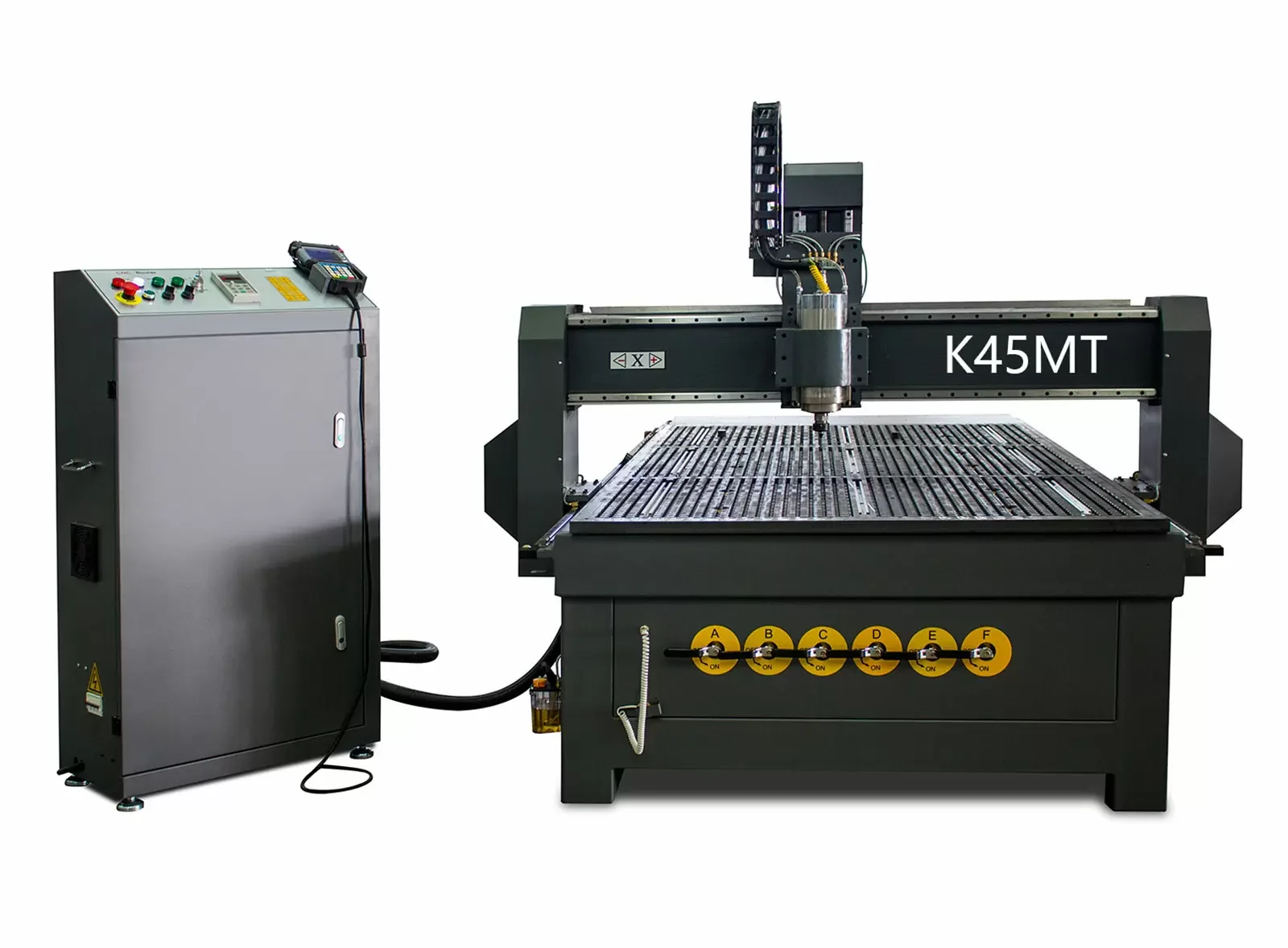
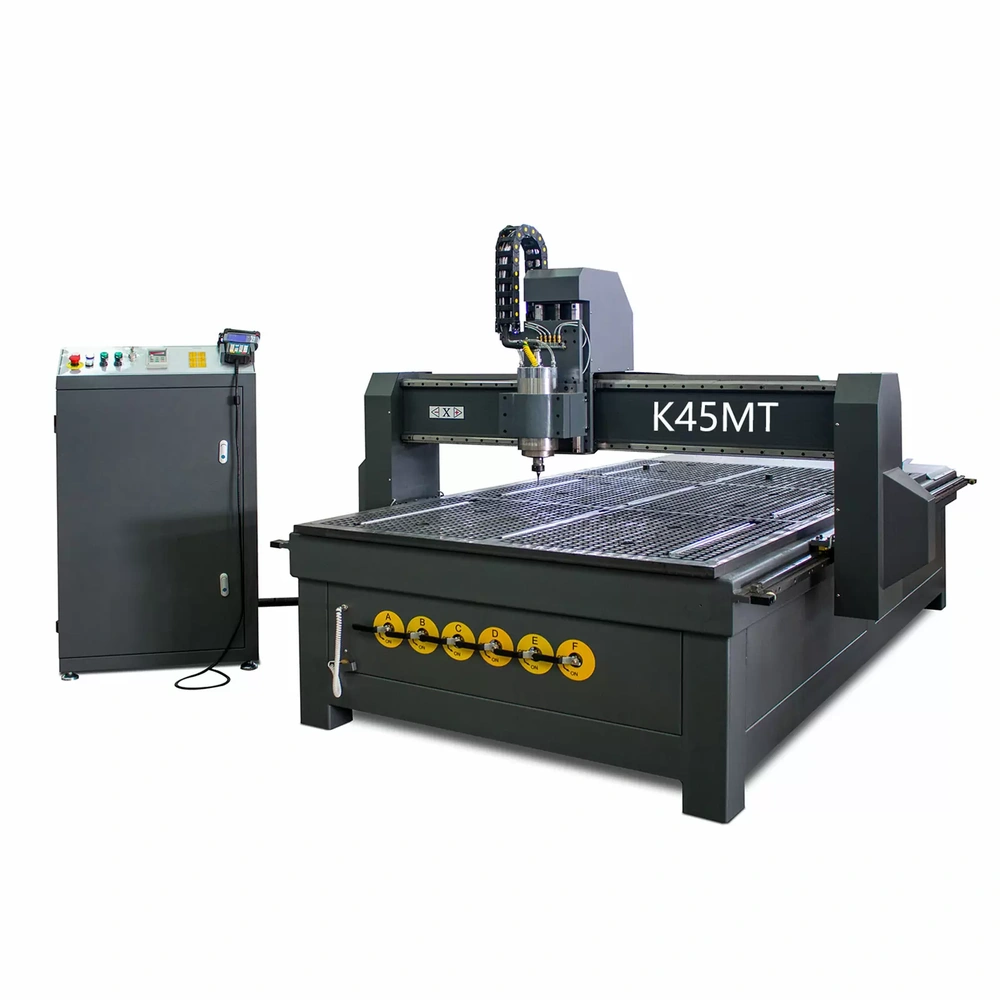
K45MT 4x8 CNC router with manual tool change and separate control cabinet

Quick answer

K45MT 4×8 CNC Router at a Glance

Machine3-axis, single-spindle 1325 / 4×8 class CNC router
Best forSign making and rigid flat-sheet cutting, engraving, pocketing, drilling and V-grooving
Main materialsAcrylic, rigid PVC, foam PVC, MDF, plywood and ACP / ACM
Tool changeManual tool change; best when one cutter or a short tool sequence handles most jobs
Best production fitCustom work, short runs and moderate batches with an operator available
Choose another machine ifYou need frequent ATC, camera registration, knife cutting, unattended automation or heavy metal machining

Machine recommendation

Is K45MT the Right 4×8 CNC Router for Your Sign Shop?

Start with the work you run every week. K45MT is a good fit for custom jobs, short runs and repeat sign work when an operator can handle setup and the occasional tool change. The real decision comes down to your tool sequence, smallest part and holding method.

  • Products are machined mainly from the top face.
  • Most programs use one cutter or a limited tool sequence.
  • Full sheets and partial sheets can be secured with a planned holding method.
  • The shop needs cutting, engraving, pocketing, spindle drilling or V-grooving.
  • An operator is available for tool setting and production checks.

Application boundary

What Can the K45MT 4×8 CNC Router Cut?

A material name by itself is not enough. Send the real grade, thickness and part. We’ll check the cutter, hold-down, chip or dust removal and the finish you actually need.

Strong K45MT fit

  • Flat sign sheets within the confirmed working envelope.
  • Acrylic, rigid PVC, foam PVC, MDF, plywood and ACP under controlled conditions.
  • Cutting, engraving, pocketing, spindle drilling and V-grooving.
  • Letters, logos, sign panels and light-box components.
  • Full sheets, partial sheets and small parts with the correct holding method.
  • Supervised custom and moderate-batch production.
  • Light soft-aluminum routing only after our engineering review and testing.

Use another machine or process

  • Steel, stainless steel and hardened metals.
  • Heavy aluminum removal or deep metal pocketing.
  • Stone machining.
  • Automatic multi-tool programs.
  • Printed contour work requiring an unconfirmed vision system.
  • Flexible-media knife work.
  • Machining-center-level metal tolerances.

Specification control

K45MT CNC Router Specifications & Order Configuration

We won’t throw old catalog numbers at you just to make the table look full. This page shows the K45MT role we can support from the current information. Your quotation will carry the exact travel, spindle, controller, vacuum setup, voltage, dimensions, weight and supplied options for the machine you’re buying.

ItemWhat we confirm for K45MT
ModelK45MT
Machine architectureThree-axis, single-spindle flatbed CNC router
Tool changingManual tool change; no tool magazine
Nominal size class1325 / 4×8 class
Primary processesProfile cutting, engraving, pocketing, spindle drilling and V-grooving from the top face
Recommended tool workflowOne tool per operation or limited manual changes
Core material rangeSuitable acrylic, rigid PVC, foam PVC, MDF, plywood and ACP/ACM
Conditional materialSoft aluminum after our engineering review and a representative test
Working envelopeWe confirm exact X/Y travel against your largest sheet and fixture
Z-axis capacityWe state Z travel and practical usable clearance separately
Table and vacuum systemOur quotation identifies the table construction, vacuum zones, pump type and supplied scope
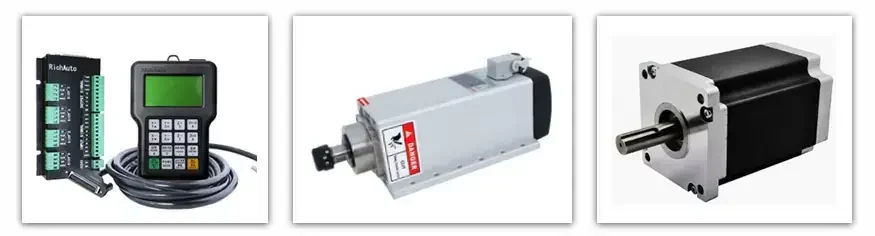
Spindle and toolingOur quotation identifies the spindle model, power, cooling, speed range, collet and supported shanks
Motion and controllerWe list the exact transmission, guides, motors, drives, controller and tool-setting method
Software workflowCAM-generated machine code and a postprocessor matched to the final controller
UtilitiesWe match voltage, phase, frequency, installed load, extraction and any air or cooling requirement to the final configuration
Installation and logisticsWe issue the machine footprint, weight, packing dimensions and unloading requirements from current model records
CNC controller, spindle and stepper motor component examples for K45MT configuration review
Working area ≠ factory spaceAllow for fixtures, sheet loading, the control cabinet, vacuum equipment and maintenance access. Review the CNC router size guide.
Z travel ≠ usable thicknessSpoilboard, fixture, tool length, spindle nose, dust hood and safe retract position reduce practical clearance.
Machine motion ≠ finished-part toleranceMaterial, tooling, spindle condition, hold-down, CAM and measurement method affect the result.

Material setup

CNC Router Setup for Acrylic, PVC, MDF, Plywood & ACP

The same machine can behave very differently on acrylic, PVC, MDF or ACP. Send the exact grade, thickness, tool, holding method and finish requirement, and we’ll set the process around that job. For a wider comparison, use our CNC router material guide.

MaterialK45MT fitRequired process control
AcrylicCore sign materialWe confirm cast or extruded grade, cutter, chip evacuation, protective film and small-part retention
Rigid and foam PVCCore sign materialWe match the tool and ventilation plan to the exact formulation, density and thickness
MDF and plywoodCore panel materialWe specify suitable tooling, effective dust collection and a holding plan for porous or warped sheets
ACP / ACMCore composite sign materialWe confirm panel construction, coating protection, cutter and required V-groove depth
Soft aluminumConditionalWe review the alloy, spindle, fixture, cutter, chip removal and cooling or lubrication, then test the real part
Printed or flexible materialsOutside the confirmed standard workflowWe recommend a vision-equipped or knife-equipped platform

Acrylic

Cast or extruded grade, chip load, cutter geometry, protective film and chip evacuation influence melting and whitening. A routed edge may still require polishing. Use the acrylic CNC cutting guide to prepare the test request.

ACP / ACM

Send us the total panel thickness, aluminum-skin thickness, core construction, coating and required remaining rear skin before we approve a fold groove.

Soft aluminum

Our engineers review the exact alloy, part, spindle configuration, fixture, chip removal and cooling or lubrication. We do not position K45MT as a metal machining center.

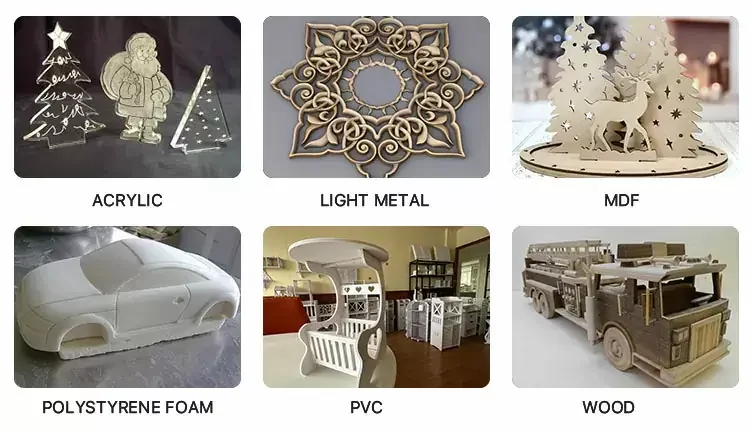
Examples of acrylic, light metal, MDF, foam, PVC and wood CNC routed products

Safety boundary: We require effective local dust extraction for MDF and plywood. Tell us the exact plastic formulation so we can match ventilation and chip management to the material. Keep wood dust separate from hot metal chips. Stop and isolate the machine before clearing chips, adjusting workholding or performing maintenance.

Configuration decision

Manual Tool Change vs ATC for Sign Making

If one or two tools finish most jobs, manual tool change can be the simpler buy. If tool changes keep stopping production, that is when ATC starts earning its place. Send one normal CAM tool list and we’ll compare the two directions with you.

Production patternSelection judgment
Most jobs use one toolK45MT is a practical choice
Two tools are used occasionallyManual changes may remain economical
Two or three tools are common but batches are smallCompare operator time with the added ATC investment
Four to eight tools are regularly usedSelect an ATC machine
Tool resets repeatedly cause scrap or downtimeCompare ATC and automatic tool measurement
Several operations must run without an operatorUse a machine designed for that workflow

Workholding

A full-sheet vacuum test does not prove small letters will stay fixed

Vacuum holding is not just about pump size. We look at the sealed area, zones, spoilboard, material porosity, open table area, cutter force and the order in which parts are released.

Send us the smallest recurring part

  • Remaining sealed surface area.
  • Vacuum-zone control.
  • Spoilboard leakage and condition.
  • Material porosity and flatness.
  • Open table area.
  • Cutter force and pass strategy.
  • Profile order.
  • Tabs or onion skin.
  • Double-sided tape.
  • Clamps or a dedicated fixture.
Front view of the K45MT showing the worktable and A-F vacuum-zone controls

Workholding example

Example: Small acrylic letters move after cut-through

This is a common sign-shop problem: a full sheet looks secure, but small acrylic letters can move as soon as the final profile cut removes most of their holding area.

Common mistakeLarge panels and small letters use the same full-depth profile strategy.
What happensThe smallest letters can rotate or shift during the final cut, which ruins the edge and forces a remake.
Why it happensOnce the part is separated, the effective holding area becomes tiny. Open zones, spoilboard leakage and cut order can release it too early.
Better approachClose unused zones, keep the spoilboard flat, cut the smallest parts later, and use onion skin, tabs, tape or a fixture where needed.
What to validateTest the smallest recurring part with the actual material, cutter, vacuum zones and final cut-through strategy before approving the process.
Our recommendationApprove the holding system from the smallest final part, not from a full-sheet demonstration.

Not sure whether K45MT will hold your smallest parts?

Send one drawing, the real material and your normal tool list. We’ll review machine fit, workholding and whether a test cut is worth doing before you spend money.

Review My Sign Job

Configuration value

K45MT Options and Alternative CNC Router Configurations

We keep the quotation simple: what is on the machine, what you need to prepare in your shop, and which options actually solve a production problem. If your work really needs ATC, camera registration or knife cutting, we’ll recommend the right platform instead of pretending K45MT does everything.

DecisionChoose it whenMove away from it when
K45MT manual tool changeMost jobs use one cutter or tolerate occasional changesRepeated tool changes interrupt production
Vacuum-centered sheet holdingFull, flat sheets dominateSmall parts, porous sheets, remnants or irregular pieces dominate
Auxiliary holdingLetters, strips and remnants need extra retentionThe process uses only stable full sheets
Wood-dust extractionMDF or plywood is processed regularlyNever omit it to reduce the initial quotation
Plastic-chip controlAcrylic or PVC testing shows chip recutting or heatIt is being used to compensate for an unsuitable cutter
Soft-aluminum process packageOur engineers approve the exact part and test methodAluminum is the main workload or heavy removal is required
Different ATC platformNormal programs use several toolsMost jobs use one cutter
Different vision or knife platformPrinted registration or flexible-media cutting is requiredWork consists of unprinted rigid sheets
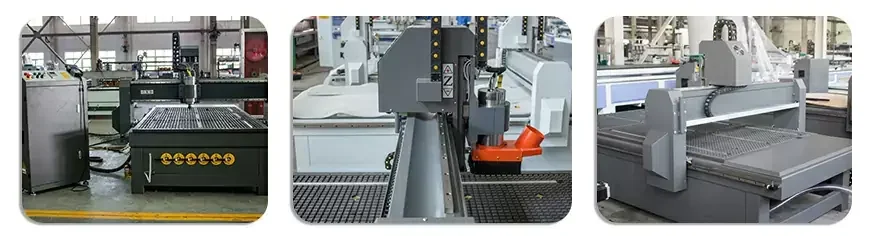
CNC router machine and spindle detail views for configuration discussion

Production workflow

Sign Making CNC Router Workflow

CorelDRAW, Illustrator or AutoCAD files do not normally run the machine directly. The final controller requires CAM-generated machine code from a verified postprocessor.

  1. Confirm the sheet material, thickness and protective surface.
  2. Check the design for open vectors, duplicate lines and unsuitable details.
  3. Generate the toolpath with the correct CAM software and postprocessor.
  4. Select the cutter and machining sequence.
  5. Prepare the spoilboard, vacuum zones, tabs, tape, clamps or fixture.
  6. Load the sheet and set the workpiece datum.
  7. Install the cutter and set tool length.
  8. Check safe travel before cutting.
  9. Complete engraving, pocketing, drilling, grooving and profile operations.
  10. Retain small parts until the controlled final cut.
  11. Inspect the specified dimensions and visible edges.
  12. Complete polishing, painting, bonding or assembly where required.

Machine video

Review the K45MT video before final configuration

Use the video to review the machine and operating context. We will confirm which visible components and functions match the exact K45MT configuration in your quotation.

What to check while watching

  • Single-spindle, manual-tool-change machine layout.
  • Controller, table and workholding arrangement shown in the video.
  • Whether the visible process matches your materials and tool sequence.
  • Which components must be confirmed in our final quotation.

The video supports machine understanding. It does not replace the final specification, test record or signed technical agreement.

Open the K45MT video on YouTube

Risk validation

Request a CNC Router Test Cut Before Ordering

Do not judge your order from a random showroom sample. If edge quality, small-part holding, ACP grooving or aluminum routing matters to the purchase, test the difficult job with the real material, toolpath and holding method.

  • Exact material and supplier information.
  • Thickness and surface condition.
  • Original drawing or CAD file.
  • Smallest part or most difficult feature.
  • Required edge, surface and dimensional result.
  • Normal tool sequence.
  • Expected production quantity.
  • Inspection method and permitted post-processing.

Factory testing and quality control

K45MT Factory Testing and Quality Control

We assemble, inspect and test each machine before shipment. Across our factory, the QC framework includes CMM inspection, laser interferometer testing, Ballbar testing and 24–72-hour continuous-operation testing.

For your K45MT, we’ll tell you exactly which checks apply, how long the test runs, what we measure and which records are available. If a number is not backed by a traceable K45MT record, we do not put it on the page just to make the machine look better.

Review our quality control
Factory readiness

What Your Shop Needs Before K45MT Delivery

The machine body is only part of the space you need. Before production, we’ll check power, dust or chip handling, sheet-loading access and the auxiliary equipment around the router with you.

Electrical supplyDestination voltage, phase, frequency and available capacity.
Dust and chipsExtraction or ventilation suited to the actual materials.
Operating spaceSheet loading, material storage, operator movement and maintenance.
Access and unloadingDoor dimensions and lifting equipment checked against the packing record.
Configuration utilitiesVacuum, spindle cooling and compressed air confirmed from the quotation.

We require qualified personnel to handle facility wiring, breaker selection, protective grounding, transformers and electrical modifications under local requirements.

Ownership risk

K45MT CNC Router Maintenance: Daily Checks That Prevent Downtime

Your operator can handle the normal visual checks and cleaning. When the problem reaches wiring, drives, spindle repair, geometry or safety circuits, stop guessing and bring in our engineers or another qualified specialist.

Operator checks

  • Stop the machine before cleaning the cutting area, racks, guides or sensors.
  • Keep the table, spoilboard, tools, collets and dust hood clean.
  • Check vacuum seals, hoses, filters and extraction before production.
  • Confirm lubrication and the approved spindle-cooling condition.
  • Record complete alarm information instead of repeatedly resetting the machine.

Initial spare categories

  • Model-compatible collets and collet nuts.
  • Common cutters, vacuum gasket and spoilboard material.
  • Dust-hood brushes, filters and identified lubrication fittings.
  • Model-matched relays, contactors and fuses.

Engineer-ready RFQ

What to Send for a K45MT CNC Router Quote

“I need a 4×8 router” is a start, not an RFQ. Give us the real parts, materials, tool sequence, holding problem and shop conditions, and we can quote the machine you actually need.

  1. Main sign products and photographs.
  2. Exact materials, grades and thickness range.
  3. Maximum raw-sheet size.
  4. Smallest recurring letter, strip or component.
  5. Cutting, engraving, drilling, pocketing and V-grooving requirements.
  6. Number of cutters used in a normal program.
  7. Edge, surface and dimensional expectations.
  8. Batch size, shifts and production target.
  9. CAD/CAM software, versions and sample files.
  10. Existing vacuum pump, dust collector or compressor.
  11. Workshop voltage and available electrical capacity.
  12. Destination country and required delivery date.

Commercial scope

Delivery, warranty, certificates and support

Here is the normal commercial baseline. Your final quotation and signed agreement will spell out the exact delivery, warranty, certificate and service scope for your destination.

Production lead time

Standard production lead time is approximately 45 days after deposit and after machine configuration, voltage, options, drawings and required technical details are confirmed. Shipping time is not included.

Custom requirements, order quantity, additional tests or delayed confirmation can change the schedule.

Warranty and support

We provide a one-year machine warranty from the date you receive the machine. Warranty handling begins with remote diagnosis. Wearing parts, consumables, misuse, improper maintenance, unauthorized modification and human-caused damage are not standard warranty items.

We provide manuals, operation videos, remote guidance, online training, maintenance guidance and troubleshooting. We can arrange paid on-site service under the final agreement.

Certificates and company scope

We supply CE-certified machines and operate under an ISO 9001 quality management system. Ask us to confirm the exact certificate scope for your final K45MT configuration and destination.

We were founded in 2006, have nearly 20 years of industry experience and have exported machines to more than 100 countries.

Questions we answer before quotation

K45MT 4×8 CNC Router FAQ

These are the questions we usually get once a buyer has narrowed the choice down to K45MT.

Do we need ATC if most jobs use one or two cutters?

Usually not. We recommend K45MT when one cutter completes most jobs and occasional manual changes do not disrupt production. We recommend an ATC machine when several tool changes are part of the normal program or reset time is already a bottleneck.

Will vacuum hold small acrylic letters?

Not by itself. Full-sheet holding and separated-part holding are different conditions. The smallest parts may need zone isolation, a surfaced spoilboard, tabs, onion skin, tape or a fixture. Send us the smallest recurring letter and we will review the holding method.

Can it process acrylic, PVC, MDF, plywood and ACP?

Yes, under material-specific conditions. We change the cutter, workholding, chip or dust removal and parameters for each material. We require effective dust extraction for MDF, heat and chip control for acrylic, and panel-construction and groove-depth review for ACP.

Can K45MT cut printed graphics by registration marks?

We do not include camera registration in the currently confirmed standard K45MT configuration. Send us the printed-board workflow, registration-mark format and required contour result. We may recommend a vision-equipped platform instead.

Can it route soft aluminum?

Only after our engineering review. We evaluate and test the exact alloy, part, fixture, cutter, spindle, chip removal and cooling or lubrication method. We do not recommend K45MT for steel or heavy metal removal.

Will our current design files run directly?

Design files normally require CAM processing and a controller-specific postprocessor. Send us the software names, versions, original file and any current G-code sample so we can verify the final workflow.

Why are exact electrical and machine dimensions confirmed in the quotation?

Those values depend on the final spindle, vacuum equipment, controller, destination voltage and supplied options. We state the exact utilities, footprint, weight and packing information in our quotation and technical agreement before we approve the order.

What are the standard lead time and warranty?

Our standard production lead time is approximately 45 days after deposit and technical confirmation, excluding shipping. We provide a one-year machine warranty from the date you receive the machine, subject to diagnosis, exclusions and the final signed agreement.

Final configuration review

Send Your Sign Job for a K45MT Configuration Review

Send us the drawing, exact material, thickness, maximum sheet, smallest part, tools per program, production target, voltage and destination country.

Send Drawing & Get a Configuration

We’ll return the machine direction, holding method, test need, shop-preparation list and detailed quotation.

K45MT 4x8 CNC router with manual tool change and separate control cabinet

Get the latest quotes in September

Tell us your material, working size and production needs. Our engineers will recommend a suitable CNC machine for your business.