Quick Answer
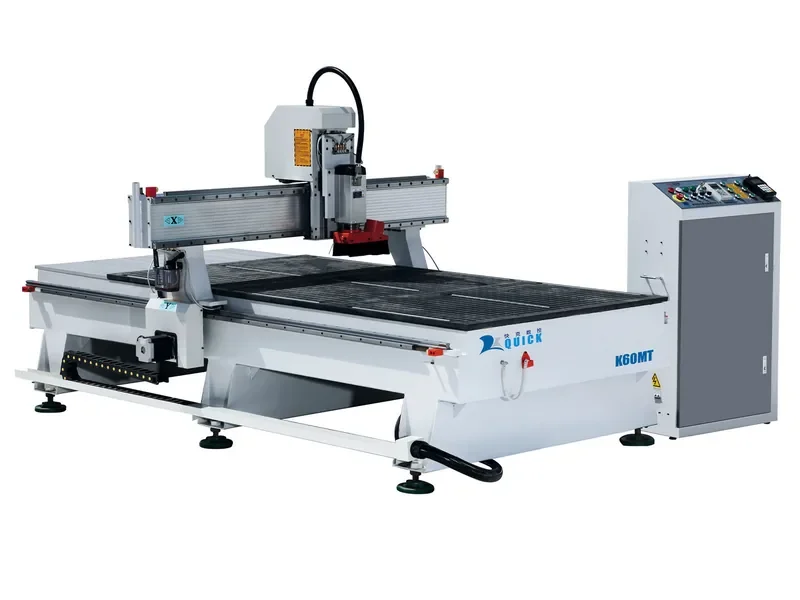
For standard 4×8 sheet cutting, start with a 1325 CNC router, usually about 1300 × 2500 mm working area. For larger sheets, long panels or doors, start with 1530 or 2040. For small signs and acrylic samples, 6090 or 1212 may be enough. For cabinet and wardrobe production, choose the size together with nesting, drilling, loading, unloading and edge banding workflow.
CNC Router Size Guide
CNC router size should be chosen by usable working area, real sheet size, maximum part length, loading space, vacuum hold-down, dust collection and workshop layout. Do not buy by table name alone.
A “1325” CNC router often points to about 1300 x 2500 mm working area. That does not tell you the full machine footprint, loading clearance, vacuum zoning, gantry clearance, Z travel or the space needed for the operator.
Quick CNC manufactures CNC routers and panel-furniture production equipment for overseas B2B buyers. Send the sheet size, maximum part size, process list and workshop space before choosing the size class. The machine should fit the production flow, not just look impressive in a quotation.
Need a fast size check? Send your material, sheet size, maximum part size, thickness, process list and workshop space before asking for a final machine recommendation.
Send your size requirementsQuick CNC Router Size Selection Matrix
Use this table to narrow the size class before quotation. The final choice should be reviewed with your material, drawing, maximum part size, loading direction and workshop layout.
| If you mainly cut… | Start from this size class | Why this direction makes sense | What Quick CNC should check |
|---|---|---|---|
| Small signs, acrylic parts and samples | 6090 / 1212 class | Lower floor demand and easier setup for small workpieces | Material thickness, fixture method, spindle direction and chip control |
| Full 4×8 sheets | 1325 class | Commonly fits sheet work around 1220 x 2440 mm | Actual X/Y travel, vacuum table, loading clearance and trimming allowance |
| Larger signs, long panels and doors | 1530 / 2040 class | Larger working area helps reduce repositioning for long or wide boards | Gantry structure, dust collection, floor space and material handling |
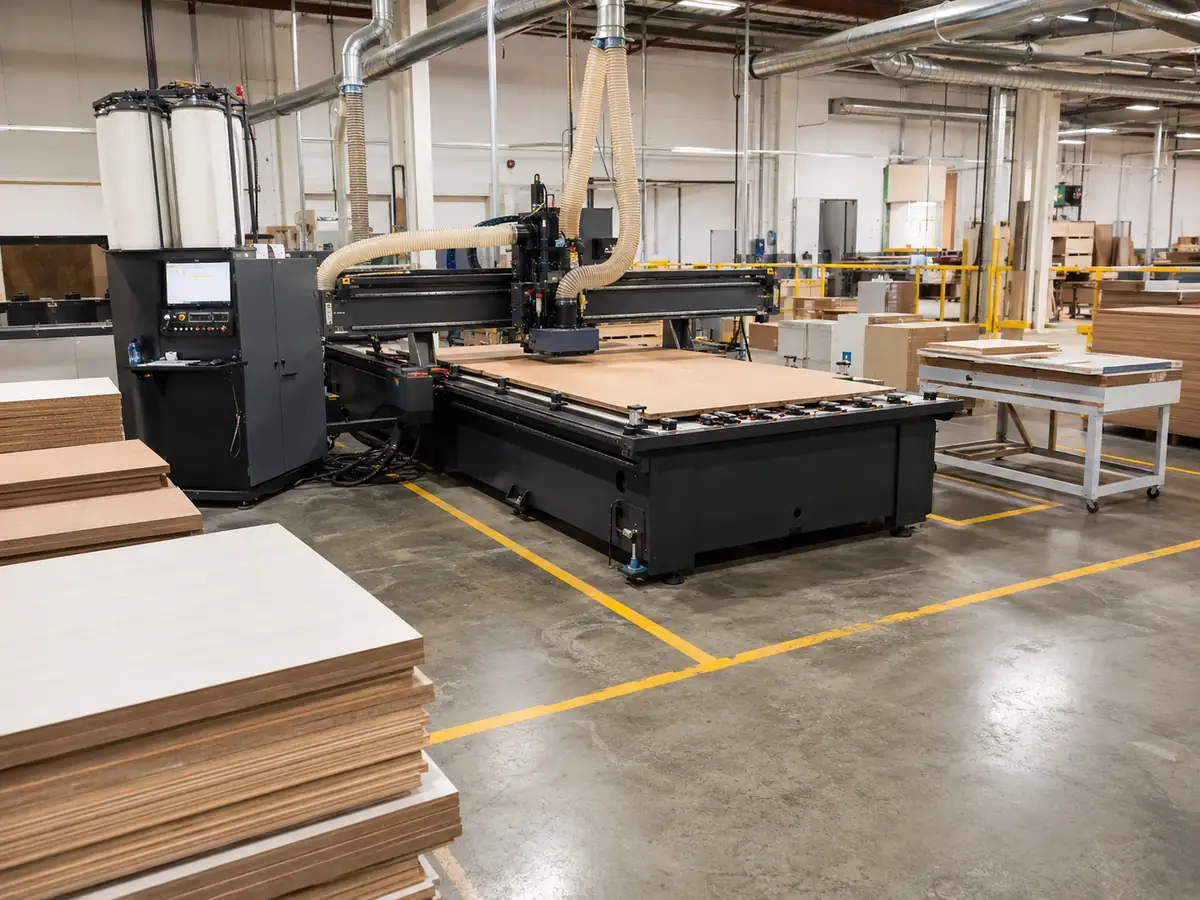
| Cabinet and wardrobe panels | 1325 class or nesting CNC machine | Panel production depends on sheet workflow, nesting and downstream processing | Drill bank, labeling, loading, unloading, edge banding and software flow |
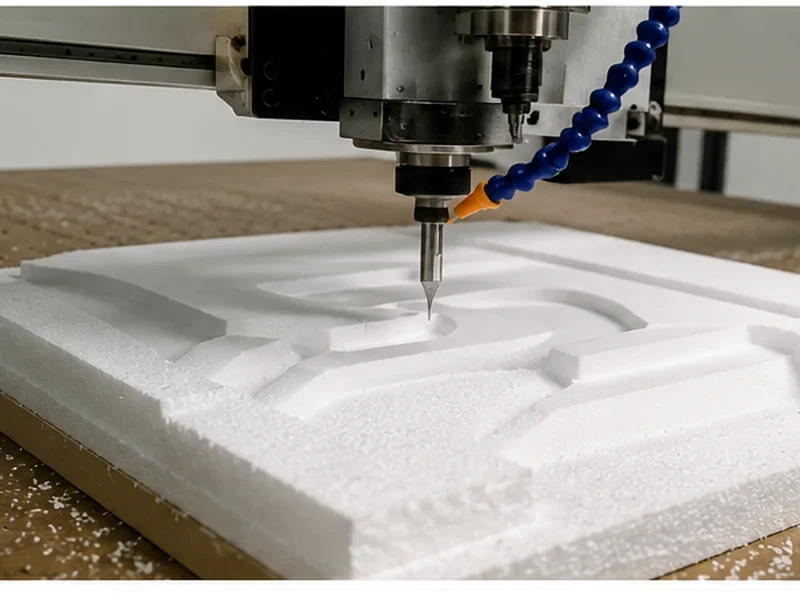
| Thick wood, molds and 3D carving | Custom Z, rotary, 4-axis or 5-axis review | Z clearance, tool reach and fixture height may matter more than table length | Tool length, fixture height, collision risk, part envelope and finishing time |
| Panel furniture production line | Nesting CNC plus drilling and edge banding workflow | The router is only one station in the real production bottleneck | Output target, automation level, factory layout, labor plan and downstream capacity |
Not sure where your work fits? Send Quick CNC your normal sheet size and maximum part size. The first size decision should happen before spindle, controller or accessories.
Ask for a size reviewWhat Does CNC Router Size Actually Mean?
CNC router size usually means the machine working area. That is the usable X and Y cutting range on the table.
It is not the same as the full machine size. The full footprint includes the frame, gantry movement, electrical cabinet, vacuum pump, dust collection pipe, loading space and service access.
Use working area for part planning
Use it to check sheet size, part size, nesting layout, clamping position and trimming allowance.
Use footprint for factory planning
Use it to check floor space, loading path, operator movement, forklift access and maintenance clearance.
If you only check the cutting area, the machine may fit the part but fail the workshop. That is where many bad purchases start.
Key CNC Router Size Terms Buyers Should Know
These terms should be clear before you compare quotations. Different suppliers may use similar model names while quoting different usable dimensions.
| Term | Short definition | Why it matters |
|---|---|---|
| Working area | The usable X/Y cutting range of the CNC router. | It decides whether your sheet, part or nested layout fits. |
| Table size | The physical table surface. | It may be larger than the usable cutting range. |
| Z travel | The vertical axis movement range. | It is not the same as usable cutting thickness. |
| Gantry clearance | The space under the gantry or spindle area. | Fixtures, tools and dust shoe reduce real usable clearance. |
| Machine footprint | The floor space occupied by the machine and attached systems. | It affects workshop layout, service access and installation planning. |
| Installation space | The real space needed for loading, unloading, operator movement and maintenance. | This is where many buyers underestimate the project. |
What Are Common CNC Router Sizes?
The table below uses common industry shorthand. Treat it as a size-language guide. For purchasing, use the quoted drawing to check the real working area, full footprint, gantry clearance and loading direction.
| Common shorthand | Typical working area meaning | Common buyer use | What to check before buying |
|---|---|---|---|
| 6090 | About 600 x 900 mm | Samples, small signs, small molds, training work | Industrial need or only light sample work |
| 1212 | About 1200 x 1200 mm | Square panels, small batch parts, compact workshops | Whether sheet cutting is too limited |
| 1325 | About 1300 x 2500 mm | 4×8 sheet work, cabinet parts, signs, MDF, plywood | Actual sheet size, vacuum table, loading space |
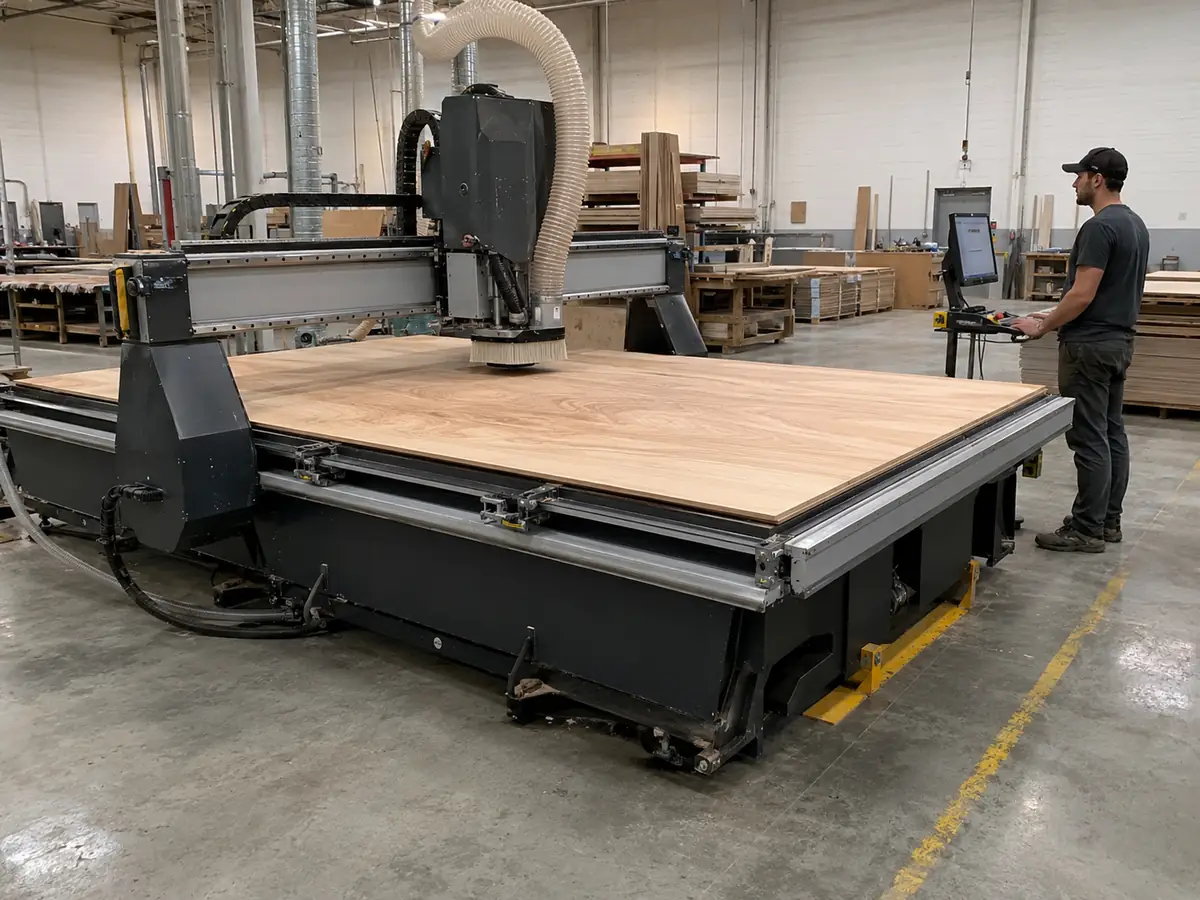
| 1530 | About 1500 x 3000 mm | Larger sheets, doors, long panels, signage boards | Floor space, gantry span, dust collection |
| 2030 | About 2000 x 3000 mm | Wide boards, furniture panels, larger templates | Hold-down strength across wide material |
| 2040 | About 2000 x 4000 mm | Long doors, long panels, special production parts | Loading path, frame structure, workshop clearance |
| Custom size | Confirmed by drawing | Production lines, special panels, large-format work | Transport, installation, power, vacuum and layout |
Selection note: Size names are shorthand. They do not prove exact working area, finished-part accuracy, output, controller, spindle power or installation space.
Is A 1325 CNC Router The Same As A 4×8 CNC Router?
A 1325 CNC router usually refers to about 1300 x 2500 mm working area. It is commonly used for 4×8 sheet processing because a 4×8 ft sheet is about 1220 x 2440 mm.
But the model code is not the final purchase specification. Before ordering, check the actual X/Y/Z travel, table size, gantry clearance, vacuum zones, loading direction, tool path allowance and total footprint.
Shop-floor Case: a 1325 machine fit the sheet but not the loading flow
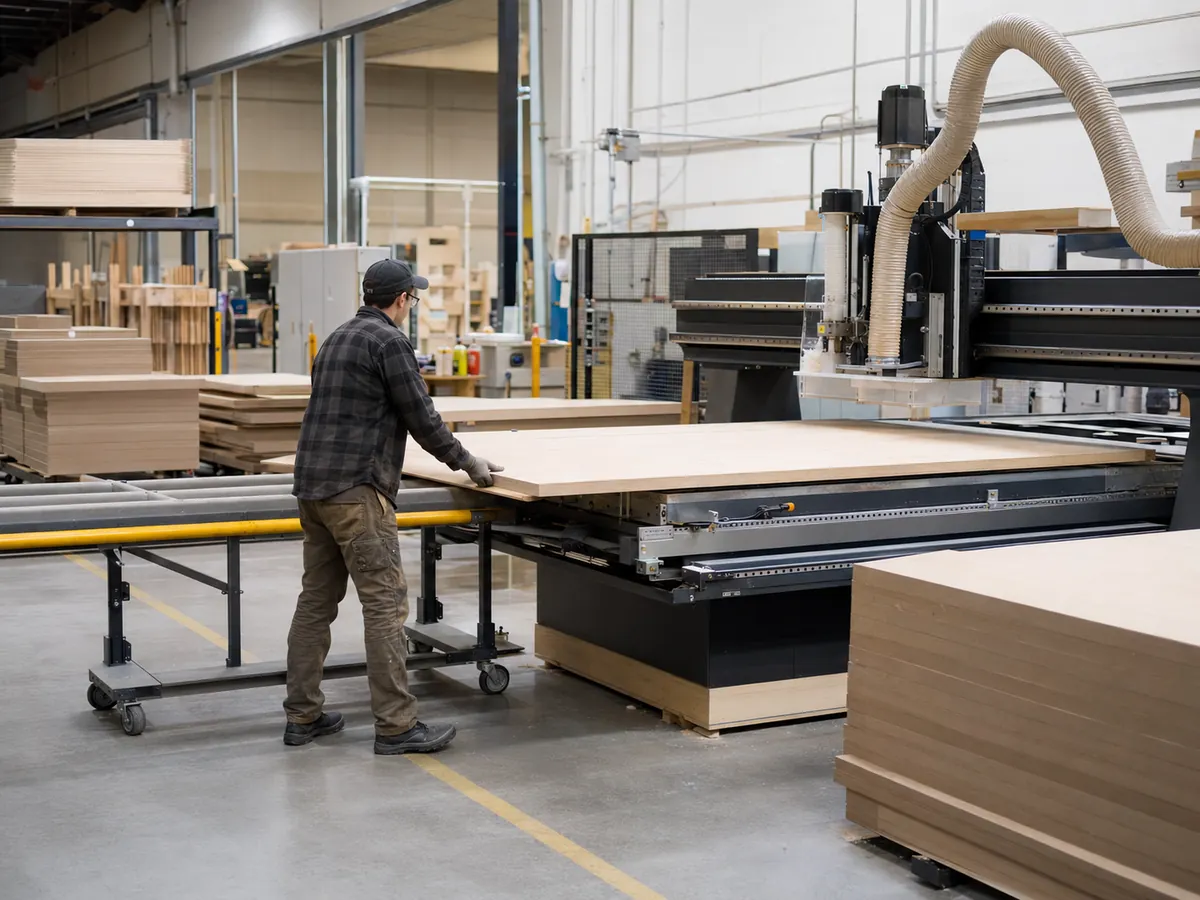
A small cabinet workshop selected a 1325-class router because the working area could process 4×8 sheets. The machine drawing looked acceptable, and the buyer checked the cutting area against the MDF sheet size.
After installation, the machine could cut the sheet, but loading became slow. The operator had to rotate panels in a narrow aisle, the vacuum pump and dust pipe blocked one side, and finished panels stacked too close to the control cabinet. The problem was not the 1325 working area. The real issue was that the workshop layout was checked after the purchase, not before it.
The correction was to redraw the loading and unloading path, move the vacuum pump and dust connection, reserve service-side clearance, and check the total footprint before confirming the next machine. For a new project, Quick CNC should review the sheet size together with the floor plan, not just the model name.
For full-sheet cabinet and furniture panel work, also check whether the router needs a drill bank, labeling, nesting software, loading table, unloading table or downstream edge banding connection. The furniture CNC machine category is the better path when machine size connects to production-line planning.
1325 Vs 1530 CNC Router: Which Size Should You Choose?
The 1325 class is often enough for common 4×8 sheet work. The 1530 class gives more space for larger sheets, longer panels and wider signage work. The better choice depends on your repeated material size, not one rare oversized job.
| Compare | 1325 class | 1530 class |
|---|---|---|
| Typical working area meaning | About 1300 x 2500 mm | About 1500 x 3000 mm |
| Good fit | 4×8 sheets, cabinet parts, signs, MDF and plywood | Larger sheets, long panels, doors and wider sign boards |
| Floor demand | Lower | Higher |
| Material handling | Easier for many small and medium workshops | Needs more loading space and better layout planning |
| Main risk | May be too tight for larger boards or special panels | Easy to underuse if most jobs are small |
| Best buying rule | Choose when 4×8-class work is your regular production | Choose when larger material is frequent enough to justify the space |
Choosing between 1325 and 1530? Send your largest weekly sheet size and workshop floor plan. That decides more than the model name.
Check 1325 vs 1530 fitWhich CNC Router Size Fits Your Application?
| Application | Size direction | Reason | Extra check |
|---|---|---|---|
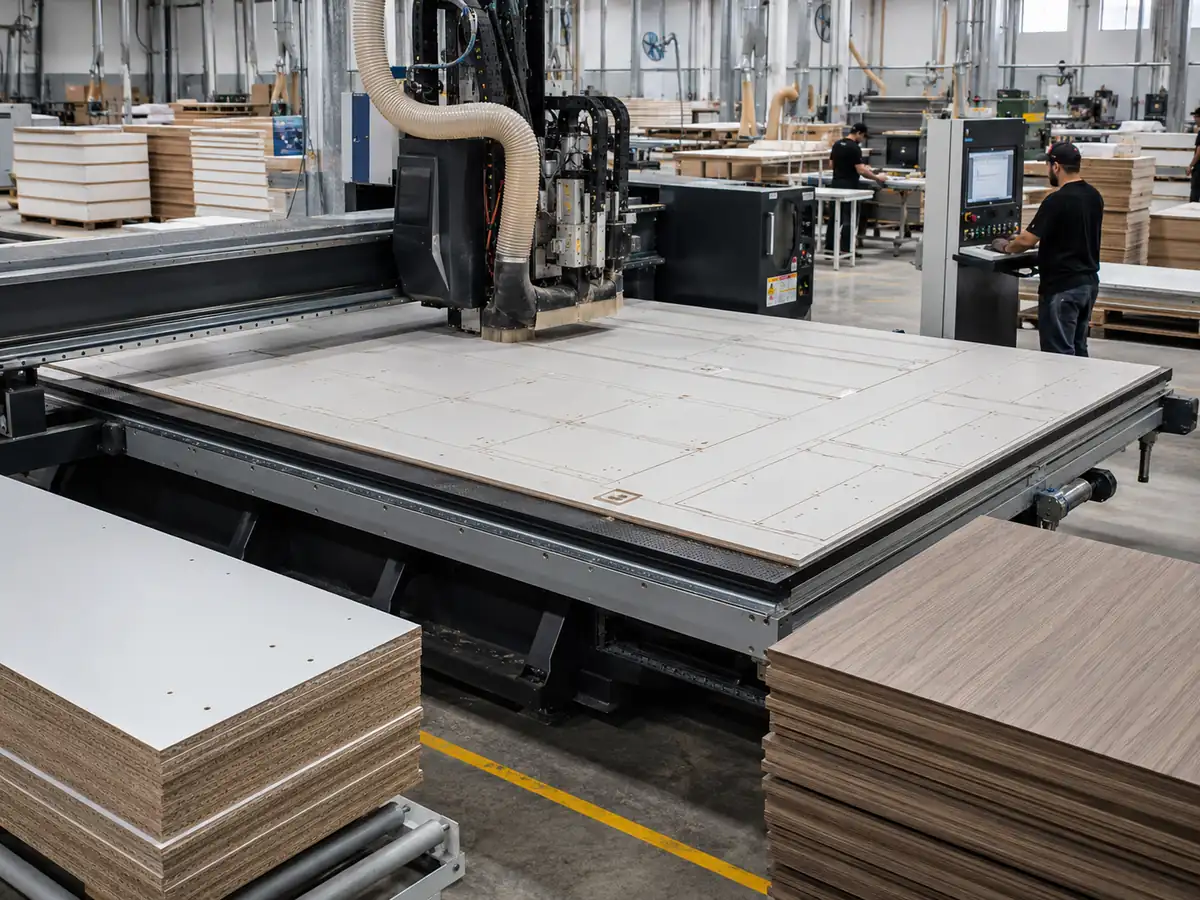
| Cabinet and wardrobe panels | Usually full-sheet size | Needs stable nesting, drilling and repeatable sheet workflow | Vacuum table, drill bank, loading method |
| Woodworking signs and acrylic signs | Depends on board size | Some shops need 1325, others need longer signage boards | Material thickness, bit choice, dust or chip control |
| Doors and long panels | Often longer than standard sheet size | Door height and panel length can drive machine size | True part length, fixture plan, Z clearance |
| Stair parts, columns and rotary work | Size plus rotary clearance | The rotary axis changes usable space and workpiece envelope | Rotary diameter, length, tailstock, tool reach |
| 3D molds and complex wood shapes | Part envelope first | Depth, Z travel and tool length can matter more than table area | Axis type, fixture height, collision risk |
| Mixed production shop | Largest repeat job first | Rare oversized work should not control every purchase | Monthly job mix and real production volume |
If axis count is part of the decision, read the 3 axis, 4 axis and 5 axis CNC router guide before locking the size. A larger table does not replace the correct axis configuration.
For wood-focused buyers, the CNC router for woodworking guide gives a wider view of machine type, material fit and buying logic.
Working Area Vs Total Machine Footprint
Working area is the cutting envelope. Footprint is the space the machine and its support systems occupy.
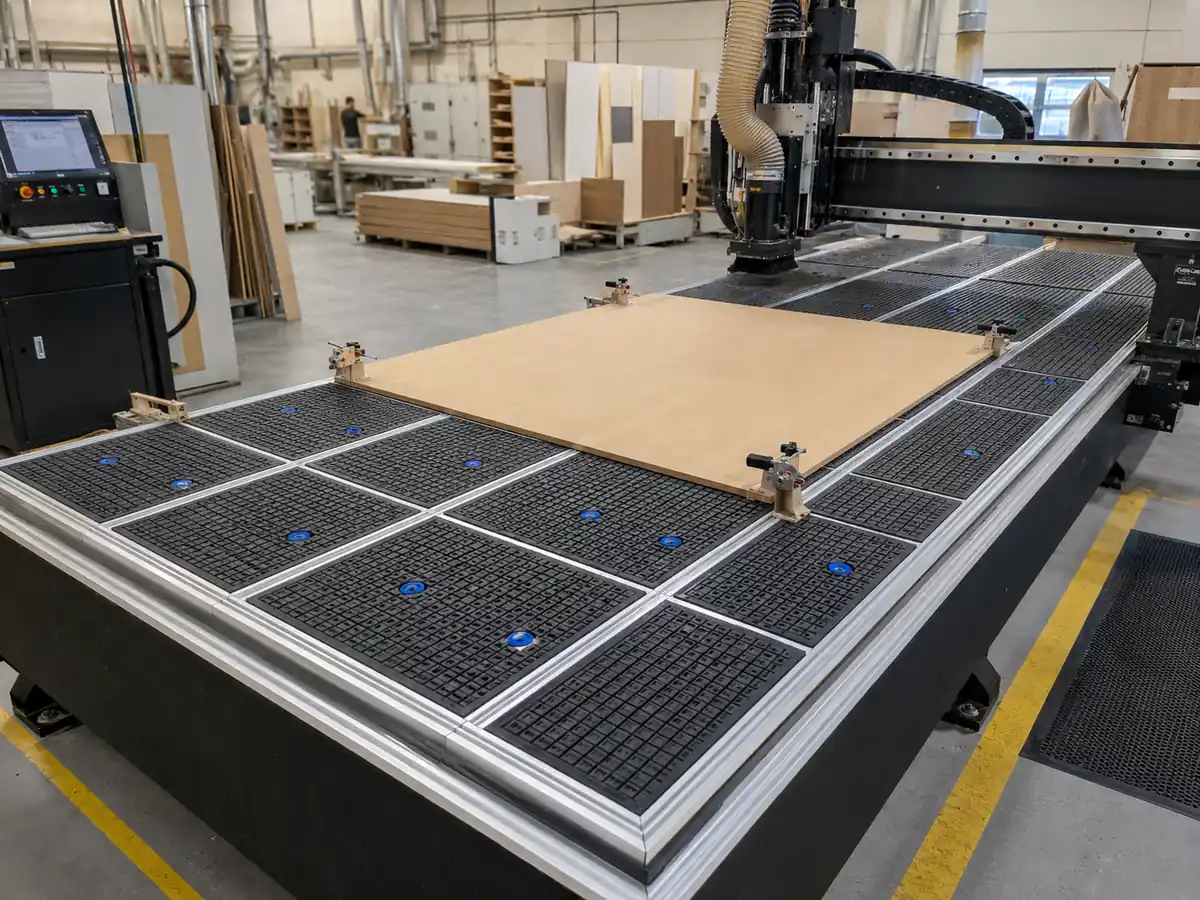
A serious floor plan should include the router, vacuum pump, dust collector connection, control cabinet, tool storage, sheet loading route, unloading area and maintenance access.
Ask for the machine drawing
Do not rely on a product name. Ask for total length, total width, table height, Z clearance and service-side clearance.
Draw the loading path
Mark the route for panels, carts, forklift movement or manual loading. The bottleneck often sits beside the machine, not inside it.
For factories planning more than one machine, the Quick CNC applications page can help connect machine size with product type and production workflow.
Z Travel Is Not Usable Cutting Thickness
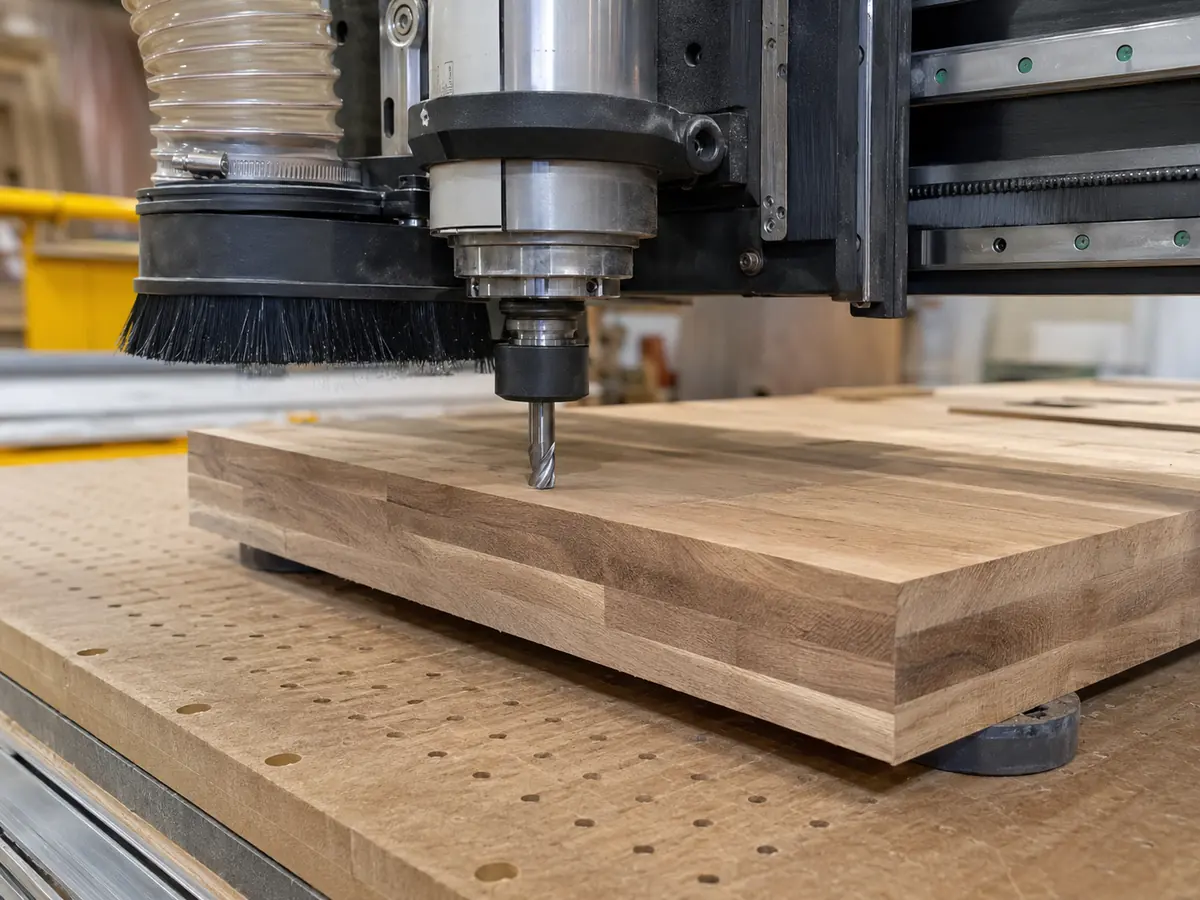
A buyer may say the material is 80 mm thick, so the machine only needs 80 mm Z travel. That is not how CNC router clearance works. Spoilboard thickness, fixture height, tool length, dust shoe space and safe clearance all reduce usable cutting space.
Engineering Case: thick parts were checked by material thickness only
A door workshop planned to machine thicker wood parts and selected the Z direction by looking only at the material thickness. The material itself was within the rough vertical range, so the buyer expected the router to handle the job without changing the setup.
During trial planning, the real stack height became much higher than the material number. The spoilboard, fixture, tool length, dust shoe and safe clearance all used space. The issue was not the table size. The real problem was confusing Z travel with usable cutting thickness.
The correction was to calculate material thickness plus spoilboard, fixture height, tool reach and safe clearance before confirming the machine. For thick doors, molds, stair parts, rotary work and 3D carving, Quick CNC should review the full part envelope, not only the board thickness.
Higher Z is not automatically better either. The machine structure still needs to support the cutting load and keep the process stable. A large table does not solve a clearance problem.
Practical rule: Check material thickness plus fixture height plus tool reach before choosing table size.
ATC, Nesting And Production Flow Can Change The Size Decision
A standard CNC router may cut the shape. An ATC CNC router helps when jobs need repeated tool changes. A nesting CNC machine helps when sheet optimization, labeling, loading and unloading become part of the daily workflow.
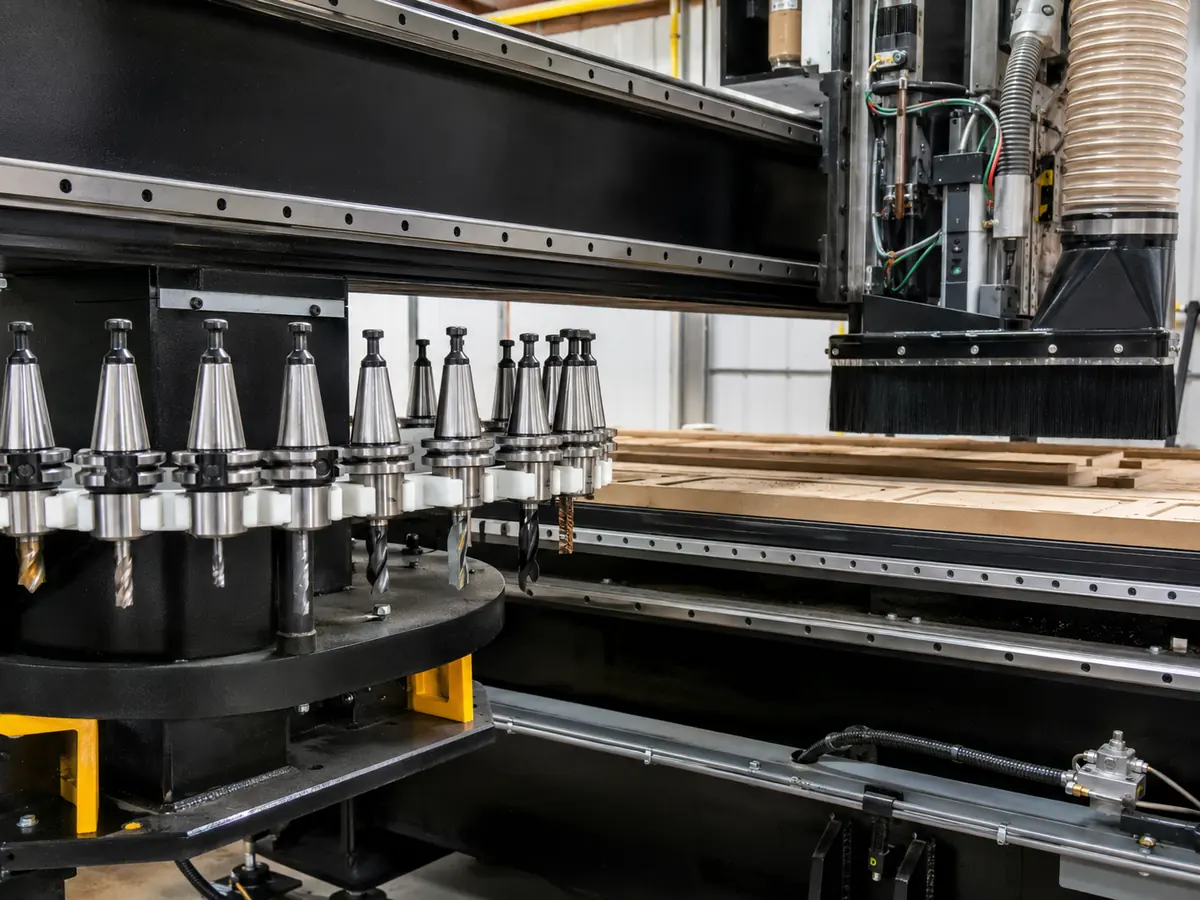
Do not choose the working area without checking the wider process. In panel furniture production, drilling, edge banding, sorting and loading can become the bottleneck even when the router table is large enough.
Is A Bigger CNC Router Always Better?
No. Bigger can be useful, but lazy oversizing burns floor space and budget.
A larger machine may need more space, stronger hold-down planning, better dust extraction, longer loading movement and more careful alignment. It may also slow down handling if most jobs are small.
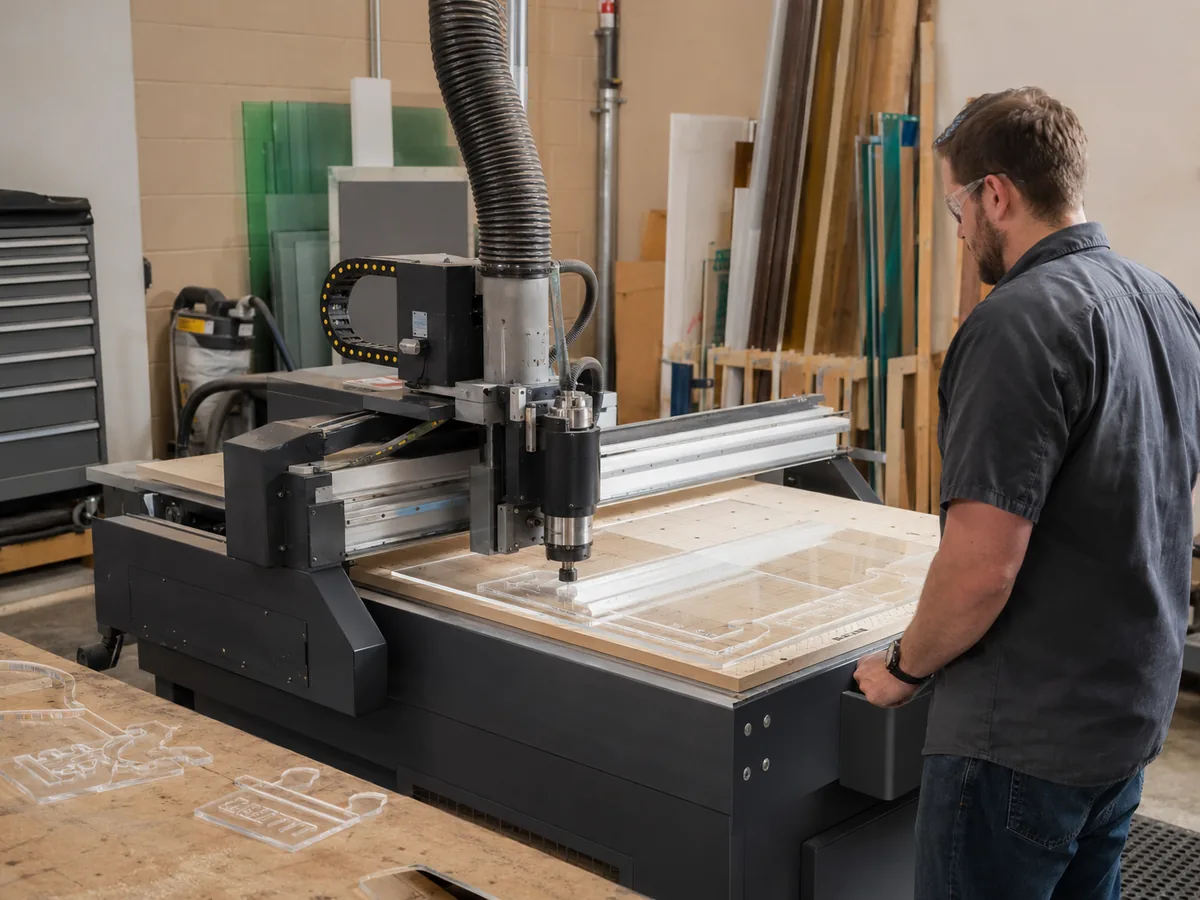
Production Case: a larger table slowed down a small-part shop
A sign workshop chose a larger router because it occasionally received long panel jobs. Most daily work, however, was acrylic letters, MDF signs and small sheet parts that did not need the extra table length.
After installation, the larger machine consumed more floor space, made material handling slower and pushed the dust collector and storage racks into awkward positions. The rare long jobs fit better, but the daily jobs became less convenient. The problem was not that the machine was too large in theory. The real issue was sizing the purchase around unusual work instead of repeated production.
The correction was to review the monthly job mix, keep the standard size for regular production, and only choose a larger or custom table when oversized work is frequent enough to pay for the space, handling and workflow changes.
Undersizing hurts differently. It creates extra setups, split cuts, manual trimming, weak nesting efficiency and awkward fixturing.
| Choice | What goes wrong | Better decision rule |
|---|---|---|
| Too small | More repositioning, split jobs, weak sheet utilization | Size for the largest regular job, not the smallest cheap option |
| Too large | Wasted floor space, harder loading, higher system cost | Size for repeat production, not one rare oversized order |
| Right size | Fits material, process, operator flow and workshop layout | Confirm drawings, workflow and RFQ details before purchase |
Common CNC Router Size Buying Mistakes
Most bad size decisions are not caused by one wrong number. They come from ignoring how the machine will actually be used every shift.
| Mistake | Why it hurts | Better action |
|---|---|---|
| Buying by model code only | 1325 does not prove actual travel, clearance or footprint | Ask for X/Y/Z travel, table size, gantry clearance and full layout drawing |
| Ignoring loading space | The machine fits the floor, but panels cannot move smoothly | Draw the loading and unloading path before ordering |
| Choosing table size before material size | The machine may not fit real sheets or nested parts | Start from weekly material size and largest repeated part |
| Confusing Z travel with cutting thickness | Fixtures, tool length and spoilboard reduce usable height | Calculate the full stack height and tool reach |
| Oversizing for rare jobs | Floor space and budget are wasted | Size for repeat production, not unusual one-off work |
| Ignoring downstream process | Cutting may be fast, but drilling or edge banding becomes the bottleneck | Review the whole production flow before final quotation |
Workshop Planning Notes Before Installation
CNC router size affects more than the cutting area. A good layout should leave space for sheet loading, finished-part unloading, dust collection, vacuum equipment, electrical cabinet access, operator movement and basic guarding.
Plan the machine as a production station. A router that fits the floor drawing can still create trouble if panels cannot move smoothly, the dust pipe blocks service access, or the operator has no clear working space. Review the layout before the machine ships, not after it arrives.
What Should You Send Before Asking For A CNC Router Size Recommendation?
A useful inquiry is specific. “I need a CNC router” is not enough for a serious size recommendation. Send the production details that decide the working area, Z clearance, table setup and workflow.
- Main material, such as MDF, plywood, acrylic, solid wood, foam or plastic.
- Common sheet size and maximum sheet size.
- Maximum part length, width and thickness.
- Main process: cutting, engraving, drilling, grooving, pocketing or 3D routing.
- Daily or shift output target.
- Typical tool count per job.
- Need for ATC, drill bank, rotary axis or nesting workflow.
- Workshop floor space and loading method.
- Local voltage, frequency, compressed air and dust collection conditions.
- Destination country and expected installation situation.
Quick CNC manufactures CNC routers and panel-furniture production equipment for overseas B2B buyers. The company was founded in 2006 in Jinan, China, and its published facts include more than 20 years of industry experience, export to more than 100 countries, more than 10,000 customers served and more than 25,500 machines in use.
For supplier background, see About Quick CNC. For application planning, see Quick CNC applications.
Production note: Final quotation should confirm working area, footprint, Z clearance, table setup, spindle direction, controller, dust or chip control, voltage and installation needs.
Last updated: July 2026.
Frequently Asked Questions
What CNC router size do I need for 4×8 sheets?
For full 4×8 sheet processing, buyers usually start around a 1300 x 2500 mm working area. Also check trimming allowance, vacuum zones, loading direction and total machine footprint.
Is a 1325 CNC router the same as a 4×8 CNC router?
A 1325 CNC router usually points to about 1300 x 2500 mm working area, which is commonly used for 4×8 sheet processing. Still, check actual X/Y/Z travel, table size, gantry clearance, vacuum zones and footprint.
Should I choose a 1325 or 1530 CNC router?
Choose a 1325 class machine when 4×8-class sheet work is your regular production. Choose a 1530 class machine when larger sheets, longer panels or wider boards are frequent enough to justify the extra floor space and handling demand.
Is working area the same as machine size?
No. Working area is the usable cutting area. Machine size or footprint includes the frame, gantry travel, electrical cabinet, vacuum pump, dust collection interface, loading space and service access.
Does Z travel equal cutting thickness?
No. Spoilboard thickness, fixture height, tool length, dust shoe space and safe clearance reduce usable cutting height. Thick parts need a clearance review before final quotation.
Should I buy a larger CNC router than my largest sheet?
Buy enough working area for the largest repeated job plus clamping, trimming and nesting needs. Oversizing can waste floor space and slow handling when the shop mainly cuts smaller parts.
Do bigger CNC routers cut more accurately?
Not automatically. Finished-part accuracy depends on machine structure, drive system, tooling, hold-down, material movement, calibration, program settings and inspection method. Size alone does not prove accuracy.
What information should I send before asking for a CNC router size recommendation?
Send your material, common and maximum sheet size, part thickness, required processes, daily output target, tool count, automation need, workshop floor plan, voltage, air supply and dust collection conditions.
Send Your Sheet Size Before Buying The Machine
Tell Quick CNC your material, maximum part size, common sheet size, workshop space, process list and daily output target. The machine size should fit the work, not just look impressive in a quotation.
Send your size requirements
Frannie
Hello, I’m Frannie, a CNC machinery specialist with 15 years of experience in the woodworking CNC industry. I help furniture factories, cabinet makers, woodworking workshops, and production businesses choose CNC machines that match their production needs, factory size, budget, and efficiency goals.
My work focuses on solving real production problems, including replacing outdated equipment, improving machining efficiency, reducing labor costs, and upgrading to smarter CNC solutions. I also support customers with machine installation guidance, operation training, video support, and on-site training when needed, helping them use their machines more confidently and effectively.