Strong fit
- Cutting, profiling, grooving or engraving is the main process.
- Most programs use one cutter or only limited manual changes.
- Workpieces can be secured by vacuum, clamps, tabs or a fixture.
- Manual loading and unloading are acceptable.
Single-head CNC router
We recommend KK-1325 for cutting, profiling, grooving, engraving and 2.5D routing of suitable wood-based panels and solid-wood components.
We recommend KK-1325 when most jobs use one cutter from start to finish or require only occasional manual tool changes. When one program regularly uses four to eight tools, we will recommend an ATC CNC router instead.
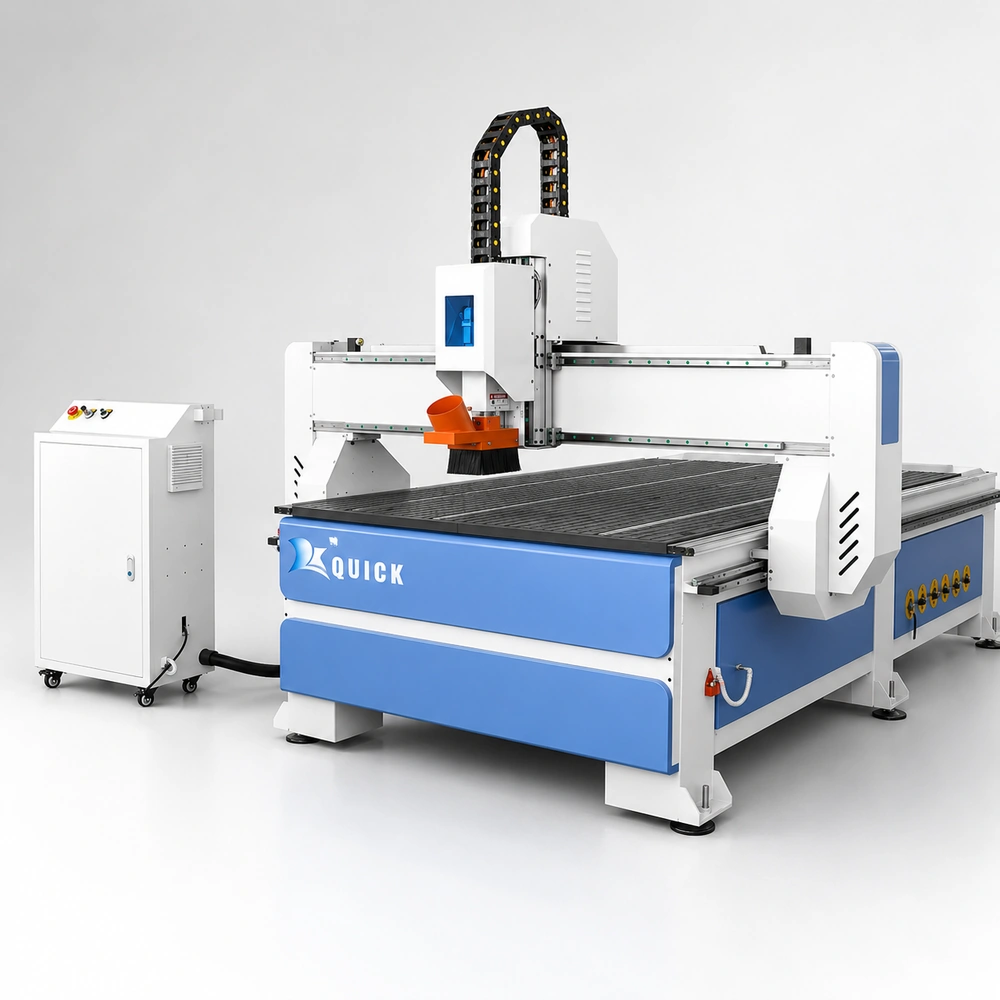
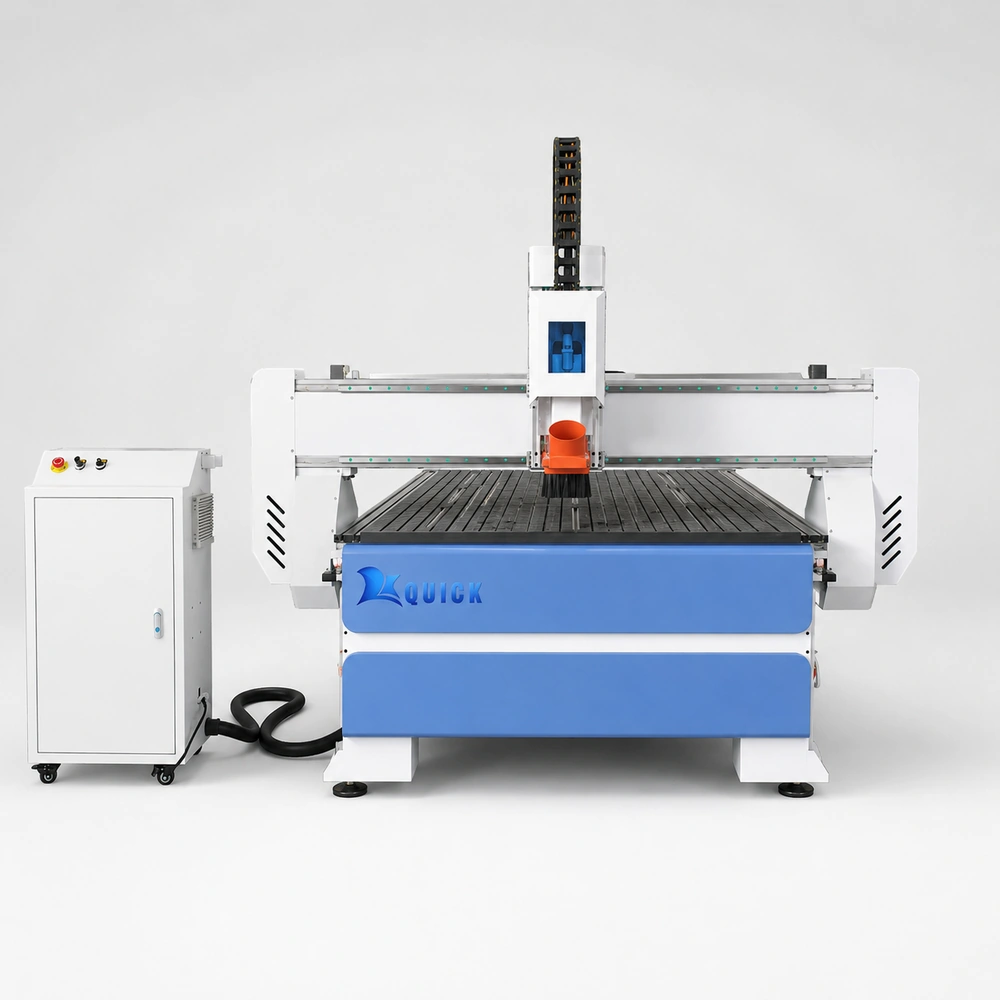
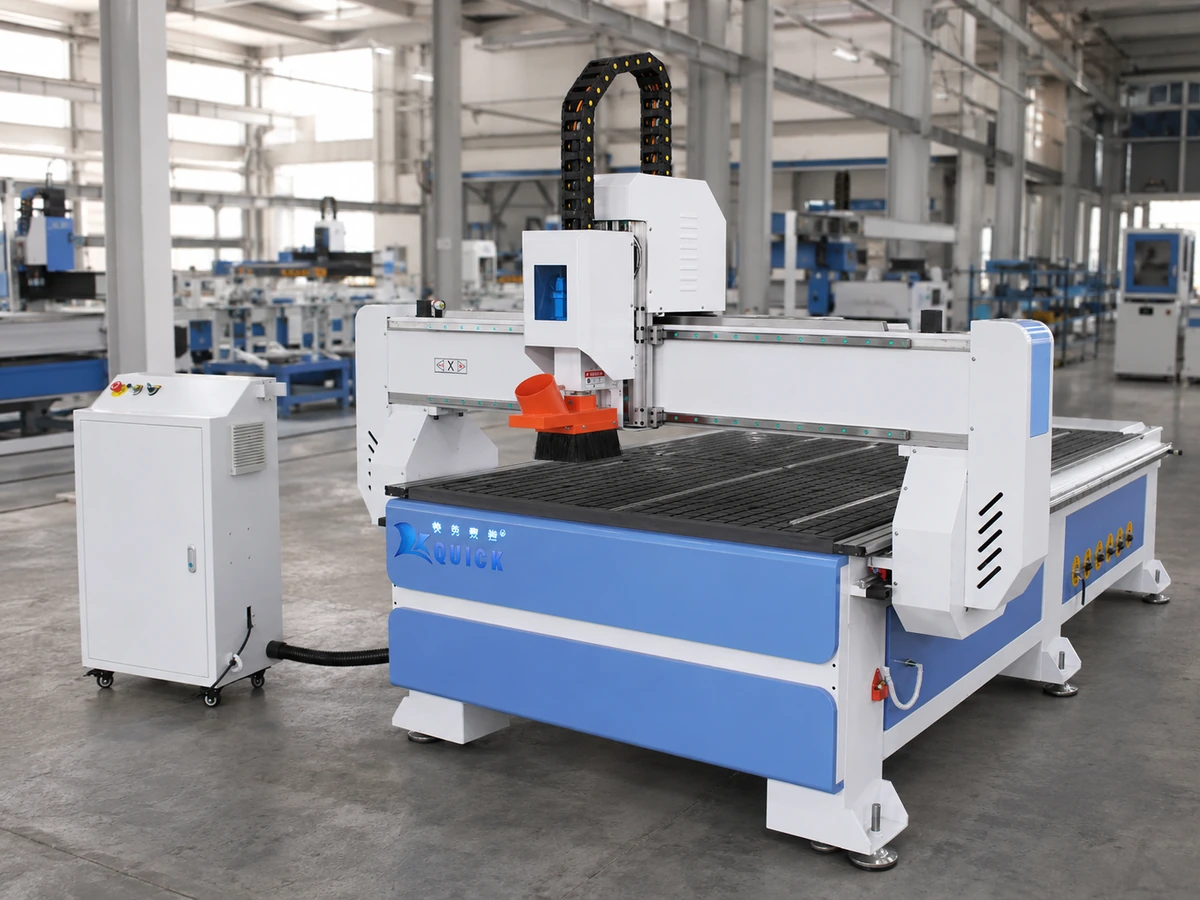
Buyer fit
We recommend KK-1325 for small and medium woodworking factories processing flat sheets or primarily top-access components with manual loading and controlled workholding.
Core applications
We do not sell KK-1325 as a universal woodworking cell. We check your product geometry, tool count and workholding before recommending it.
Flat furniture parts, tabletop profiles, decorative panels, templates, simple joints and repeated wood profiles. Warped solid wood usually needs mechanical fixtures.
Routing and grooving of MDF, plywood, particle board and HDF when manual handling is acceptable and dense connector drilling is not the main process.
Best for stable, limited-tool door programs. Use ATC when every door requires repeated roughing, finishing, grooving, engraving and drilling tools.
Wood-based signs, MDF letters, wall panels, templates and conditional plastic or composite work after tooling and sample review.
A practical replacement for manual templates when geometry repeats and a stable fixture or sheet-holding method can be established.
Requires review of usable clearance, cutter length, fixture height, relief depth, surface expectation and cycle time.
Suitable / not suitable
We only recommend the simpler configuration when your production process does not depend on automation or repeated tool changes.
| Suitable for | Not suitable for | Better direction |
|---|---|---|
| Flat-sheet MDF, plywood, particle board and HDF routing | Four to eight automatic tool changes per workpiece | 3-axis ATC CNC router |
| Repeated profiling, pocketing, grooving and engraving | Dense vertical and horizontal connector-hole production | Drill-bank, PTP or six-side drilling solution |
| Vacuum-held sheets or mechanically fixtured solid wood | Automatic labeling, loading, unloading and continuous nesting | Production-oriented nesting cell |
| Controlled operator-attended production | Undercuts, multi-face work, steel, stainless steel or stone | Multi-axis, metalworking or stone-specific equipment |
Reference configuration
We use the values below as a working reference for a 1325-class single-head router. Our quotation, technical agreement, approved drawings and final BOM will define the machine we supply.
| Item | Reference configuration | Status |
|---|---|---|
| Machine type | 3-axis, single-head CNC router | Target product role |
| Tool-change method | Manual tool change | Engineer confirmation required |
| Working area | 1300 × 2500 mm reference | Reference only |
| Z-axis travel | 200 mm reference | Reference only |
| Actual usable clearance | Approximately 180 mm practical clearance | Reference value; spoilboard, fixture, tool length and safe retract reduce usable height |
| Table | Vacuum and T-slot combined table reference | Final quotation controls |
| Motion | X/Y rack-and-pinion; Z ball-screw reference | Final BOM controls |
| Spindle | 3.5 kW air-cooled spindle reference | Reference only |
| Motors and drivers | Stepper-system reference | Reference only |
| Controller | RichAuto A11 handheld DSP reference | Reference only |
| Tool setting / lubrication | Manual tool-setting sensor and manual centralized oil lubrication | Reference configuration |
| Vacuum pump and zones | 7.5 kW vacuum pump option with six independently controlled table zones | Final pump model and inclusion follow our quotation |
| Electrical configuration | Prepared for the destination factory | Site data required |
| Footprint / weight / packing | Machine approx. 2000 × 3100 × 1700 mm; packing approx. 2280 × 3200 × 1800 mm; gross weight approx. 1000 kg | Legacy KK-1325 reference; final packing list controls |
| Positioning / repeatability | Positioning accuracy ±0.03 mm/300 mm; repeatability ±0.03 mm | Comparable 1325 reference; final machine inspection record controls |
| Certification scope | CE machine documentation; Quick CNC ISO 9001 quality-management system | Final declaration scope follows the supplied configuration and destination |
Configuration and supply scope
We will not give you only a machine price. Our quotation will identify the spindle, table, vacuum system, tools, software scope, packing, shipping and service responsibilities.
| Item | Working classification | What we need from you |
|---|---|---|
| Frame and motion system | Included in final machine configuration | Confirm final BOM |
| Single spindle / DSP / vacuum-T-slot table | Reference configuration | Confirm quotation line by line |
| Vacuum pump, valves, spoilboard, gasket and clamps | Final quotation confirmation | Provide sheet sizes and smallest part |
| Cutting tools | Starter package or buyer supplied | Confirm tools and quantities |
| Dust collector | Optional or buyer supplied | Provide collector and duct information |
| CAD/CAM software | Buyer supplied unless specifically included | Provide software name and version |
| Transformer | Destination-dependent option | Provide measured electrical supply |
| Packing / international shipping | We will state the included scope | Confirm destination and incoterm |
| Online training | Available | Confirm language and schedule |
| On-site service | Paid service where agreed | Confirm scope and responsibility |
Configuration decisions
Most jobs use one cutter or tool changes occur mainly between batches.
Four to eight tools are used in one normal program. Include tool replacement, setting and restart time in the cycle calculation.
Flat sheets with sufficient sealed surface area and a maintained spoilboard.
Small released parts, porous or warped panels, thick solid wood, irregular components and soft aluminum.
Raw material, finished part, fixture area, workpiece thickness and longest cutter.
Model code proves usable capacity. Z travel is not maximum workpiece thickness.
CAD drawing → CAM toolpath → postprocessor → machine program → controller.
A DXF, STEP or other design file runs directly on the machine.
May be possible within the final spindle, tool and process limits.
Dense connector holes, horizontal drilling, cylindrical production or true simultaneous multi-axis motion are required.
Send one representative drawing, material, smallest part, tool sequence and finish expectation. A sample result applies only to the recorded conditions.
Machine structure
We do not judge a machine by transmission type or spindle power alone. We also check installation, alignment, workholding, tooling and maintenance because these determine the practical result.
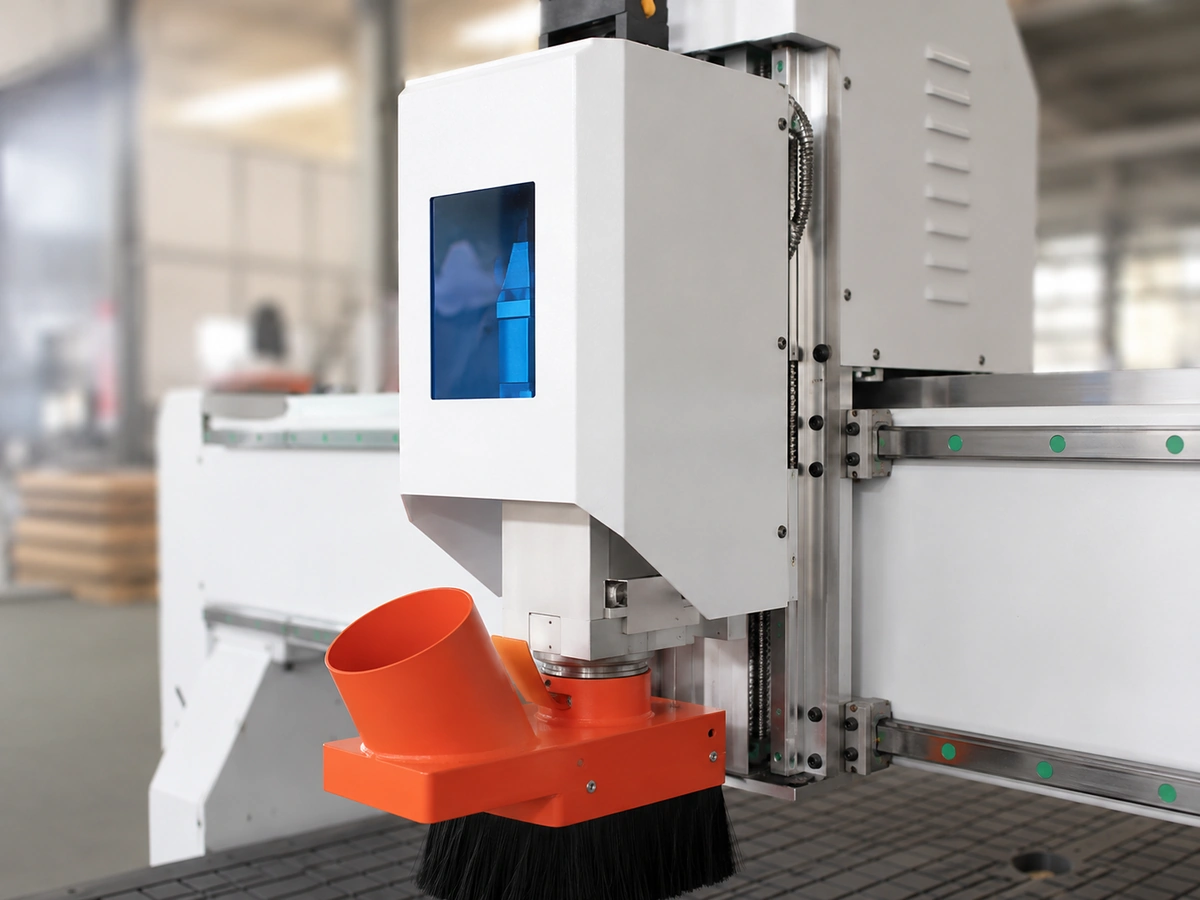
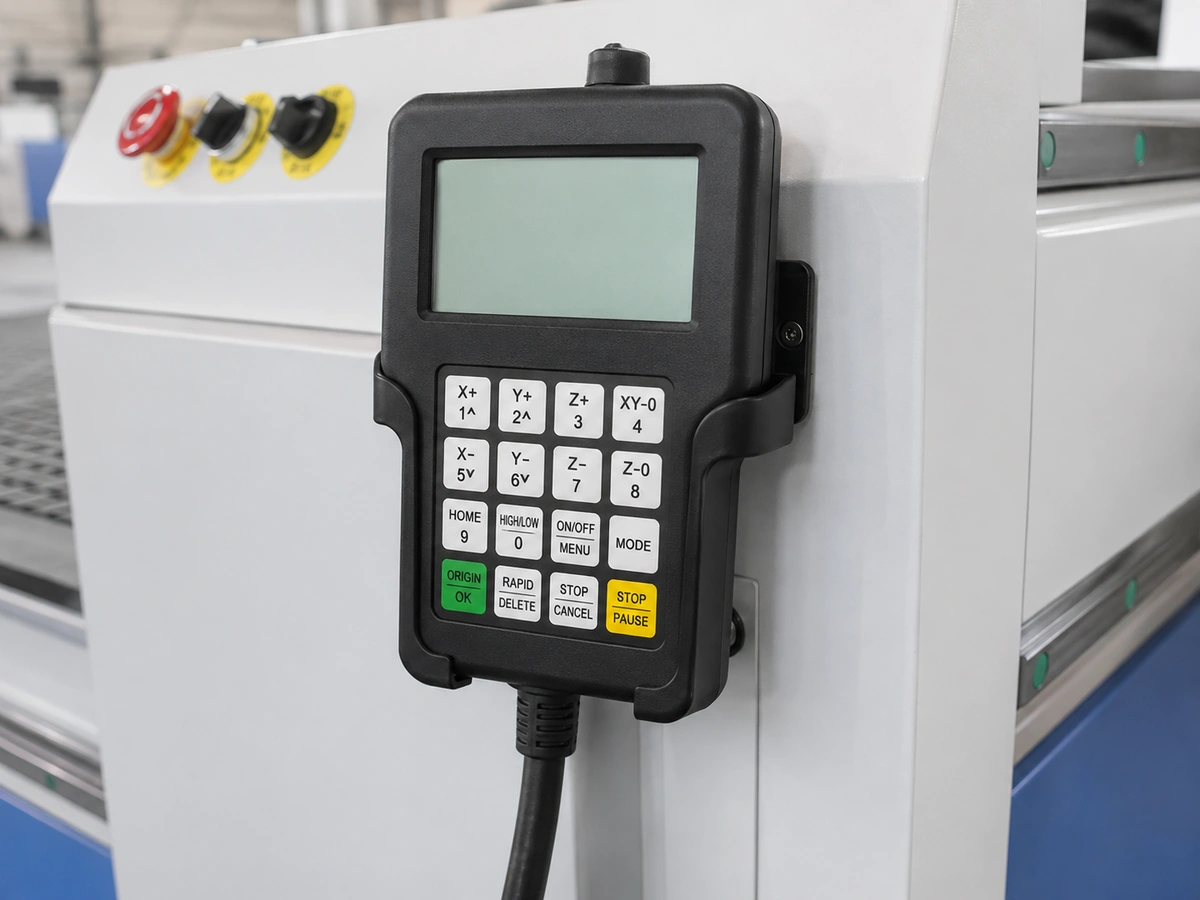
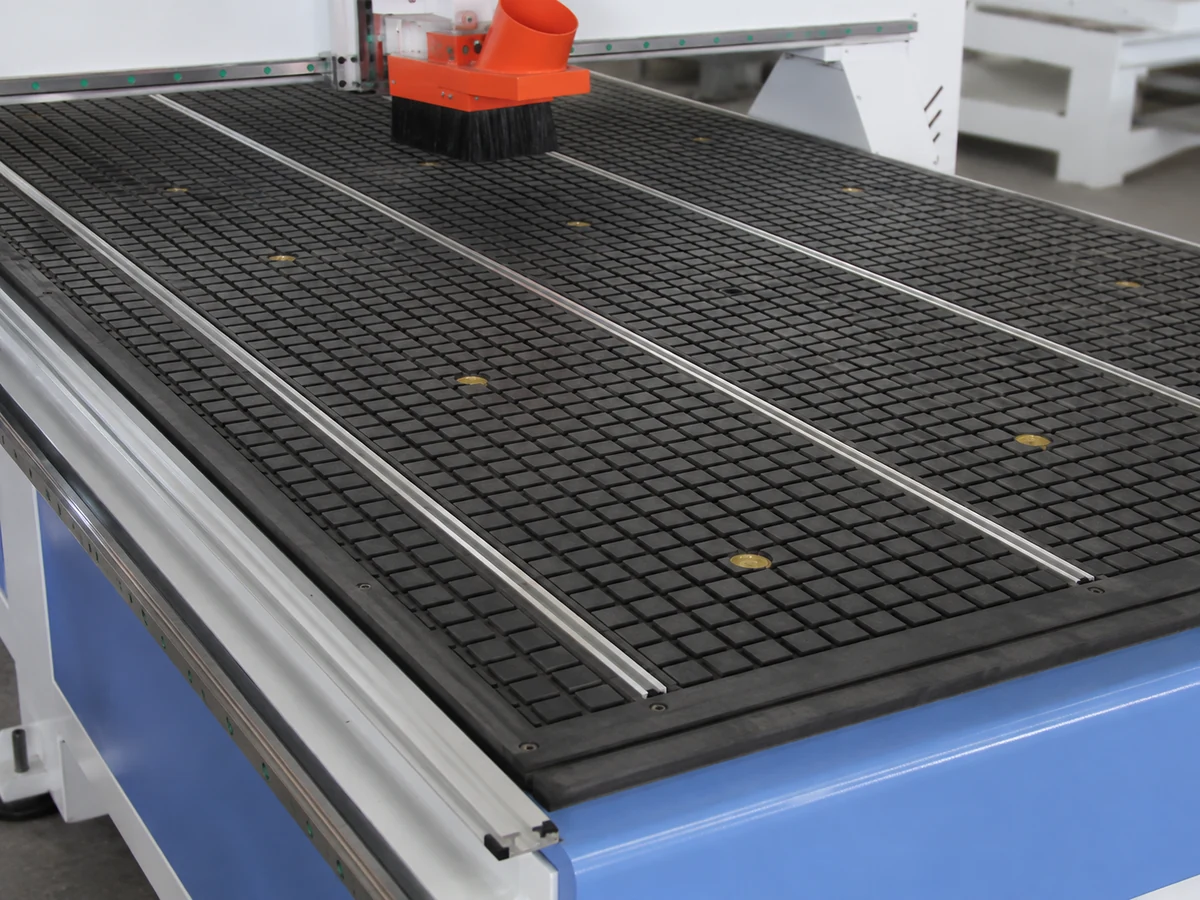
We confirm suitability from the supplied structure, rail installation and completed geometry checks—not from a “heavy-duty” label.
The reference architecture suits full-size travel, but alignment, engagement, tuning and lubrication control the result.
Keep the cooling path, collet, nut and cutter clean. Dust and excessive tool overhang can increase runout and shorten tool life.
Use vacuum for suitable sheets and mechanical fixtures when sealing or part geometry is unreliable.
Production workflow
Confirm material, thickness, dimensions, access and critical features.
Select tools, feed, depth per pass, leads, tabs and onion skin.
Clean the spoilboard, close unused zones and inspect the holding system.
Use vacuum, clamps, stops or a dedicated fixture.
Clean the collet, secure the cutter and confirm tool length and origin.
Confirm direction, clearance, holding and dust or chip removal.
Stop the machine and follow the approved tool-change procedure.
Check critical dimensions and edge condition before continuing the batch.
Machine video
Use this video to review the machine layout and operating context. Final configuration, tooling, workholding and cutting parameters follow your quotation and approved technical agreement.
In our machine-selection work, one production decision can matter more than the spindle headline.
We reviewed a door factory that had checked cutting capability but had not calculated the effect of a six-tool program.
Repeated cutter replacement, setting and restart confirmation added approximately 14 minutes per door.
Tool changing was treated as a minor setup task instead of part of every production cycle.
We recommended moving the six-tool program to an ATC router and keeping the manual machine for stable one-tool work.
Manual handling fell to approximately 2 minutes per door; output changed from 18 to 26 doors per eight hours under that factory’s conditions.
We recommend KK-1325 for stable, limited-tool programs. We recommend ATC when manual changes become the main operating cost.
Material boundaries
We will not promise no chipping, no melting, burr-free cutting or no secondary finishing for every material. When the finish matters, send us your real material for review or testing.
| Material | Suitable work | Required condition | Main risk / test decision |
|---|---|---|---|
| MDF | Cutting, grooves, engraving, simple doors and relief | Sharp tools, controlled vacuum and effective extraction | Fine dust, leakage and small-part movement; test strict edges |
| Plywood | Profiles, pockets, furniture parts and templates | Compression/downcut tooling and stable support | Veneer chipping, voids and delamination; test decorative surfaces |
| Particle board / HDF | Panel routing, grooves and basic cabinet parts | Sharp cutters, zoning and dust extraction | Porosity, laminate damage and tool wear; test small parts |
| Solid wood | Furniture components, profiles, joints and relief | Grain-appropriate tooling and fixtures where needed | Tear-out, warping, resin and batch variation |
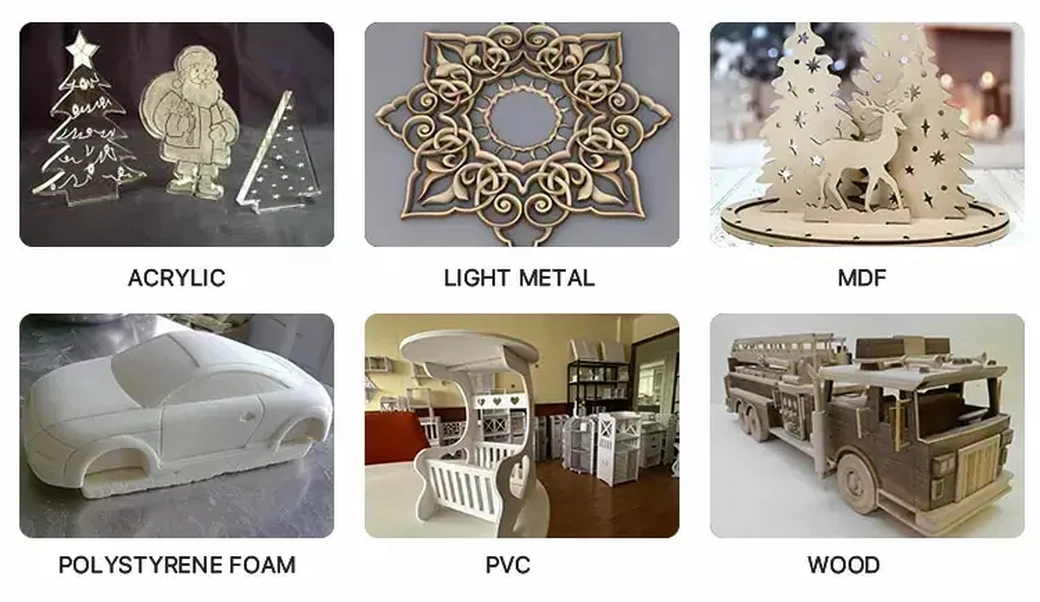
| Acrylic / PVC / foam | Conditional cutting and engraving | Material-specific tool, secure holding and ventilation | Heat, melting, chipping, static debris or fumes; sample test |
| ACP / ACM | Profile cutting and conditional V-grooving | Flat support, composite cutter and groove test | Burrs, scratches, core heating and fold-depth error |
| Soft aluminum | Light routing after engineering review | Mechanical fixture, aluminum tool, chip removal and test | Tool welding, burrs, heat and part release |
| Steel / stainless / stone | Not suitable | Select purpose-built equipment | Structure, spindle and chip/dust systems do not match |
MDF, plywood, particle board and solid wood generate fine dust during routing. Connect effective local extraction and keep dust away from the spindle cooling path, guides, sensors and electrical cabinet.
Isolate electrical, spindle, vacuum and other stored-energy sources before maintenance, blockage clearing or service work. Normal tool changes must follow the approved operating procedure. Please confirm guarding, dust extraction, electrical installation and site procedures against your destination-country requirements.
Installation and utilities
We will confirm the machine footprint, electrical supply, extraction, workholding and unloading requirements before we release the machine for production.
Provide measured voltage, phase, frequency, capacity and grounding from the actual installation point.
Match duct diameter, route, filter condition, static pressure and connected machines—not motor power alone.
Match the pump to the table, zones, material leakage, sheet sizes and smallest important part.
Confirm loading area, cabinet access, entrance, corridor, turning space and utility positions.
Use confirmed weight, approved lifting points, qualified personnel and equipment with sufficient rated capacity.
Confirm CAM, postprocessor and controller workflow. Include a tested sample program and parameter backup.
Maintenance and downtime
We prepare the spare-parts recommendation from the supplied BOM. Do not order generic electronics or spindle components without matching the exact models and parameters.
Clean accessible surfaces after isolation; inspect tools, collets, dust hood, hoses, vacuum zones and external cabinet-filter condition; record alarms and back up programs.
Replace approved sensors, hoses, filters, fans, relays or service parts according to the manual and after isolation; restore approved backups under guidance.
Gantry squareness, positioning calibration, drive tuning, spindle repair, live electrical testing, safety-circuit changes and internal pump overhaul.
Factory testing and QC
We assemble, inspect and test every Quick CNC machine before shipment. When you need a numeric geometry, positioning, repeatability, runout or running-duration result, we will refer to the corresponding machine record.
Delivery, warranty and support
Our final quotation and signed agreement will define the machine configuration, schedule, replacement responsibilities, shipping and service scope.
Approximately 45 days after deposit and confirmation of configuration, voltage, options and required technical information. Shipping, customs, inland delivery, unloading and buyer-caused approval delays are separate.
Our standard one-year warranty begins when you receive the machine. We first diagnose the issue remotely and confirm whether it resulted from a manufacturing or component defect under normal use. Wearing parts and human-caused damage are excluded.
We provide manuals, operation videos, remote guidance, online training, maintenance guidance, troubleshooting and spare-parts identification. We can also arrange paid on-site service according to the final agreement.
Service scopeRFQ checklist
After the first review, we may ask for entrance, dust-system, pump, postprocessor, certificate and unloading details to complete the quotation.
Buyer questions
Yes. We recommend KK-1325 for this production pattern because tool changes can occur between batches instead of interrupting every workpiece.
We recommend ATC when one normal program regularly uses four to eight tools or when manual tool setting interrupts every part. Typical examples include multi-profile doors and furniture parts requiring roughing, finishing, drilling, grooving and engraving in one program.
Not automatically. We will review the sealed area, material porosity, spoilboard condition, active zones, cutting sequence and tool force. For small parts, we may recommend tabs, onion skin, dedicated zones or fixtures.
Yes, for suitable flat or securely fixtured components. We will review grain direction, warping, resin, tear-out and batch variation. For some solid-wood parts, we will recommend mechanical fixtures instead of vacuum alone.
Yes. We can arrange a representative sample test after we review your material, drawing, finish expectation and required configuration. The result applies only to the recorded material, cutter, parameters, workholding and inspection conditions.
We recommend a drill bank or dedicated drilling solution when dense vertical holes, horizontal connector holes or hardware drilling dominate the cycle. A routing spindle and an ATC tool magazine do not perform the same function as a drill bank.
Send us the original drawing, a PDF showing critical dimensions and the name and version of your CAD/CAM software. We will confirm the postprocessor and controller workflow before production use.
Send us the destination country and city, measured site voltage, entrance dimensions, unloading conditions and required certificate or customs documents. After we release the final machine configuration, we will confirm the machine weight, packing dimensions, lifting points and document scope.
Detailed quotation
Our engineers will check manual tool change, workholding, spindle, controller, table, alternative machine options, test requirements and destination-factory utilities.
Tell us your material, working size and production needs. Our engineers will recommend a suitable CNC machine for your business.