Industrial ATC CNC Router for Furniture Production
K1325 ATC CNC Router for Woodworking Production
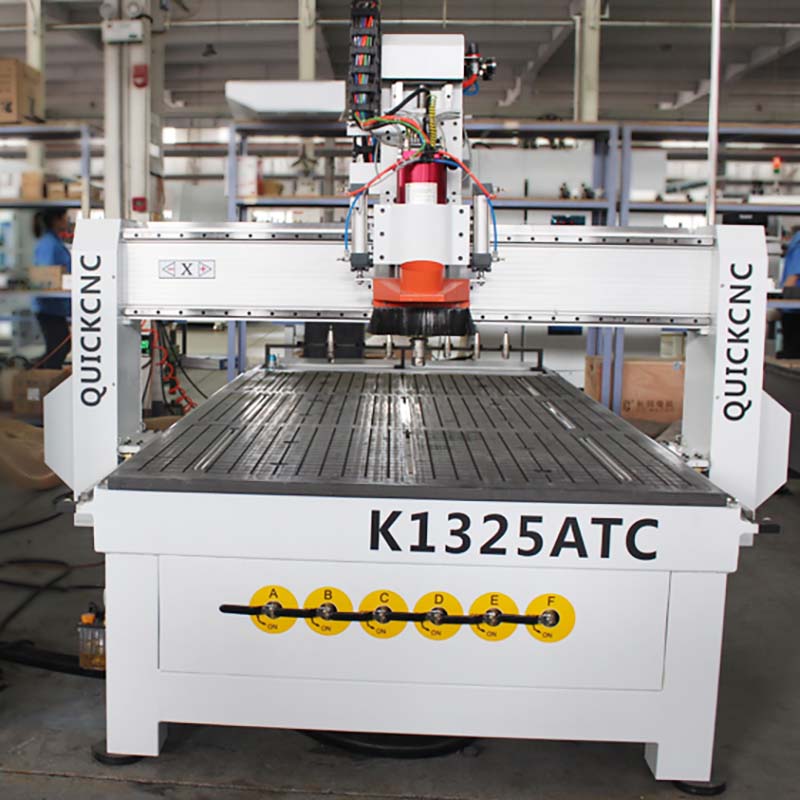
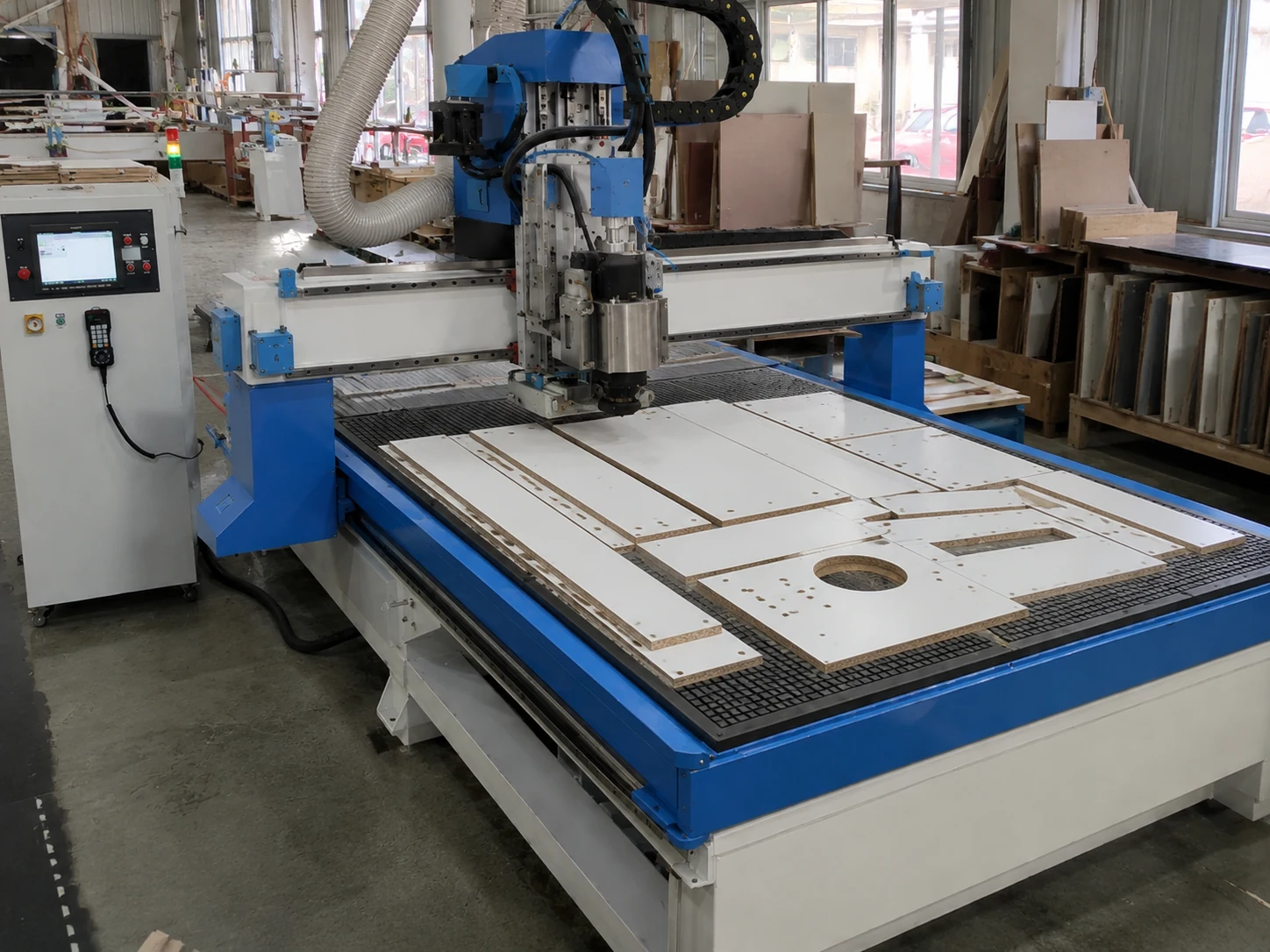
The K1325 ATC is built for furniture, cabinet and woodworking factories that need several cutters in one programmed job. Its 1300 × 2500 × 200 mm working area, vacuum table and automatic tool changing support cutting, grooving, routing and engraving of MDF, plywood, melamine and other sheet materials with fewer manual tool-change interruptions.
Production value
Reduce Manual Tool Changes in Multi-Process Woodworking
Cabinet and furniture parts often need several cutters in the same job. The K1325 ATC is designed for production flows where a panel may be cut, grooved, pocketed, profiled or engraved without stopping for every manual tool change.
Keep multi-tool jobs moving
Automatic tool changing is most valuable when one program uses several cutters and repeated manual changes interrupt production.
Process common furniture sheets
The 1300 × 2500 mm working area covers common 1220 × 2440 mm panel formats, while the vacuum table supports sheet cutting and routing.
Build the configuration around the job
Controller, dust collection, working size and optional rotary requirements can be selected around your material, drawings and factory setup.
Furniture and cabinet production
Built for Cabinet, Furniture and Panel Production
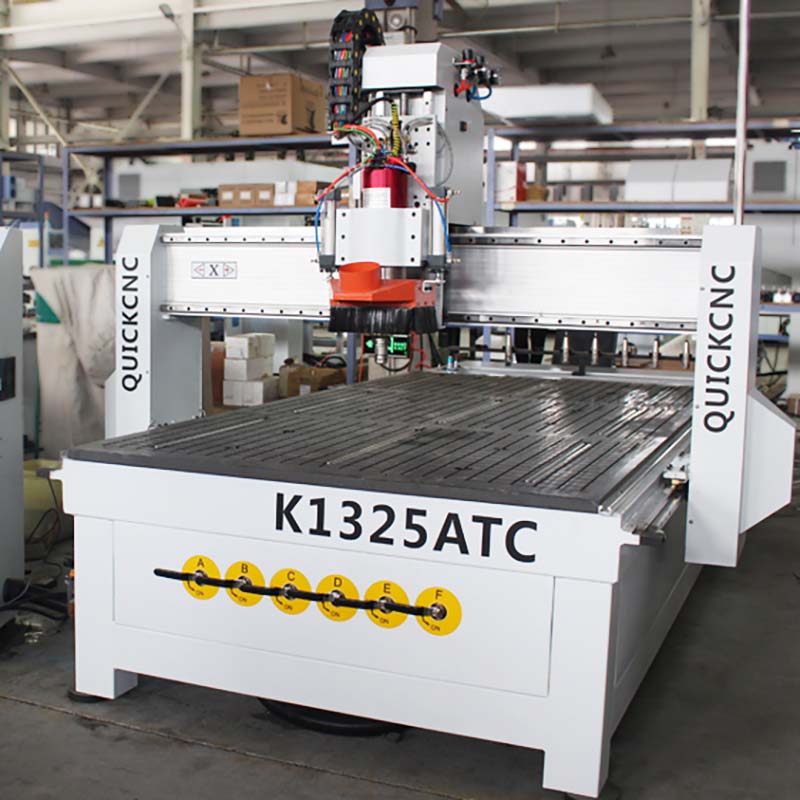
The K1325 ATC is a strong fit for furniture factories, cabinet shops, wood-door producers, panel furniture manufacturers, custom woodworking shops and CNC service providers processing sheet materials on a regular basis.
Typical work includes cabinet panels, furniture components, door parts, nested sheet cutting, grooves, pockets, profiles and engraving in wood, MDF, plywood, particle board and melamine. Acrylic, PVC, plastics, aluminum composite panel, soft aluminum, foam and composites require suitable tooling and process settings.
Is the K1325 ATC Right for Your Production?
Best fit for
- Flat-board cabinet, door and furniture components.
- Programs that use several cutters for cutting, grooving, routing and engraving.
- Factories upgrading from repeated manual tool changes.
- Standard panel work that fits within the 1300 × 2500 × 200 mm working area.
Choose another configuration if
- You need automatic loading, labeling and unloading as part of a complete nesting line.
- High-volume multi-hole drilling is a major part of your furniture process.
- Your parts require complex 4-axis or 5-axis machining.
- Your largest sheets or workpieces exceed the standard working area.
Technical specifications
K1325 ATC Technical Specifications
Use these specifications to check the machine against your panel size, process, factory utilities and production requirements. Final configuration is confirmed before order production.
| Item | K1325 ATC value | What It Means for Your Production |
|---|---|---|
| Working area | X 1300 mm, Y 2500 mm, Z 200 mm | Covers common 1220 × 2440 mm furniture sheet formats with additional travel margin. |
| Spindle | 5.5 kW ATC water-cooled spindle | Standard ATC spindle configuration for multi-tool woodworking; confirm thicker materials or heavier cutting requirements before order. |
| Spindle speed | 6,000–24,000 RPM | Allows spindle speed to be matched to different cutters and materials within the approved range. |
| Table | Vacuum table | Supports full-sheet workholding; small nested parts may need suitable vacuum zones, tabs or fixtures. |
| Movement and guide | Rack and pinion, ball screw, linear square guide | Rack-and-pinion and linear-guide motion supports the router's X/Y production movement, with ball screw used where specified. |
| Maximum speed | 35 m/min | Machine travel specification; it should not be treated as guaranteed cutting speed. |
| Maximum cutting speed | 25 m/min | Actual production cutting speed depends on material, cutter, depth, toolpath and finish target. |
| Motor | Stepper motor | The listed standard model uses stepper motors; any different drive configuration must be confirmed separately. |
| Control system | DSP B57, Mach3 or Syntec | Choose according to operator experience, CAM workflow and the control environment preferred by your factory. |
| Voltage | AC380V / 50–60Hz / 3 phase | Factory power must be checked before order production and installation planning. |
| Options | 1530, 2030, 2040 sizes; 4th axis; dust collector | Larger working sizes, rotary processing and dust collection can be selected when the job requires them. |
Vacuum workholding
Hold Full Sheets Securely and Plan Small Parts Correctly
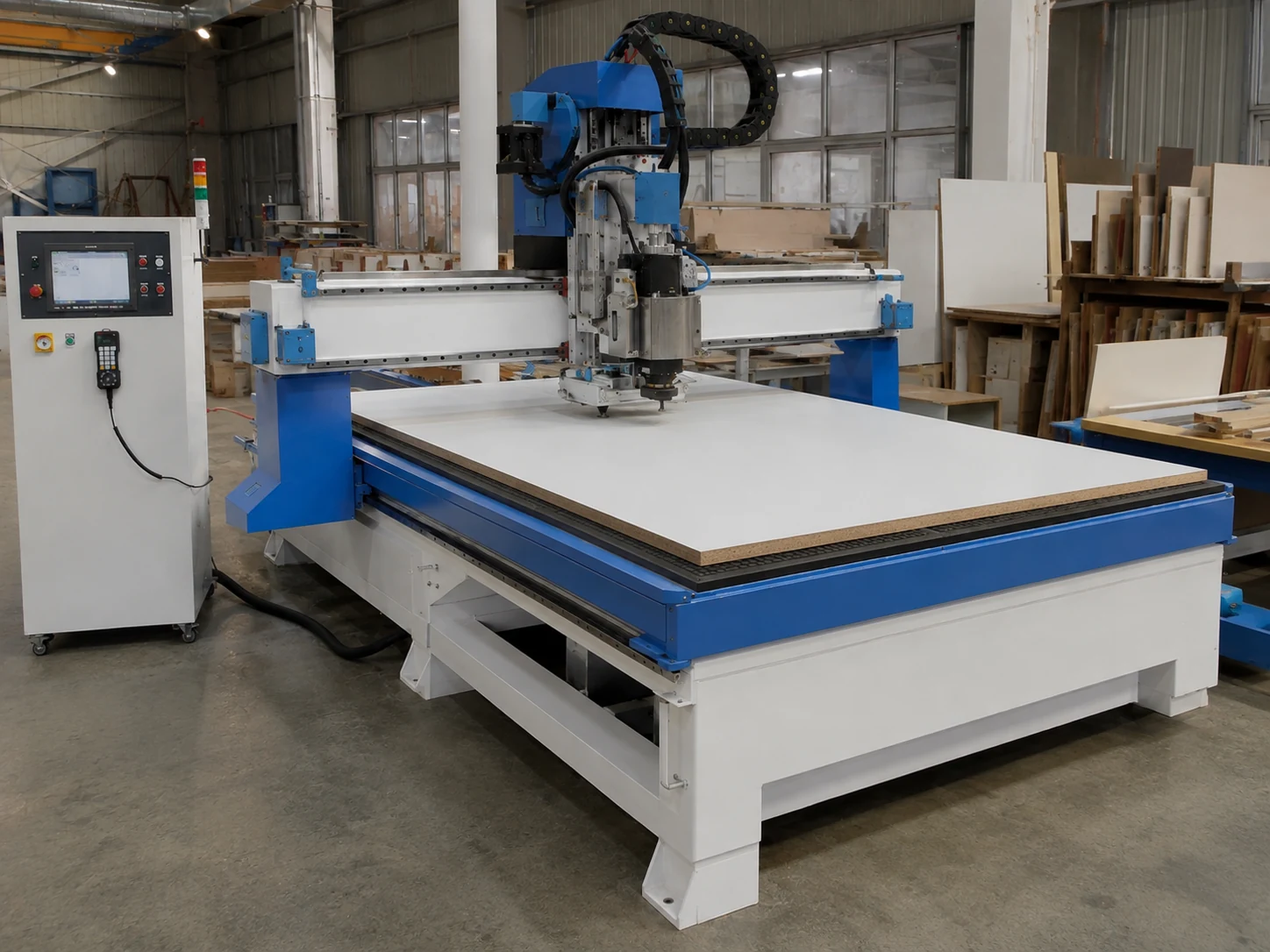
The vacuum table is designed to hold MDF, plywood, particle board, melamine and other sheet materials during routing and cutting. Workholding becomes more demanding when parts are small, narrow or heavily cut through.
For small nested parts, suitable vacuum zoning, tabs, fixtures or a different nesting strategy may be required. Sample testing can be used when part movement or edge quality needs to be confirmed before batch production.
Automatic tool changing
Run Multiple Tools Without Repeated Manual Changes
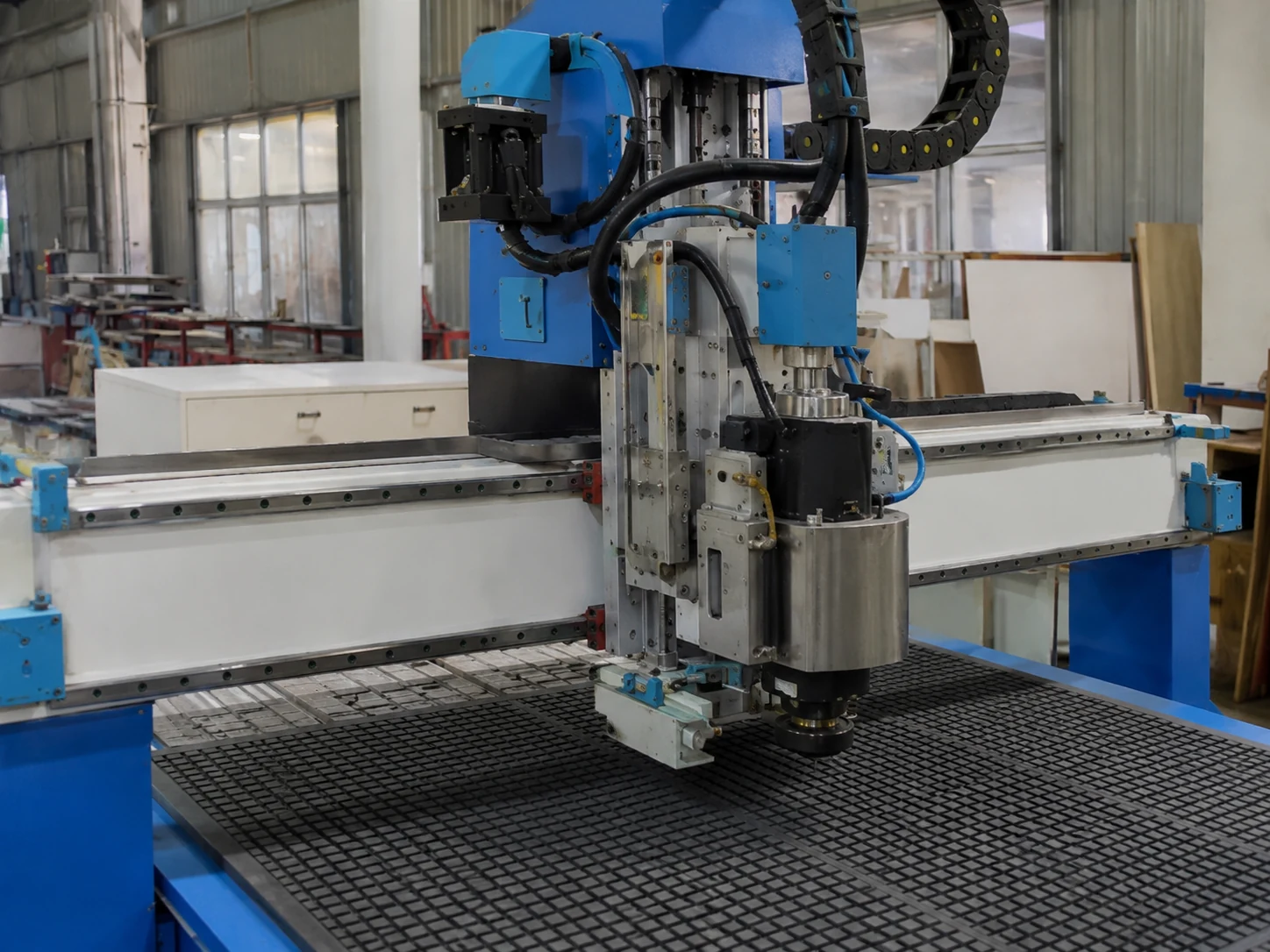
The main reason to choose the K1325 ATC over a basic manual tool-change router is a multi-tool production sequence. One programmed job can move from cutting to grooving, pocketing, profiling or engraving with automatic tool changes between the required cutters.
Standard 3-axis routing can also perform spindle drilling for selected hole patterns. If high-volume multi-hole drilling is a major process, a drill-bank or dedicated drilling solution may be a better match than relying on the router spindle alone.
Tooling and process setup
Match Tooling and Workholding to the Material
Edge quality, chip control, part stability and tool life depend on the combination of material, cutter type, cutting depth, feed strategy, vacuum holding and programming. The table below shows the information needed to set up common woodworking tasks.
| Production task | Typical process direction | Key input for setup |
|---|---|---|
| Panel cutting | Compression or spiral tooling direction for MDF, plywood and melamine. | Material grade, thickness, edge quality target and nesting drawing. |
| Grooving and pockets | Tool diameter, groove depth, holding method and machining sequence. | Groove width, depth and DXF or cabinet drawing. |
| Engraving or carving | V-bit, ball nose or profile tooling according to detail level. | Artwork, relief depth and surface finish requirement. |
| Small nested parts | Vacuum zones, tabs, fixtures or process changes to reduce part movement. | Smallest finished part size and layout file. |
Pre-shipment machine checks
Machine Testing Before Shipment
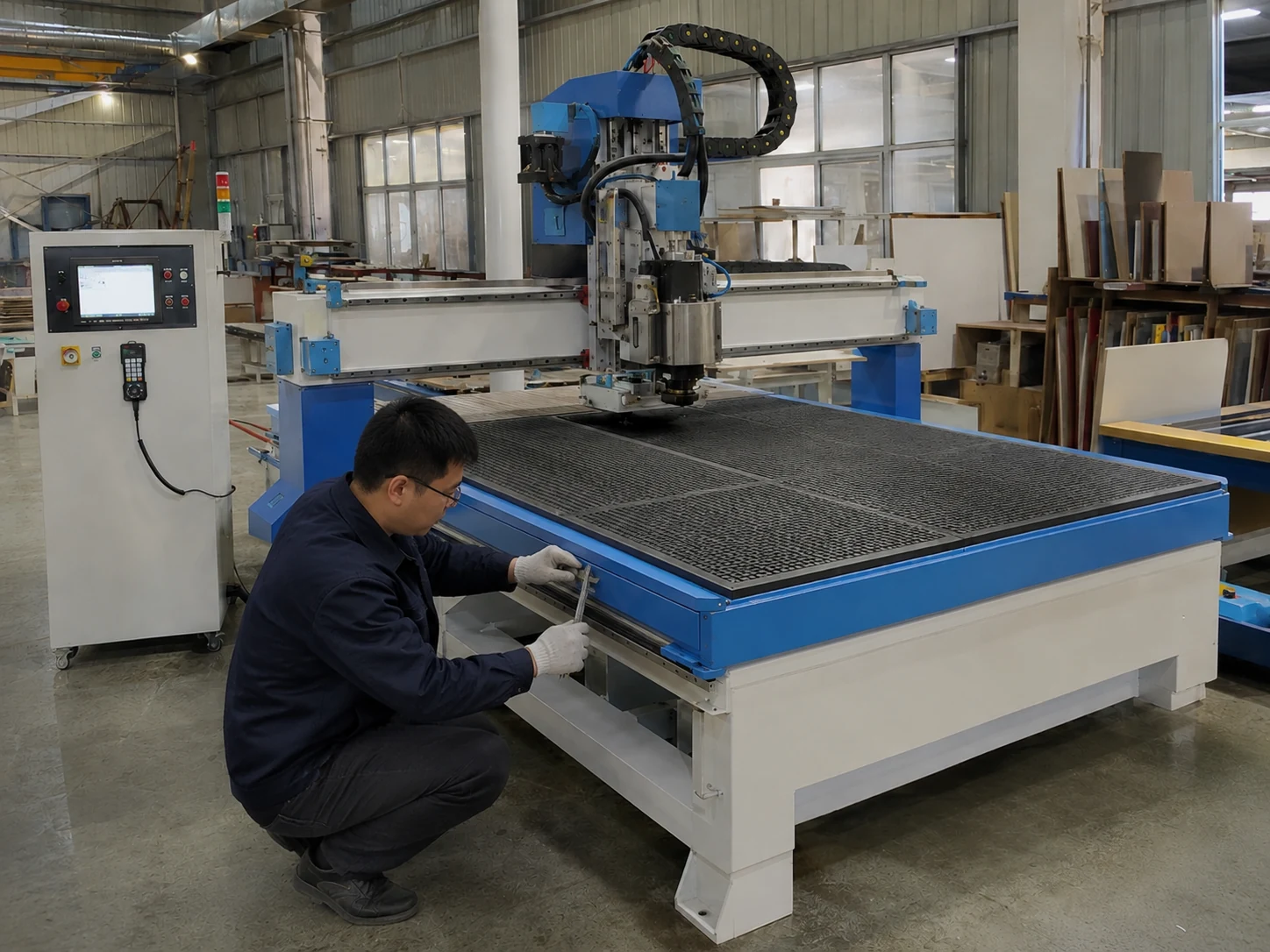
Quick CNC's quality-control process covers frame inspection, component inspection, assembly inspection, electrical testing, running tests and final packaging inspection. For the K1325 ATC, the exact check list follows the confirmed machine configuration and order requirements.
If sample machining, additional inspection records or destination-specific documents are required for your project, they should be agreed before order confirmation so the required scope can be included in the production plan.
Which CNC Router Configuration Fits Your Production?
Basic 1325 router
A basic 1325 router can be enough when most programs use one cutter and manual changes do not interrupt production.
K1325 ATC router
Choose K1325 ATC when full-sheet woodworking programs regularly need several cutters for cutting, grooving, routing and engraving.
Larger or line solution
Choose a larger machine, drill-bank solution or automated line when workpiece size, drilling workload or automation requirements go beyond this model.
Control and factory setup
Choose the Controller and Factory Setup That Fits Your Team
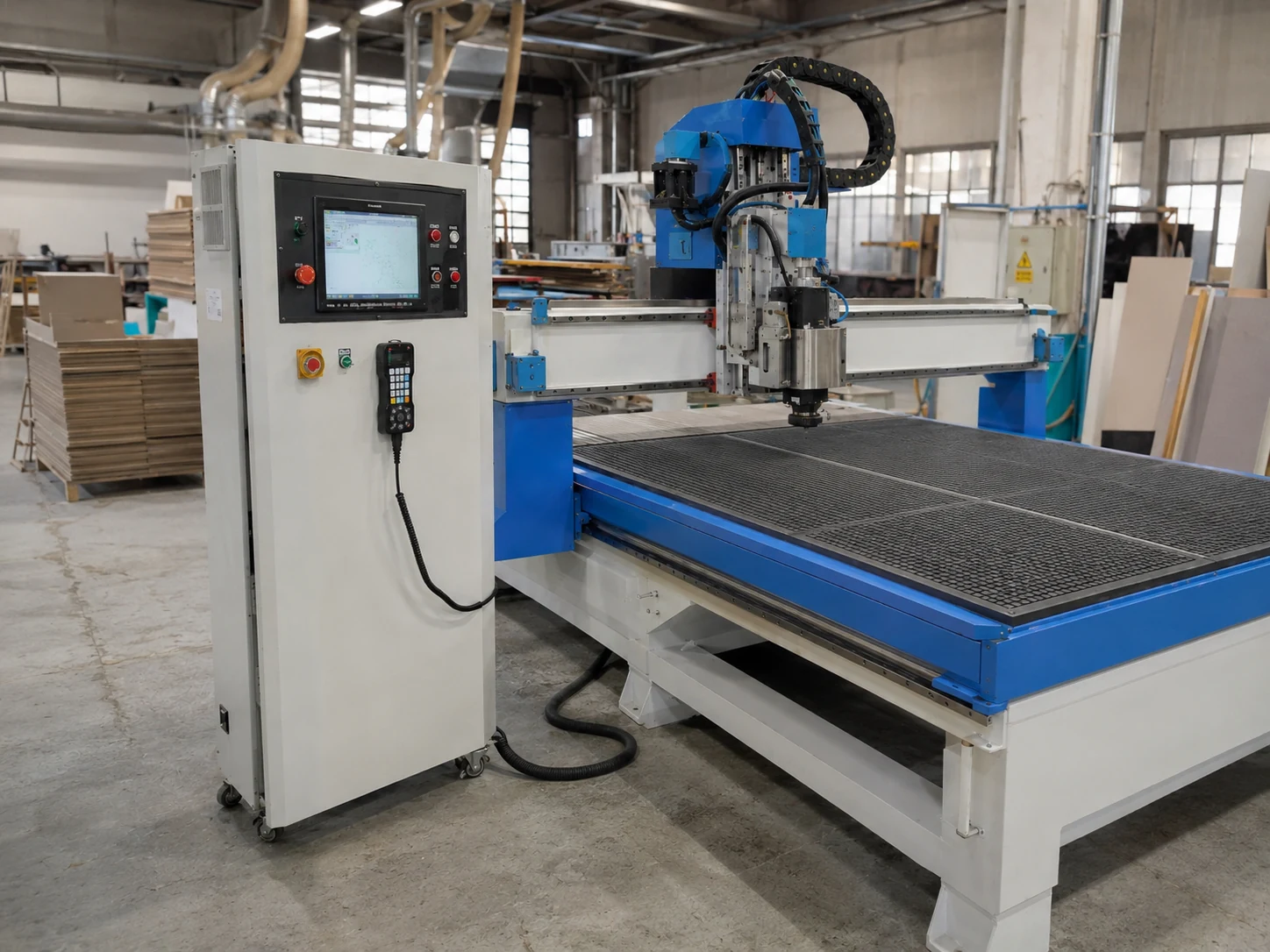
The listed controller options are DSP B57, Mach3 and Syntec. Selection should match your operators' experience, CAM workflow, training needs and preferred control environment.
Before production, confirm factory voltage, available workshop space, dust extraction and installation requirements so the machine arrives with the correct project configuration.
Get an accurate configuration
Get a Price and Configuration Based on Your Actual Job
Processing details
- Main material and sheet thickness.
- Largest panel size and smallest finished part size.
- Drawings, DXF files, cabinet layouts or sample photos.
- Processes needed: cutting, routing, grooving, drilling, engraving or carving.
Factory and order details
- Daily or monthly output target.
- Controller preference: DSP B57, Mach3 or Syntec.
- Destination country, voltage and workshop space.
- Accessories needed: dust collector, larger size or 4th axis option.
Delivery, Warranty and After-Sales Support
About 45-day production
Production lead time is normally about 45 days after configuration approval and deposit, depending on the final order scope.
Container shipment
The machine is normally packed and shipped by container according to the destination and selected configuration.
One-year warranty
Warranty support is normally one year, with the final scope confirmed in the sales agreement.
Installation & training
Installation guidance and operator training are arranged according to the selected machine, destination and agreed service scope.
Troubleshooting support
Our service team supports machine troubleshooting according to the agreed after-sales service scope.
Spare-parts coordination
Spare-parts coordination is available for maintenance and after-sales requirements according to the machine configuration.
Machine video
See the K1325 ATC in Operation
Use the supplied video to review the machine layout and woodworking operation before comparing the K1325 ATC with your current production process.
Common Questions About the K1325 ATC
Can it process standard furniture sheets?
The working area is X 1300 mm, Y 2500 mm and Z 200 mm, which covers common 1220 × 2440 mm panel formats. Larger workpieces require a different working size.
When is ATC worth the upgrade?
ATC becomes more valuable when one production program uses several cutters and repeated manual tool changes interrupt the workflow.
Does it replace a drill-bank machine?
Not necessarily. The router spindle can perform selected drilling operations, but high-volume multi-hole furniture drilling may be better served by a drill-bank or dedicated drilling solution.
Can it process acrylic or plastics?
These materials can be processed with suitable cutters, parameters and workholding. Sample validation is recommended when surface finish or material behavior is critical.
Do I need a 4th axis?
The standard machine is a 3-axis ATC router. The listed 4th-axis option is relevant when the workpiece requires rotary processing.
What information is needed for a quotation?
Provide material, thickness, maximum part size, drawings, required processes, output target, controller preference, destination and required accessories.
Your production project
Tell Us What You Need to Produce
Send your material, thickness, part drawings, sheet size, required processes, output target and destination. Quick CNC will prepare the K1325 ATC price and configuration, or recommend a better-matched CNC solution when your production requires a different setup.