Quick CNC · Compact Advertising Production
K6100A Mini CNC Router for Advertising and Sign Making
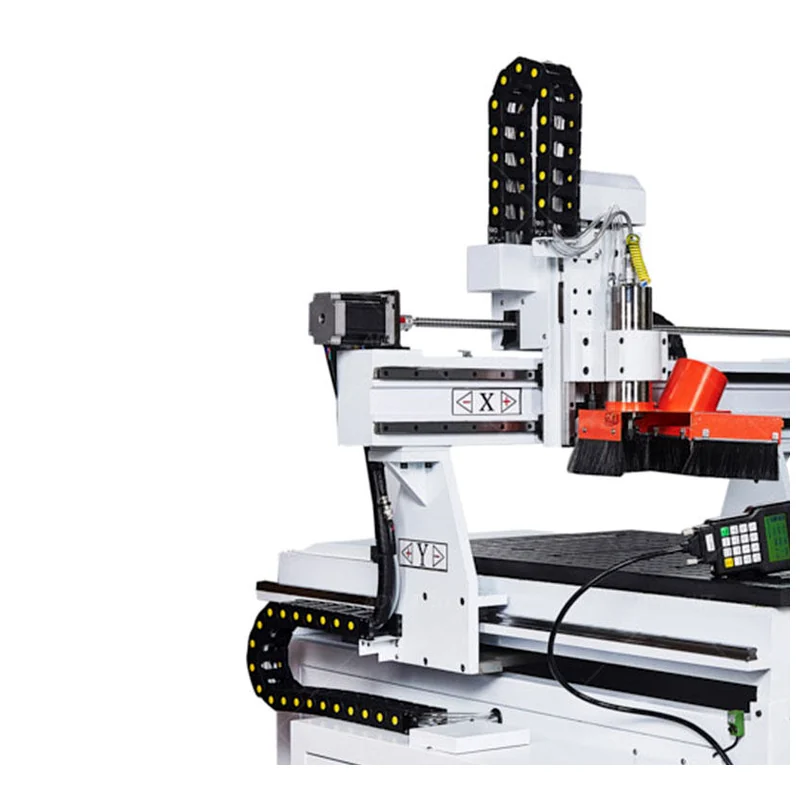
The K6100A gives sign shops, acrylic fabricators and small production teams a practical 600 × 1000 mm or 600 × 1200 mm working area without moving to a full 4×8 machine. We configure it for acrylic, PVC, MDF, wood, foam, aluminum composite panel, prototypes and detailed engraving.
Buyer and application fit
Built for compact sign, prototype and custom-part work
Advertising and sign shops
Use the K6100A for acrylic lettering, logos, display boards, meeting signs, badges, dimensional signage and decorative panels that fit the selected work area.
Acrylic, PVC and plastics
Route and engrave acrylic, PVC, plastic, foam and composite sheet materials with tools and parameters selected for chip evacuation, edge quality and material formulation.
Prototypes and small batches
Make samples, molds, fixtures, wood crafts, small furniture components and short-run custom parts without dedicating the floor space required by a full-sheet production router.
Core solution
More usable table length than a 6090-class router, still compact enough for a small workshop
The K6100A is a practical step up when 600 × 900 mm is too short for your signs, templates or prototypes, but a 1300 × 2500 mm machine would add unnecessary floor space and budget. We match the 1000 mm or 1200 mm Y-axis version to your largest part and clamping allowance.
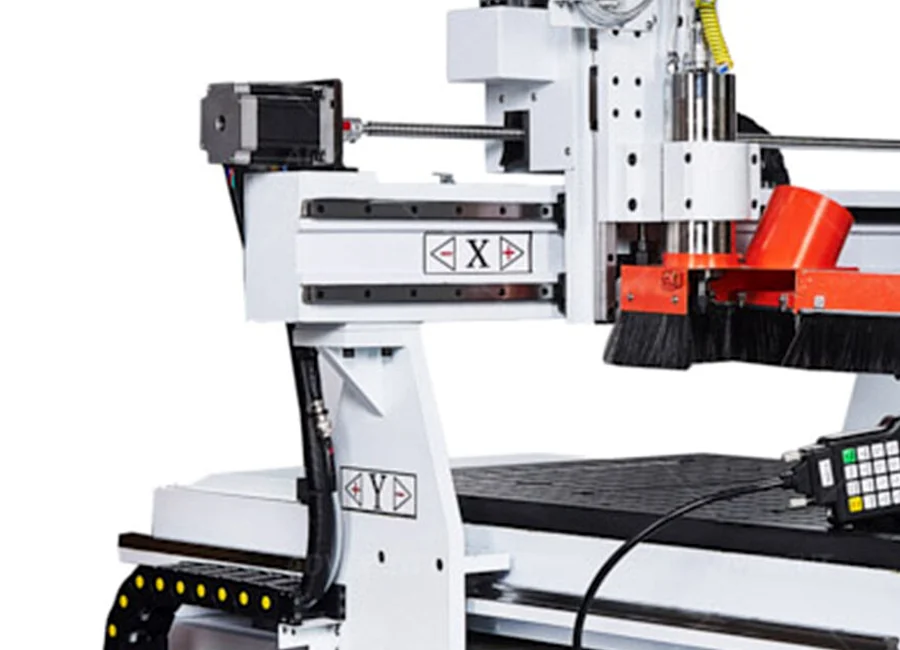
Its welded one-piece steel frame, ball-screw movement and water-cooled spindle support detailed routing, engraving, drilling and 3D milling within the machine's intended material and workholding range.
Selection boundary
Where the K6100A fits — and where a different machine is the better choice
Choose K6100A when
- Your typical parts fit a 600 × 1000 mm or 600 × 1200 mm envelope.
- You make signs, acrylic letters, logos, prototypes, molds, crafts or small wood components.
- You value compact floor space and straightforward handheld control.
- You use manual clamps or want to discuss a vacuum-table option.
- You need short-run flexibility rather than a full automatic production line.
Choose another configuration when
- You need to process full 4×8 sheets without cutting them down.
- Your cabinet or door line requires automatic loading, nesting and high-volume unloading.
- Your jobs require frequent automatic tool changes as a confirmed standard feature.
- You need aggressive machining of steel or other hard metals.
- Your finished-part tolerance must be guaranteed without material and sample validation.
Approved model data
K6100A complete specifications
| Specification | K6100A reference configuration | Buyer decision |
|---|---|---|
| Working area | 600 × 1000 × 200 mm or 600 × 1200 × 200 mm | Select around the largest part, clamps, tool clearance and growth plan. |
| Repositioning resolution | 0.02 mm | Machine resolution is not the same as guaranteed finished-part tolerance. |
| System resolution | 0.025 mm | Final results also depend on material, tooling, spindle runout, workholding and toolpath. |
| X/Y/Z movement | Ball screw | Suited to detailed work and controlled movement in this compact size class. |
| Maximum movement speed | 8,000 mm/min | Actual program speed is selected for the material, tool and finish requirement. |
| Maximum cutting speed | 6,000 mm/min | Not a guaranteed production rate for every part. |
| Spindle | 2.2 kW water-cooled spindle | Tool diameter, material and duty cycle must be checked together. |
| Spindle speed | Up to 24,000 rpm | Set spindle speed with feed, flute count, chip load and cooling strategy. |
| Drive motors | Stepper motors | Alternative drive packages require engineering confirmation. |
| Power reference | AC 220 V, 50/60 Hz | Confirm destination voltage, phase, frequency and site supply before production. |
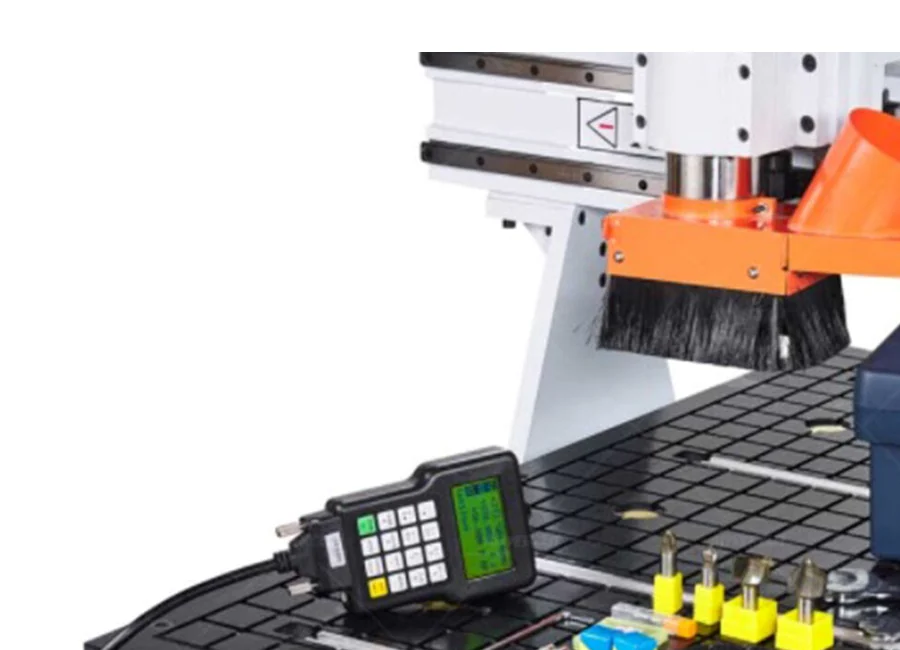
| Controller / files | DSP A11; G-code; USB 2.0 transfer | Confirm the complete CAD/CAM, postprocessor and controller process. |
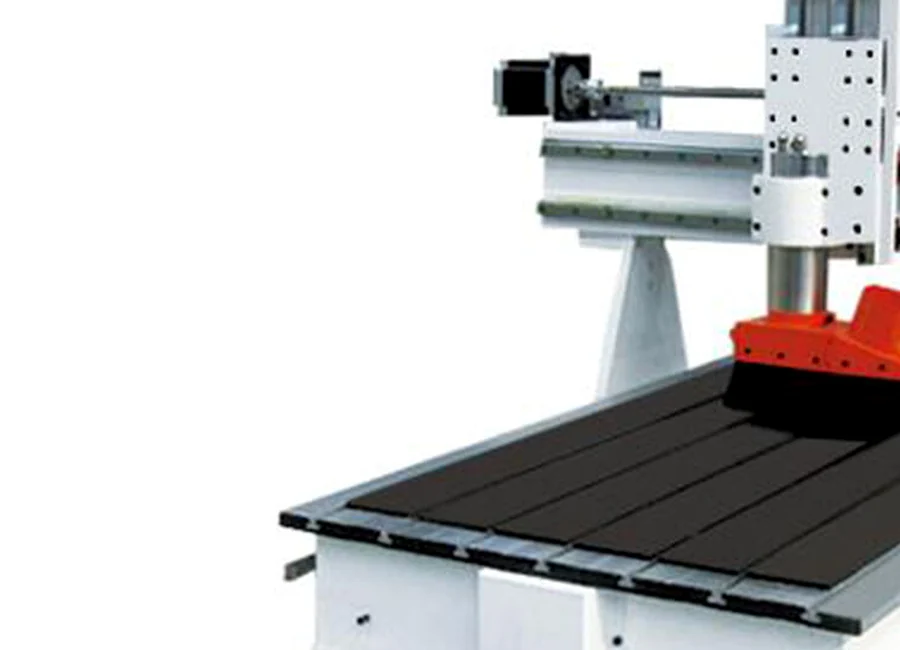
| Table | T-slot table with mechanical clamps | Review clamp access, cut-through jobs and small-part retention. |
| Reference software | ArtCAM | Confirm current software availability, license and compatible postprocessor. |
| Collet | ER20; reference sizes 3.175 mm, 6 mm and 12.7 mm | Final tool package follows the actual application. |
| Tool sensor | Included | Used to support tool-height setup in the confirmed control process. |
| Listed options | Vacuum table with 2.2 kW pump; rotary axis | Option fit depends on material, part geometry and process. |
Structure and motion
A compact steel machine built around controlled three-axis routing
Welded one-piece steel frame
The frame and gantry create the base for alignment and stable routing. Machine setup, leveling and workholding still determine how that structure performs on the buyer's actual parts.
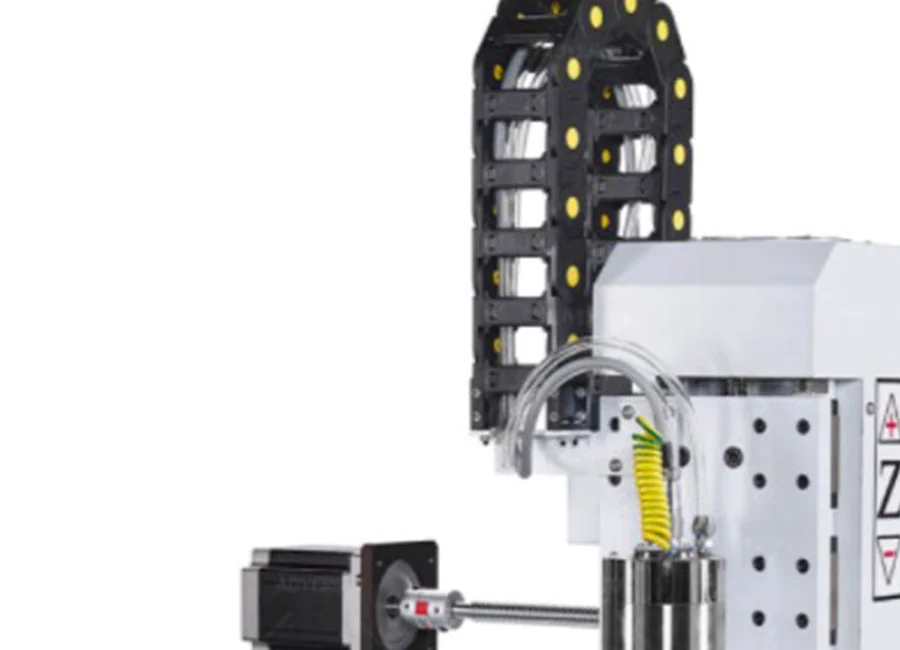
Ball-screw movement
The K6100A reference specification uses ball screws on X, Y and Z. We use the part drawing and finish requirement to determine whether this compact motion system suits the job.
Water-cooled spindle and dust hood
The 2.2 kW water-cooled spindle is intended for engraving, cutting, drilling and 3D routing with compatible tools. Dust collection and chip evacuation are configured around the material and shop environment.
Configuration choice
Configure the table, controller process and optional axis around the job
1000 mm or 1200 mm Y-axis
Choose the 1200 mm version when the longer part length creates real production value. Do not oversize the machine without checking floor space, loading access and typical workpiece mix.
T-slot or vacuum workholding
Mechanical clamps are flexible for prototypes and irregular parts. A vacuum table can improve repeat work on suitable sheet materials, but porous boards and small cut parts need a retention plan.
DSP A11 control
Transfer the prepared G-code file through USB storage and operate through the handheld controller. We confirm the postprocessor before delivery.
Rotary or engineered options
A rotary axis is listed for suitable cylindrical work. Any ATC discussion requires a separate engineered specification because tool count and control details are not part of the approved standard data.
Customization boundary
What we confirm before building your K6100A
Electrical package
Destination country, voltage, phase, frequency, plug or hard-wiring plan, transformer needs and local installation requirements.
Process package
Material grade, thickness, cutter range, collets, dust extraction, cooling method, workholding and expected edge or surface finish.
Digital file process
CAD/CAM software, file format, nesting or toolpath process, postprocessor, controller code and operator experience.
Machining plan
Tooling, workholding and sample validation for advertising materials
Acrylic and plastics
Use sharp cutters, stable clamping and chip-removal settings that limit melting and edge re-welding. Cast and extruded acrylic can respond differently, so identify the grade and finish target.
MDF, plywood and wood
Tool geometry, cut direction, dust extraction, hold-down and board quality affect tear-out, edge quality and tool life. Compression tools may be considered for laminated boards when the part and spindle load allow.
ACP and soft aluminum
Aluminum composite panel is not the same as solid aluminum. Limited soft-metal work requires rigid workholding, suitable carbide tools, conservative parameters and a sample cut. K6100A is not offered as a heavy-metal milling machine.
Risk control before shipment
Inspection and verification are defined around the confirmed order
Configuration check
We confirm the work area, spindle, controller, table, options, voltage and application inputs against the signed technical agreement.
Functional checks
Assembly, axis movement, spindle operation, controller functions, electrical items and safety-related functions are checked within the approved inspection plan.
Sample validation
When the order includes buyer material and drawings, we agree the sample objective, tool, program and acceptance method before treating the result as evidence.
Certificate and destination-compliance documents are confirmed for the exact machine configuration and destination. General company information does not replace an order-specific declaration, certificate or local compliance review.
Model selection
K6100A compared with nearby CNC router sizes
| Size class | Best fit | Choose it when | Key limitation |
|---|---|---|---|
| 6090-class mini router | Very compact signs, crafts and prototypes | Most parts fit 600 × 900 mm and floor space is the priority | Shorter Y-axis work envelope |
| K6100A | Advertising parts, acrylic, prototypes and short runs | You need 1000 mm or 1200 mm part length without a full-sheet machine | Not a 4×8 nesting line |
| 1325 / 4×8 router | Full sheets, larger signs and furniture panels | You routinely load 1220 × 2440 mm sheets | Larger footprint, utilities and investment |
| Mini ATC router | Small parts requiring frequent tool changes | Automatic tool changing creates enough cycle-time value | Higher configuration complexity and budget |
Project scenarios
Typical K6100A production scenarios
Acrylic lettering and logo panels
Profile-cut letters, engrave logos and produce display components with a drawing-led toolpath and edge-quality target.
Prototype and mold work
Route foam, plastic, wood or compatible composite material for prototypes, patterns and low-volume development parts.
Small decorative wood parts
Engrave reliefs, craft panels, instrument parts, boxes and small furniture components that fit the selected envelope.
Manufacturer support
Quick CNC supports selection, production confirmation and after-sales service
Manufacturing since 2006
Quick CNC manufactures CNC routers and woodworking machinery in Jinan, China. We use application and configuration data to prepare the machine proposal.
Order-level quality planning
The agreed machine configuration, inspection points, test requirements and documentation are controlled through the technical and commercial order documents.
Support after delivery
Manuals, operation videos, remote guidance, troubleshooting and spare-parts assistance are available within the signed service and warranty terms.
Prepare a useful K6100A quotation request
Send these inputs through our contact page so our engineers can recommend the work area, table, tooling, extraction and electrical configuration:
- Part drawing and maximum X/Y/Z dimensions
- Material type, grade and thickness
- Processes: cutting, engraving, drilling, pockets or 3D routing
- Minimum detail, tolerance and finish requirements
- Expected batch size and daily production target
- Preferred clamping or vacuum workholding
- Available voltage, phase and frequency
- Destination country and requested delivery terms
Commercial framework
MOQ, lead time, packing and logistics
No minimum order quantity
You can order one machine. The final quotation depends on the selected work area, configuration, options, destination and commercial terms.
Approximately 45-day production lead
The standard production period starts after the deposit and final technical details are confirmed. Shipping, customs clearance, inland delivery and installation time are separate.
Export packing and container shipment
The machine is prepared for export and is normally shipped by container. The final packing, loading and shipping plan is confirmed for the order and destination.
Installation and ownership
Plan utilities, training, warranty and service before the machine arrives
Site preparation and installation
Confirm floor access, unloading method, machine placement, electrical supply, grounding, water-cooling arrangement, dust extraction, computer/CAM process and operator responsibility. Installation guidance can be provided remotely, and on-site service can be arranged separately.
One-year machine warranty
The standard warranty starts when the buyer receives the machine. Warranty handling begins with remote diagnosis. Wearing parts, consumables, incorrect operation, poor maintenance, unauthorized modification and human-caused damage are excluded as standard; final coverage and cost responsibility follow the signed agreement.
Buyer questions
K6100A FAQ
What is the working area of the K6100A?
The approved K6100A working-area versions are 600 × 1000 × 200 mm and 600 × 1200 × 200 mm. Choose the version according to your largest part, clamping allowance, tool clearance and expected future work.
Is the K6100A suitable for acrylic sign making?
Yes. It is positioned for acrylic engraving and cutting, lettering, logos, display panels and similar advertising work. Send the acrylic grade, thickness, drawing and edge-finish requirement so we can recommend tooling and a sample-cut plan.
Can it cut aluminum?
It can be evaluated for aluminum composite panel and limited soft-aluminum or brass work. These applications require suitable cutters, conservative parameters, rigid workholding and sample validation. It is not presented as a heavy-metal milling machine.
Does the machine need a computer during operation?
The reference DSP A11 handheld controller supports file transfer through USB storage and runs G-code without keeping a computer attached during machining. The CAD/CAM software and postprocessor still need to match the controller process.
What workholding options are available?
The reference standard table is a T-slot table with mechanical clamps. A vacuum table with a 2.2 kW pump is listed as an option. The better choice depends on part size, sheet porosity, cutting-through requirements and batch repetition.
Can a rotary axis be added?
A rotary axis is listed as an option for suitable cylindrical work. Send the maximum diameter, length, material, part drawing and machining features so we can check clearance and configuration.
What is the production lead time?
Standard production lead time is approximately 45 days after the deposit is received and the final configuration, voltage, options and required technical details are confirmed. Shipping time is not included.
What warranty and support are provided?
Quick CNC provides a standard one-year machine warranty from the date the buyer receives the machine. Warranty handling begins with remote diagnosis. Wearing parts, consumables, incorrect operation, improper maintenance, unauthorized modification and human-caused damage are excluded as standard; final terms follow the signed agreement.
Next step
Let us configure the K6100A around your real sign or part
Send the drawing, material, dimensions, batch target, voltage and destination. We will recommend the 1000 mm or 1200 mm version, table and workholding approach, tool package, sample-validation plan and commercial quotation.