Mini 6090 ATC CNC Router With 3-Tool Automatic Tool Changer
A compact 600 × 900 mm CNC router for repeat jobs that need two or three tools in one program, without moving up to a full-size 1325 machine.
K6090T-ATC combines a 2.2 kW water-cooled ISO20 ATC spindle, a three-position linear tool magazine, DSP B57 handheld control, a T-slot clamping table and automatic tool-height sensing. If your work is small enough for a 600 × 900 mm bed and you keep switching between cutters, this is the point of the machine: fewer manual stops between operations.
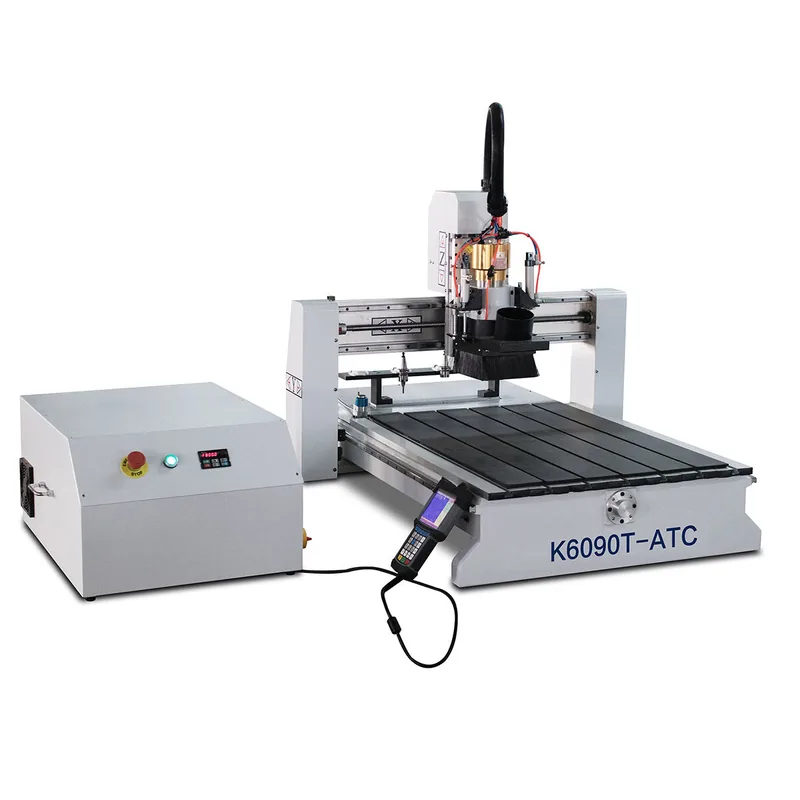
Best fit
Small parts within the 600 × 900 mm working area that repeatedly need two or three tools, such as profiling, engraving, pocketing, drilling or 3D carving.
Not the right machine
Full 4×8 sheet nesting, routine programs that need more than three tools, six-sided panel processing, or heavy metal removal.
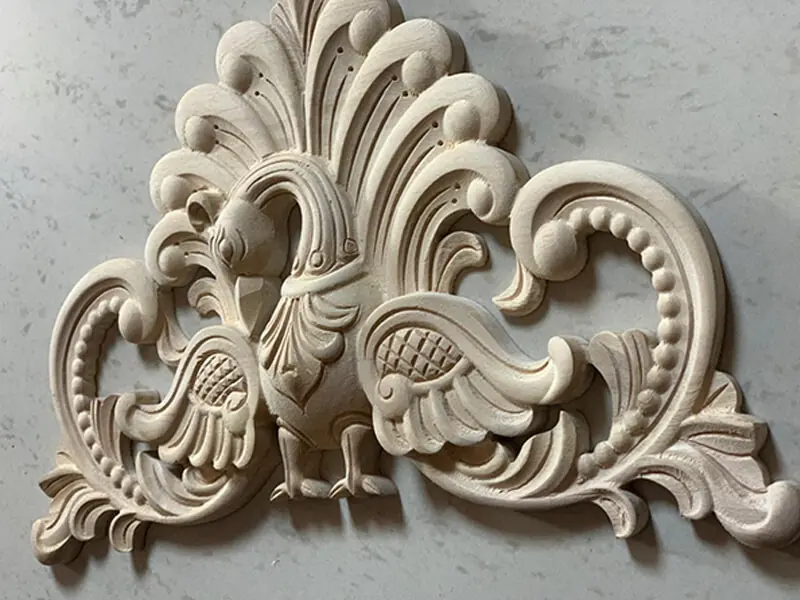
What Can a 6090 CNC Router Cut?
This small-format CNC router is aimed at parts that actually fit the bed: acrylic letters, PVC signs, wood plaques, small furniture parts, instrument parts, jigs, prototypes, foam patterns and decorative 3D work.
Wood, MDF and plywood: a good match for engraving, profiling, pockets, relief work and small components when the cutter, hold-down and dust extraction suit the job.
Acrylic, PVC and plastics: well suited to compact sign and display work. Cutter geometry, feed rate and chip evacuation matter because too much heat can melt the edge or load the cutter.
Foam and suitable composites: useful for patterns, prototypes and light routing work.
Soft aluminum: light routing is possible with suitable tooling, secure workholding, conservative cutting parameters and the right chip-control or lubrication method. This is not a heavy metal-cutting machine.
The 600 × 900 mm working area is roughly the 24 × 36 in / 2 × 3 ft class. Always judge the machine by the actual part envelope, not the label alone.
How the 3-Tool ATC Works on a 6090 CNC Router
The ATC earns its keep when the same program keeps calling for different cutters. Think profile cutting, V-carving and drilling, or roughing, finishing and a final cleanup pass. Instead of stopping the machine and setting the next cutter by hand, the program calls the next tool from the three-position linear magazine.
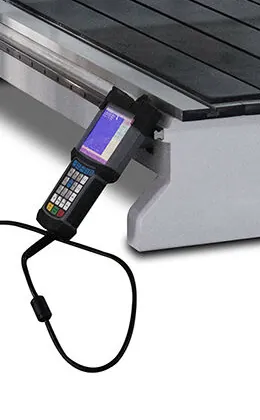
The automatic tool-height sensor supports repeat tool setting after each change, and the DSP B57 controller runs the prepared G-code from the handheld unit.
Tool 1: Profile or rough
Cut the outside geometry, rough the blank or remove the first batch of material.
Tool 2: Detail
Switch to engraving, V-carving, pockets or a finer finishing tool.
Tool 3: Finish
Use the third tool for drilling, cleanup, finishing or another programmed operation.
If most of your work uses one cutter, do not pay for ATC just because it sounds better. A manual-tool 6090 is usually the simpler route. If four, six or more tools are routine, move to a larger magazine instead of forcing every job into three positions.
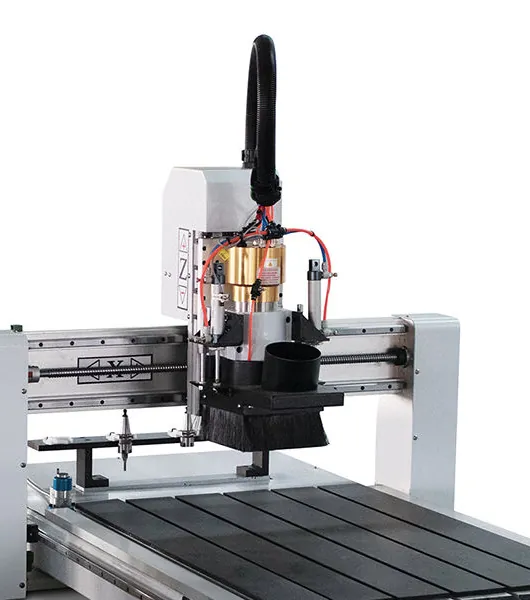
Where This Small CNC Router With ATC Fits, and Where It Does Not
Strong fit
- Recurring parts smaller than 600 × 900 mm.
- Sign, acrylic, PVC and display work that changes between engraving, profiling and drilling tools.
- Small wood components, reliefs, decorative parts, prototypes and jigs.
- Limited workshop space where automatic tool changing matters more than a full-sheet bed.
- Small-batch production where the same multi-tool program runs repeatedly.
Choose another machine when
- You process 4×8 sheets or full cabinet panels. Start with a 1325-class router or a nesting setup.
- Most programs use one cutter. A manual-tool 6090 is usually simpler and more economical.
- You need more than three tools in nearly every program. Choose a larger ATC magazine.
- Your core process is side drilling, six-side drilling or complete panel-furniture production.
- Heavy aluminum or steel removal is the main job.
6090 ATC CNC Router Specifications
| Item | K6090T-ATC |
|---|---|
| Machine type | Compact 3-axis CNC router with automatic tool changing |
| Working area | 600 × 900 × 150 mm |
| Controller | DSP B57 handheld control |
| Spindle | 2.2 kW water-cooled ATC spindle |
| Tool magazine | 3-position linear automatic tool changer |
| Tool interface | ISO20 |
| Table | T-slot table with clamps |
| Motor | Stepper motor |
| Inverter | Delta inverter |
| Transmission | Taiwan TBI ball screw |
| Y-axis rail | 15 mm square rail |
| Tool setting | Automatic tool-height sensor |
| Maximum travel speed | 8,000 mm/min |
| Maximum cutting speed | 5,000 mm/min |
| Spindle speed | Up to 24,000 rpm |
| Electrical supply | AC220 V, 50–60 Hz |
| CAM software | ArtCAM / Type3 |
| Packing data | 1,800 × 1,090 × 1,040 mm; 250 kg |
The travel and cutting-speed figures describe machine motion, not a guaranteed finished-part tolerance or daily output. Real cutting parameters still depend on the cutter, material, hold-down, toolpath and finish you need.
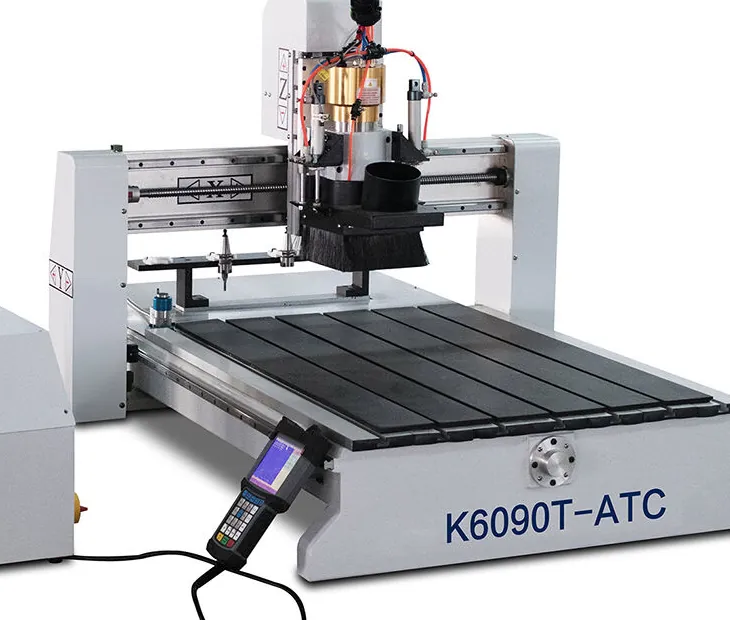
6090 CNC Router Structure, Ball Screw and Linear Rail System
The machine uses ball-screw transmission, square linear rails and a compact gantry layout for small-envelope routing. The base is machined as part of the geometry-control process, while the T-slot surface makes it straightforward to clamp individual blanks, fixtures and irregular small parts.
A compact machine still needs a proper process around it. Good workholding, the right cutter, a sensible toolpath, chip or dust removal and enough loading and service clearance matter just as much as the machine label.
Choose the Options That Actually Help Your Parts
T-slot clamping
Good for irregular blanks, jigs, small solid-wood parts and lower-volume work where the clamps can stay clear of the toolpath.
Vacuum table option
Useful for repeated flat parts when faster loading and a clear top surface matter. Holding strength still depends on part area, material porosity, zoning, spoilboard condition and pump selection.
4th-axis rotary option
Choose it for cylindrical or indexed rotary work that really needs rotation. It adds very little to ordinary flat three-axis jobs.
Stay With 6090, Extend to 6012, or Move Up a Machine Class
600 × 900 × 150 mm
The standard K6090T-ATC direction for compact parts that stay inside the 6090 envelope.
600 × 1,200 × 150 mm option
Adds length for recurring parts that run past 900 mm while staying narrow. If the work starts looking like full-sheet furniture production, skip the compromise and move up.
Complete the cell
Tooling, dust collection, spindle cooling, chip control and destination electrical preparation should follow the material and how you plan to run the machine.
6090 CNC Router vs Manual 6090 vs 1325 ATC Router
| Recurring job | Better starting direction | Why |
|---|---|---|
| 600 × 900 mm or smaller, mostly one tool | Manual-tool compact 6090 | Less complexity when automatic tool changes do not save much time. |
| 600 × 900 mm or smaller, repeated 2–3 tool programs | K6090T-ATC | Best match for repeated multi-tool work inside a compact footprint. |
| Parts longer than 900 mm but still narrow | 600 × 1,200 option or larger compact model | Extra length without immediately moving to full-sheet size. |
| Full 4×8 sheets, cabinet panels or nesting | 1325-class ATC / nesting router | The 6090 bed is simply too small for full sheets. |
| Repeated cylindrical parts | Add rotary capability or choose a rotary-focused setup | The job needs rotation, not just a different flat-bed size. |
Machine Checks and a Cutting Test Around Your Real Job
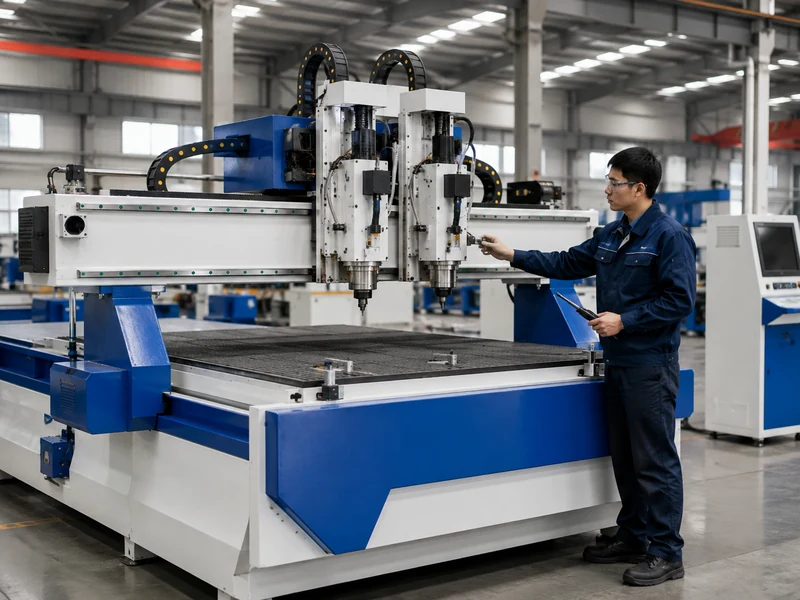
Quick CNC production control covers frame inspection, component inspection, assembly checks, electrical testing, running tests, cutting tests and packing inspection. The checks for the supplied K6090T-ATC follow the ordered configuration and machining requirements.
If you want the pre-shipment cutting check to mean something, send a representative drawing and material. That gives the team a real job to prepare the machine, cutter and workholding around, instead of doing a generic demo that proves very little about your part.
Built and Supported as Production Equipment
CNC equipment manufacturing focused on woodworking and production applications.
Factory process
Mechanical assembly, electrical installation, running checks, cutting checks and export preparation are handled in-house.
Technical support
Manuals, operating videos, remote installation guidance, training, troubleshooting, maintenance guidance and spare-parts coordination.
What You Need to Plan Before the Machine Arrives
MOQ & lead time
No minimum order quantity. Production lead time is approximately 45 days after the deposit is received and the configuration and required technical details are finalized. Shipping time is separate.
Packing & electrical
Packing data for this model is 1,800 × 1,090 × 1,040 mm and 250 kg. Listed electrical supply is AC220 V, 50–60 Hz. Final requirements follow the supplied configuration.
Warranty & support
One-year machine warranty from the date the machine is received. Manuals, videos, remote installation guidance, operation and maintenance training, troubleshooting and spare-parts support are available. The signed agreement controls final warranty terms.
Plan enough room for the router, electrical equipment, spindle cooling, dust or chip removal, loading access and routine service. Paid on-site service can be arranged when required, with travel and service scope agreed separately.
Send Four Things First. That Is Enough to Start.
You do not need to write a full machine specification before talking to us. Start with the job. We can work through the machine details after that.
1. Part
A drawing, 2D/3D file or clear product photo.
2. Material
Your main material and thickness.
3. Size
Maximum part length × width × height.
4. Operations
Profile cutting, engraving, pocketing, drilling, 3D carving or another process.
Daily quantity, software, voltage, dust collection, rotary requirements and other factory details can be sorted out after the machine direction is clear.
6090 ATC CNC Router Questions Buyers Usually Ask
What size is a 6090 CNC router?
The listed working area on K6090T-ATC is 600 × 900 × 150 mm. The 150 mm figure is Z-axis working travel, not guaranteed usable material height. Fixtures, cutter length and safe clearance reduce the actual workpiece height.
Do I need an ATC on a 6090 CNC router?
Choose ATC when the same job repeatedly uses two or three cutters. If most programs use one cutter, a manual-tool 6090 is usually simpler. If you routinely need more than three tools, look at a larger magazine.
What is the difference between a 6090 and a 1325 CNC router?
The big difference is working size and production direction. A 6090 is for compact parts. A 1325-class router is the better starting point for standard 4×8 sheets, cabinet panels and nesting work.
Is a 6090 ATC CNC router suitable for full cabinet sheets?
No. A 600 × 900 mm working area is meant for small parts. Standard 4×8 cabinet sheets need a larger 1325-class machine or a nesting solution.
Can K6090T-ATC cut acrylic and PVC?
Yes. Acrylic, PVC and plastics are core small-format applications. Tool geometry, chip evacuation, feed rate and spindle speed need to be set to control heat and edge quality.
Can it machine soft aluminum?
Light soft-aluminum routing is possible with suitable tooling, secure workholding, conservative cutting parameters and the right chip-control or lubrication method. It is not a heavy metal-cutting machine.
What does the 150 mm Z value mean?
It is the listed Z-axis working travel. Usable material height is lower once the table, fixture, cutter length and safe clearance are included.
Does the DSP B57 need a PC connected while cutting?
The controller supports transferring prepared machining files by USB storage and running from the handheld unit. The CAD/CAM workstation is still used to create the toolpath and G-code.
Can I add a vacuum table or rotary axis?
Yes. Both are listed options for this platform. Choose vacuum for repeated flat-part loading and rotary capability for cylindrical or indexed work that actually needs rotation.
What should I send for a quotation?
Send a drawing or part photo, material and thickness, maximum part size and the required operations. Those four things are enough to decide whether this compact three-tool ATC route fits.
Put One of Your Real Parts Against the K6090T-ATC
If your regular work fits a 600 × 900 mm envelope and usually needs two or three tools, send the drawing and material. We will start from the part, then work through tooling, workholding and machine configuration. No point loading the quote with options your job does not need.
Start with:
- Part drawing or clear photo
- Material and thickness
- Maximum part dimensions
- Required machining operations