CNC Router Collet Selection
Choose a CNC router collet from the cutters your production actually uses—not from the ER number alone. Start with the cutter shank sizes, then confirm the spindle or tool holder’s ER series, tool reach, change frequency and whether the process needs manual or automatic tool changing.
If all recurring tools already fit the selected ER20 system, changing to ER32 does not automatically improve cutting accuracy or production quality. A larger ER system becomes useful when your real cutter inventory, spindle configuration or tool-access requirement needs the additional shank capacity.
The real question is not “Which ER number is bigger?” It is whether the spindle and toolholding system can support the cutters, tool changes and production process you actually run.
Recommended direction: send the actual CAM tool list with the machine RFQ. Shank diameter, tool length, number of tools per program and change frequency tell us far more about the required spindle and toolholding configuration than simply writing “ER32 preferred.”
What Should You Decide Before Ordering?
The collet clamps the shank, not the cutting diameter. Record every recurring shank size in mm or inch.
ER20, ER25 and ER32 refer to different collet-system sizes. The collet, nut and chuck must belong to a compatible system.
If several cutters repeat within one program, the production question may be ATC versus manual tool changing rather than ER20 versus ER32.
Runout, tool projection, dirty interfaces, damaged collets and poor assembly can affect production even when the nominal collet size is correct.
Start With the Workpiece and Tool List, Not the Collet
A collet should not be selected as an isolated accessory. The correct configuration starts with what the factory needs to machine.
| Production input | Why it changes the tooling decision |
|---|---|
| Material | Material and cutting process determine the cutter families you need and therefore the shank sizes that must be supported. |
| Workpiece size and thickness | Part thickness, fixtures and access can change required cutter length, projection and spindle clearance. |
| Machining operations | Cutting, grooving, pocketing, drilling and profiling can require different cutters within the same program. |
| Tools per program | Repeated multi-tool work can make automatic tool changing more important than simply selecting a larger collet series. |
| Output requirement | If operators repeatedly stop production to change tools, the tool-changing method becomes part of the productivity decision. |
A cutter can technically fit a spindle and still be a poor production choice if it creates excessive manual tool changes, unnecessary projection, poor access or repeated setup interruptions.
Which Part Actually Holds the Router Bit?
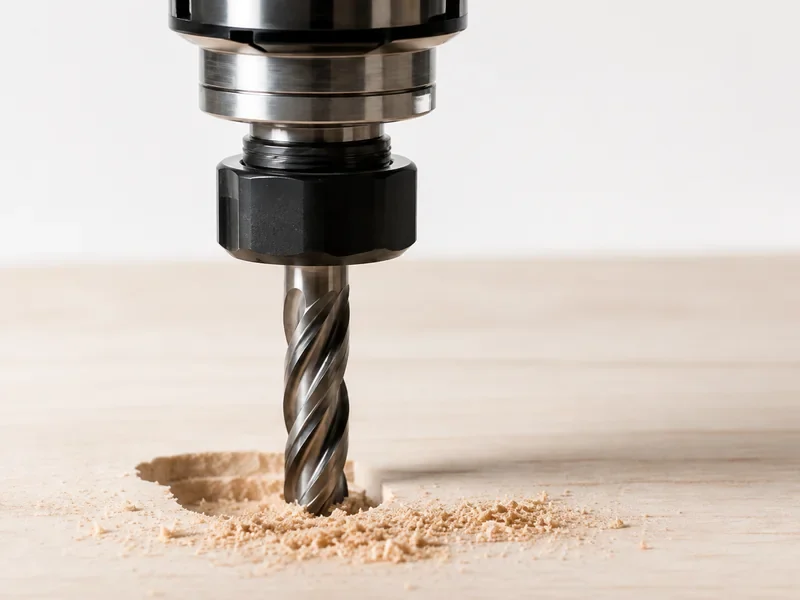
It is easy to mix the cutter, collet, nut, tool holder and spindle interface into one specification. They perform different jobs, and confusing them can lead to the wrong spare tooling or an incomplete machine quotation.
| Part | What it does | What you need to confirm |
|---|---|---|
| Cutter | Performs the machining | Cutting diameter, shank diameter, cutting length and overall length |
| Collet | Clamps the cutter shank | ER series, collet size, documented clamping range and condition |
| Collet nut | Compresses and retains the collet | Compatible ER series and correct assembly |
| Tool holder / collet chuck | Carries the collet system | ER series, holder geometry, condition and spindle compatibility |
| Spindle interface | Connects the rotating tool assembly to the machine | Manual spindle nose or the exact ATC tool-holder interface specified for the machine |
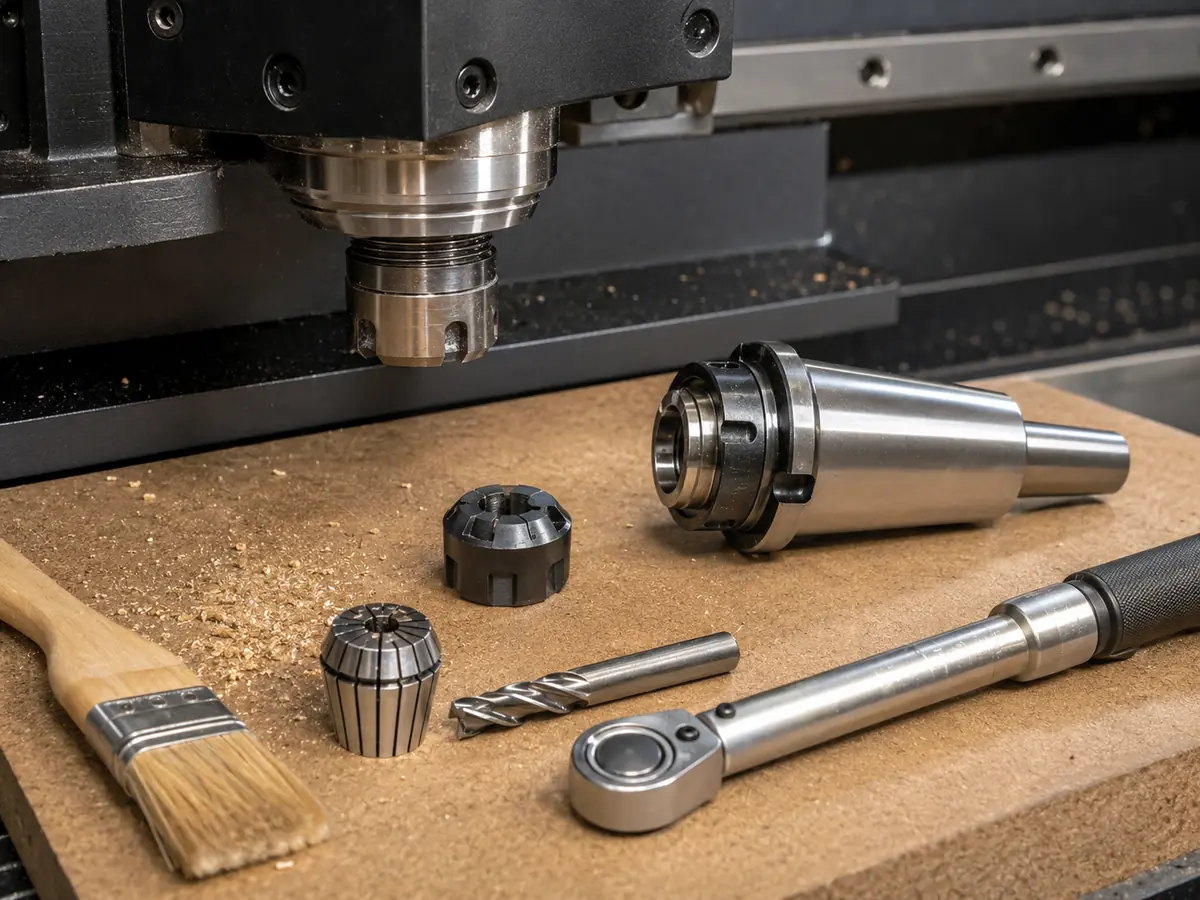
Do not use the ER size as the ATC spindle-interface specification. The ATC holder connects to the spindle. The ER collet inside the compatible holder clamps the cutter. These should be listed separately in the quotation.
Which ER Series Covers Your Actual Cutter Shanks?
ER11, ER16, ER20, ER25 and ER32 are different collet-system sizes. The number does not describe the cutter diameter and does not represent an accuracy grade.
The following ranges are reference coverage from published REGO-FIX standard metric collet sets. They are useful for comparing the relative capacity of each ER family. The final machine specification still needs to match the selected spindle or tool holder.
| ER series | Reference standard-set shank coverage | What this means in production |
|---|---|---|
| ER11 | 0.5–7.0 mm | Compact system for smaller shanks. Do not choose it before confirming that all required production cutters fit the selected spindle configuration. |
| ER16 | 1.0–10.0 mm | Provides more shank capacity than ER11 while remaining relatively compact. |
| ER20 | 1.0–13.0 mm | Covers many common router-tool shanks. A larger system is unnecessary if your real tool inventory already fits and the spindle configuration suits the process. |
| ER25 | 2.0–16.0 mm | Useful when the required cutter inventory extends beyond the ER20 family range but does not require ER32 capacity. |
| ER32 | 2.0–20.0 mm | Provides wider shank capacity. Choose it when the required cutters or spindle/tool-holder configuration genuinely need that range. |
REGO-FIX publishes standard ER collets to DIN 6499-B / ISO 15488 and specifies a 1 mm clamping range for its standard ER family. These figures describe tooling-family reference coverage; they do not mean every CNC router spindle accepts every size available within the ER family.
What Determines the Collet You Should Order?
- List the cutters used in normal production. Include the cutter type, cutting diameter, exact shank diameter, cutting length and overall length.
- Keep metric and inch shanks separate. A 6 mm shank is not the same as 1/4 in. A 12 mm shank is not the same as 1/2 in.
- Confirm the spindle or holder’s ER series. An ER20 collet is not a direct replacement for an ER32 collet.
- Match the exact shank to a documented clamping range. Do not force an oversized cutter shank into a collet whose specified range does not include it.
- Check cutter reach and fixture clearance. A larger collet does not solve excessive cutter projection or poor access to the workpiece.
- Decide how often the cutter must change. If several tools repeat throughout normal programs, manual versus automatic tool changing becomes part of the machine-selection decision.
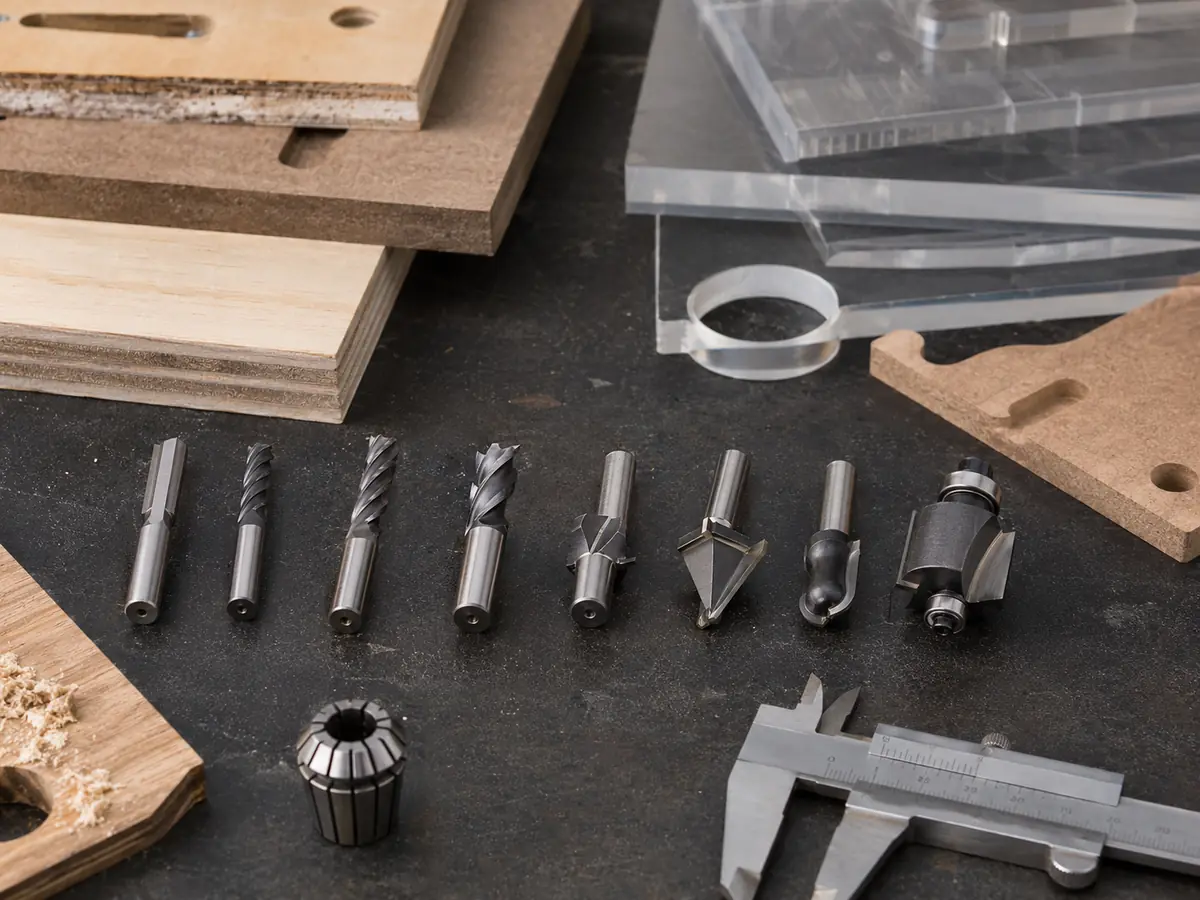
Do not round metric and inch shank sizes into one specification. A 1/4 in shank is 6.35 mm and a 1/2 in shank is 12.7 mm. If those are recurring tools, specify compatible collets whose documented ranges actually include those diameters.
When Is ER32 Worth Choosing Over ER20?
ER32 is worth selecting when the required tool inventory or spindle configuration needs the additional shank capacity. It should not be selected simply because “32” sounds more industrial than “20.”
| Your production situation | Recommended direction | Why |
|---|---|---|
| All recurring cutters fit the compatible ER20 range | Keep ER20 if the spindle and process already meet the production requirement | Moving to a larger ER system does not automatically improve cutting quality, accuracy or productivity. |
| Required cutter shanks extend beyond the ER20 family range | Review ER25, ER32 or another compatible spindle/toolholding configuration | The larger system is justified by the actual cutter inventory. |
| The shop routinely uses 1/4 in and 1/2 in shanks | List those inch sizes explicitly in the RFQ | This avoids incorrect metric substitution and makes spare collet planning clearer. |
| The concern is poor edge quality or excessive runout | Inspect the entire toolholding system before changing ER series | Collet condition, holder condition, cleanliness, cutter quality, assembly and projection can all affect the result. |
| A larger holder reduces access around the part or fixture | Do not oversize the system without a production reason | More shank capacity has little value if the tooling geometry makes the actual machining task harder. |
Tip
Send one normal CAM tool list instead of requesting “the largest possible collet.” It allows the spindle and holder configuration to be checked against the cutters your factory will actually use.
When Does ATC Matter More Than Collet Size?
If a normal part uses one cutter or only occasional manual tool changes, a manual-tool-change router can remain a practical production solution. In that situation, the priority is confirming the correct spindle, ER series, cutter range and tool access.
If the same program repeatedly requires several cutters—for example cutting, grooving, pocketing and profiling—the operator must stop the process and change tooling on a manual machine. At that point, the production decision is no longer just ER20 versus ER32. It becomes manual tool change versus ATC.
| Production pattern | Better direction | What the configuration solves |
|---|---|---|
| One primary cutter and infrequent changes | Manual tool change can be sufficient | Avoids buying an automatic tool-changing system when it does not remove a meaningful production bottleneck. |
| Several cutters repeat within normal programs | Review ATC | Reduces repeated operator intervention between machining operations. |
| Tool changes interrupt batches throughout the shift | Review ATC together with tool count and production target | The value comes from reducing process interruption, not simply from having more tooling hardware. |
| One large-shank tool is required | Do not assume ATC is required | Large shank capacity and automatic tool changing solve different production problems. |
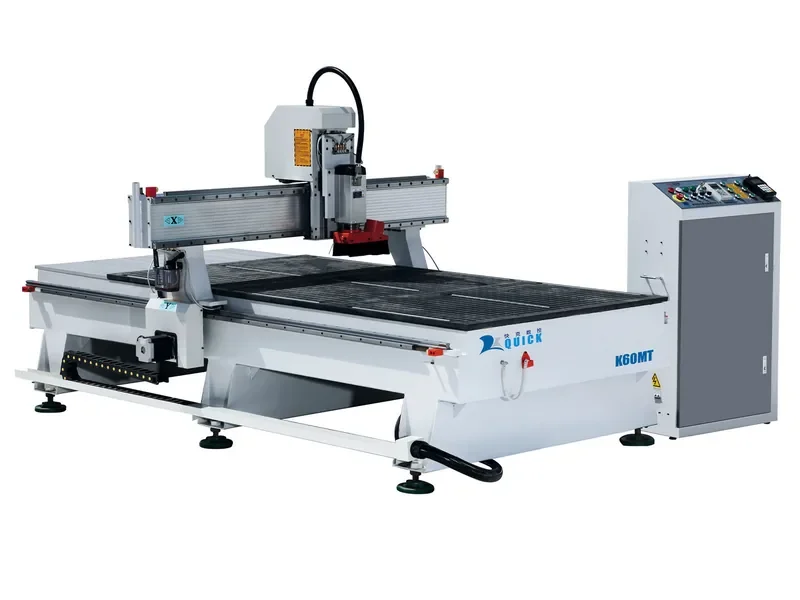
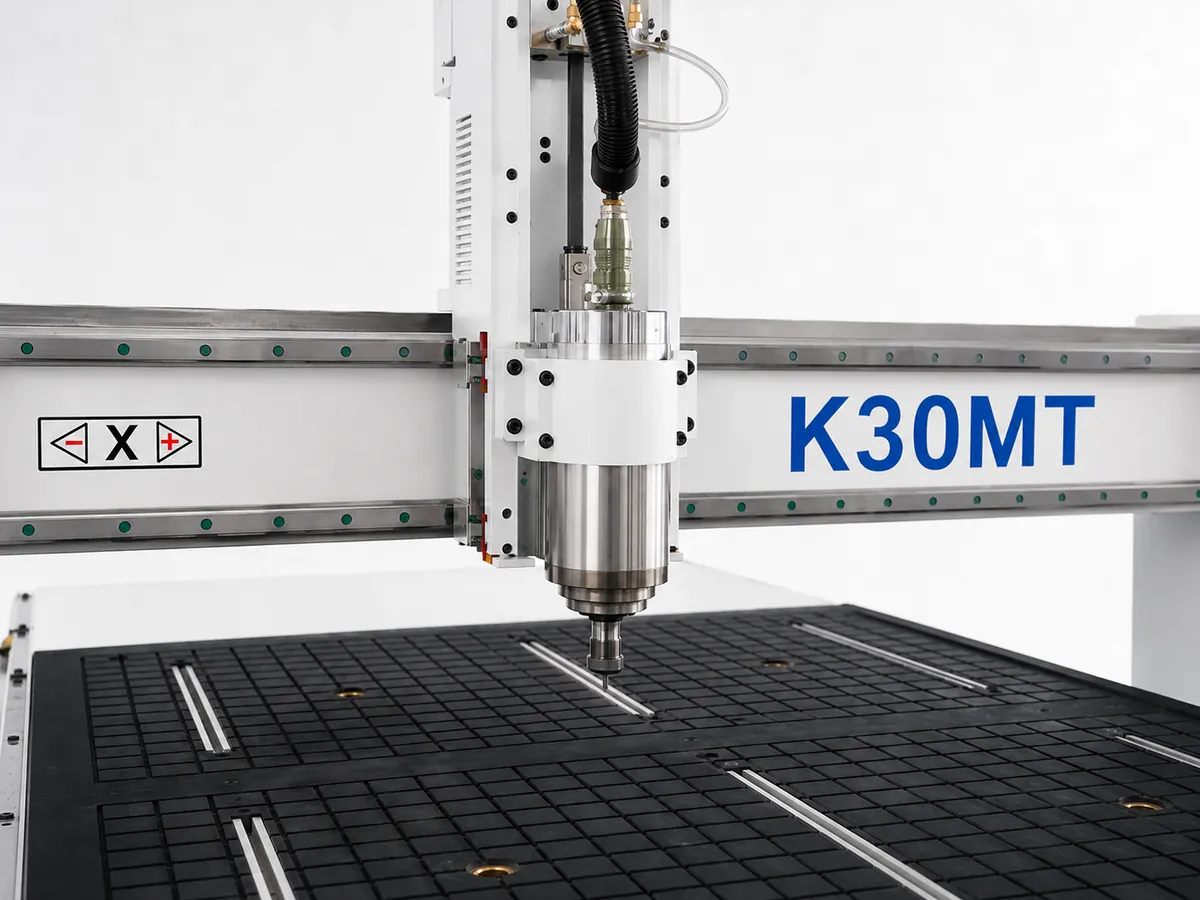
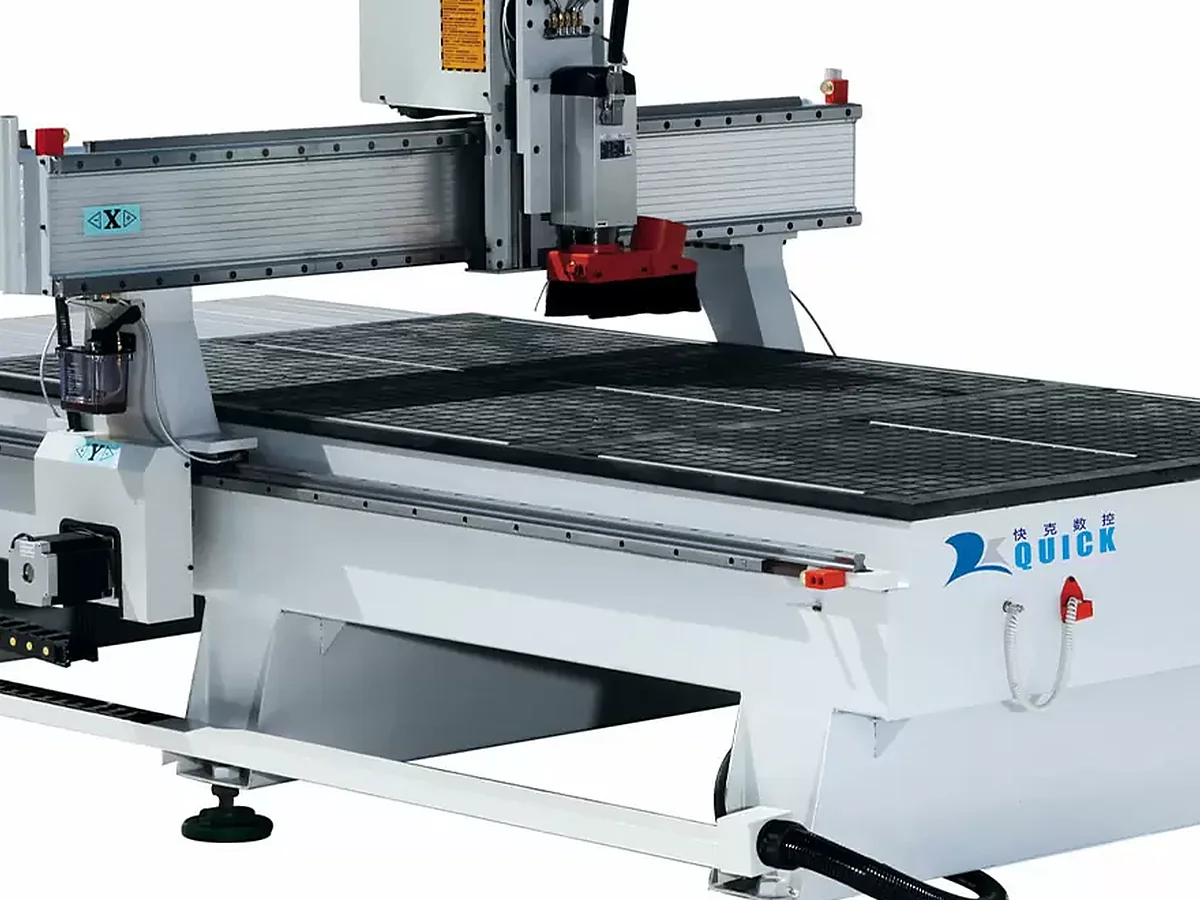
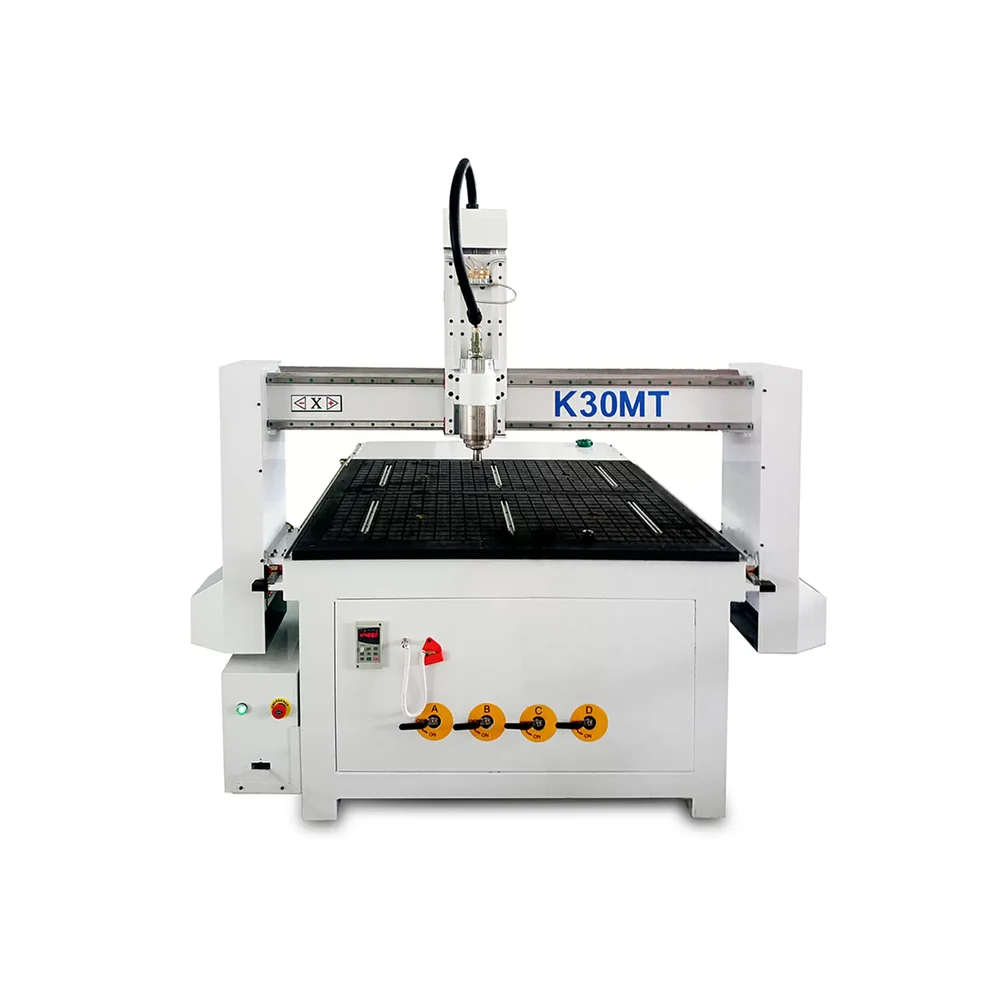
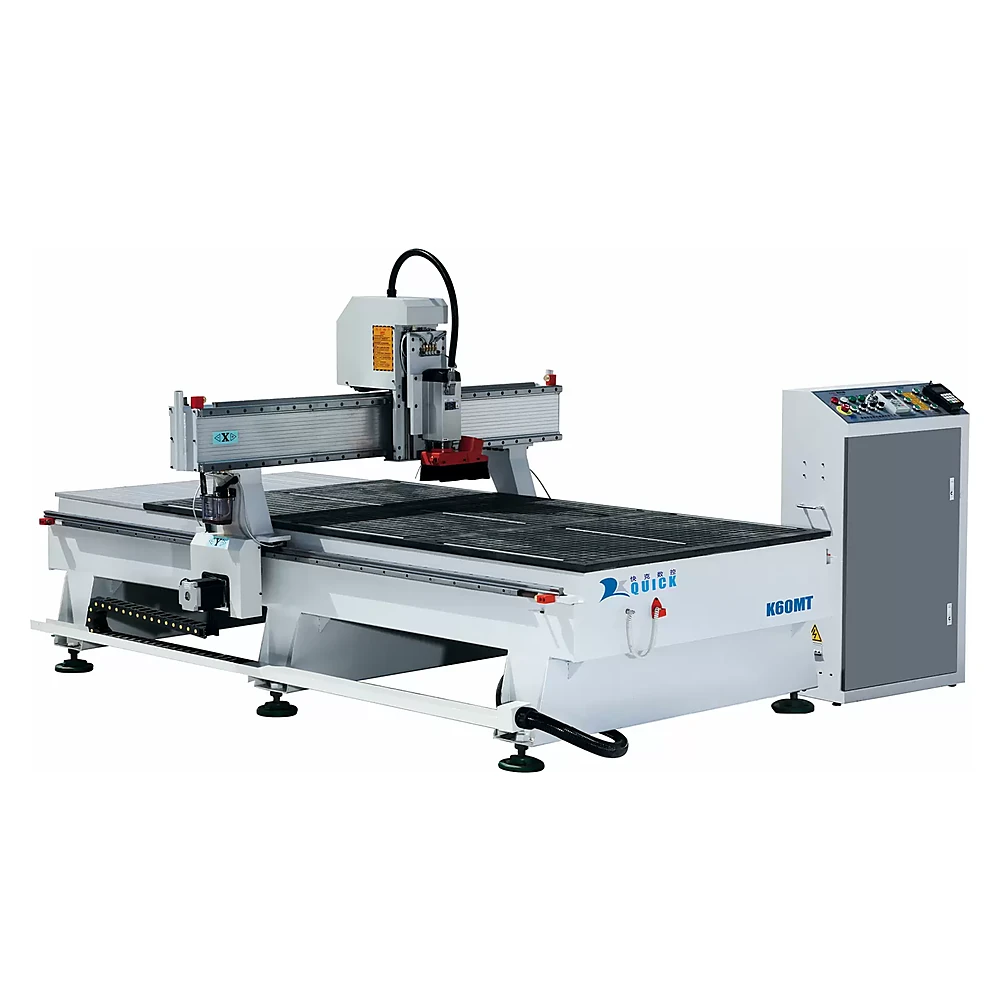
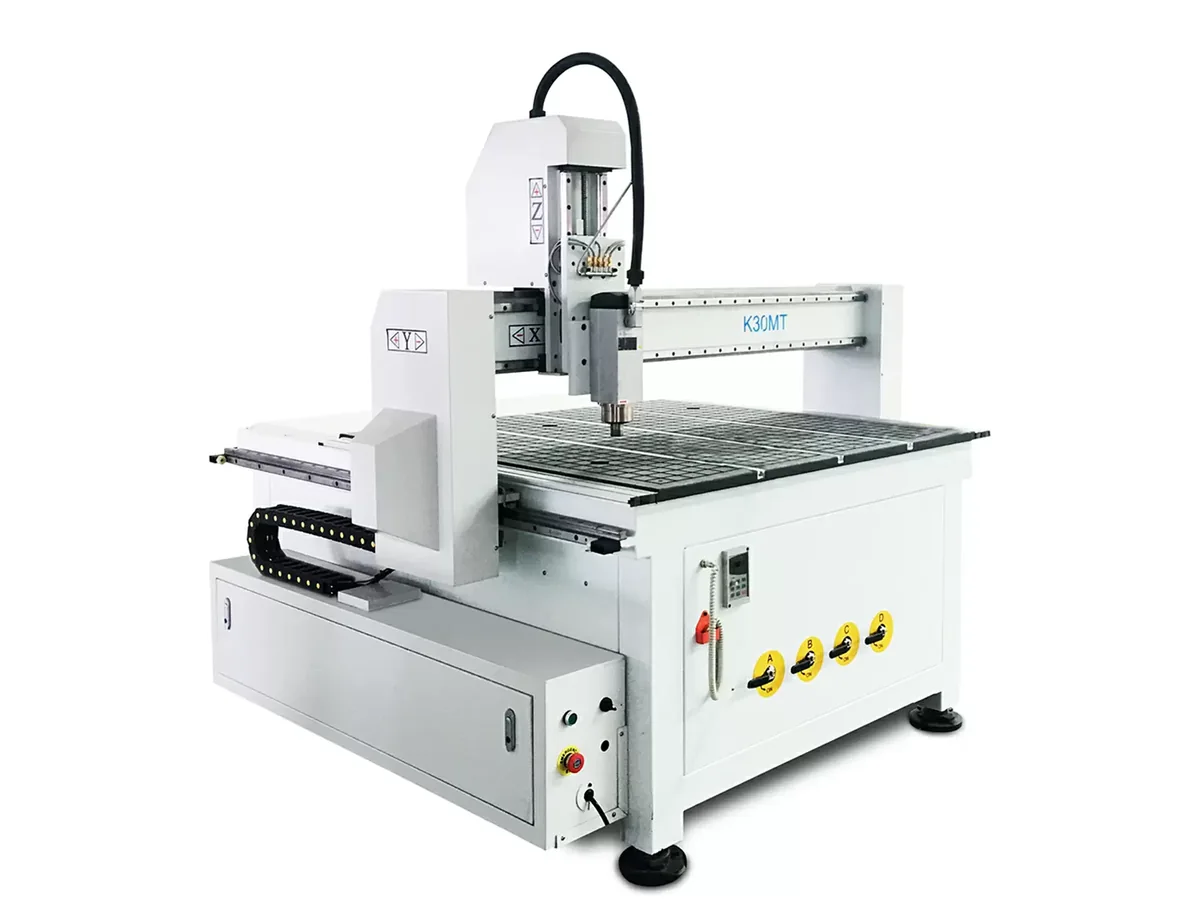
Quick CNC’s current K30MT page lists a manual ER20 system, while the K60MT page lists a manual ER32 system. These are model-specific configurations, not a rule that one machine size must always use one ER series.
On an ATC CNC router, cutters are normally prepared in removable holders and the machine changes the holder assembly. The quotation therefore needs to confirm both the holder-to-spindle interface and the collet-to-cutter interface.
See the ATC CNC Router Guide when repeated multi-tool programs are affecting production flow.
Why Can the Correct Collet Still Produce Poor Cutting?
Selecting the correct ER series and shank size only confirms nominal compatibility. Stable production also depends on the condition and assembly of the complete rotating tool system.
If the cutter chatters, leaves an unstable edge, slips or shows persistent runout, do not immediately solve the problem by increasing spindle power, changing to a larger ER system or changing feed settings.
Check the toolholding system in this order:
- Inspect the cutter shank for damage or contamination.
- Clean the collet bore and taper surfaces.
- Inspect the collet slots for scoring, corrosion, cracking or deformation.
- Check the nut and holder or spindle interface for damage.
- Confirm that the collet is assembled into the nut correctly.
- Confirm adequate cutter insertion and avoid unnecessary projection.
- Reassemble using the tooling manufacturer’s specified tightening procedure.
- Verify the result with the actual cutter and representative machining process.
REGO-FIX assembly guidance requires the collet to be correctly clipped into the nut before installation on the holder. It also recommends inserting the cutter through the full collet length where possible and not less than two-thirds of the collet length.
When should a collet be replaced or investigated?
- visible scoring, rust, pitting, cracking or damaged slots;
- resin, dust or debris prevents clean seating;
- the cutter slips during machining;
- persistent runout remains after proper cleaning and assembly;
- the nut or holder interface is damaged;
- a collision may have damaged the cutter, collet, holder or spindle.
Do not use a universal “replace every X months” rule. Inspection and replacement depend on actual cutting load, spindle use, dust exposure, tool-change frequency, maintenance and the tooling manufacturer’s instructions.
What Should You Avoid When Specifying CNC Router Collets?
The collet clamps the cutter shank. Cutting diameter and shank diameter are separate specifications.
Extra shank capacity only has value when your tool inventory or spindle configuration requires it.
Record 6 mm, 6.35 mm, 12 mm and 12.7 mm as their actual dimensions.
Use the documented clamping range and keep recurring production sizes clearly identified.
If operators repeatedly stop the machine to change cutters, review whether ATC is the actual production solution.
Dirty or damaged interfaces can create problems that feed and speed changes will not correct.
Why Is a 1/4-Inch Shank Not a 6 mm Shank?
Consider a factory that uses both metric and inch router bits. A recurring 1/4 in cutter has a 6.35 mm shank, but the tooling list records it simply as “6 mm.”
The 6.35 mm cutter is treated as a 6 mm shank and paired with a collet whose documented maximum is 6.0 mm.
The cutter is now outside the stated clamping range, so correct seating and clamping can no longer be assumed.
The tooling list recorded only cutter names or approximate sizes instead of exact shank dimensions.
Record the tool as 1/4 in / 6.35 mm and select a compatible collet whose documented range includes that shank.
The production lesson is simple: the exact recurring shank sizes belong in both the machine RFQ and the spare-tooling list.
Send These Details So We Can Match the Spindle and Toolholding
Send the details that can actually change the spindle, toolholding or machine configuration.
Main material, workpiece dimensions, thickness and any areas where tool access or fixture clearance matters.
Show the part geometry plus cutting, grooving, pocketing, drilling, profiling or other recurring operations.
Include cutter type, cutting diameter, exact shank diameter, cutting length and overall length for the tools used in normal production.
Show how many cutters repeat in a normal program, the output target, and whether manual tool changing is acceptable or ATC should be reviewed.
Confirm the Toolholding System Before the Machine Configuration Is Locked
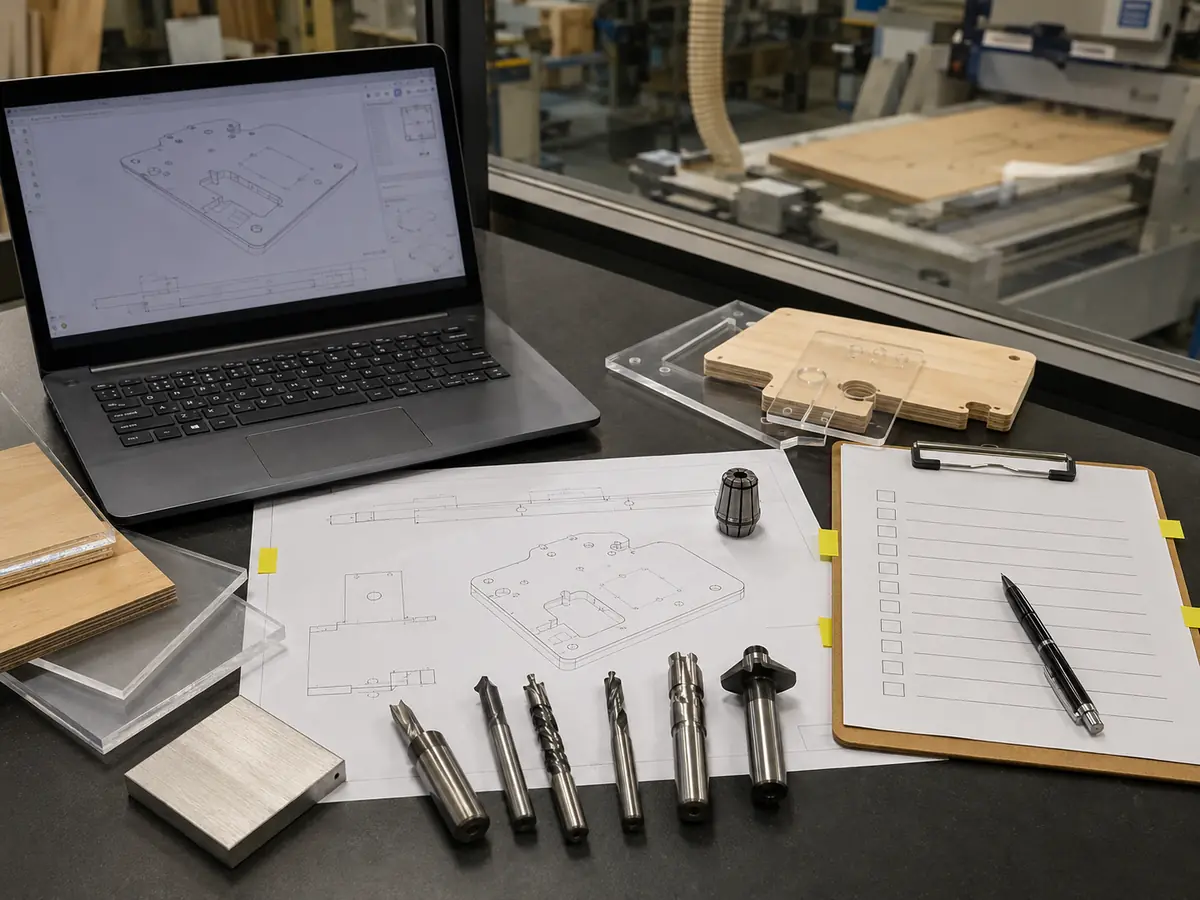
Send Quick CNC your material, representative CAD or drawing, cutter list with exact shank sizes, tools used per program, production requirement and manual-or-ATC preference. These inputs allow the spindle, holder, collet and machine configuration to be reviewed together instead of treating the collet as a separate accessory.
Send My Tool List for Configuration ReviewHow Does Quick CNC Use This Information to Configure the Machine?
You do not need to choose an ER number before sending the machine requirements. The configuration should follow the production requirement.
We first check whether the selected manual spindle and collet system cover the required shanks and tool reach. A larger ER series is unnecessary if it does not solve a real tooling requirement.
We review whether the production process is better matched to an ATC CNC router, then define the holder-to-spindle and collet-to-cutter interfaces separately.
We review cutter length, workpiece thickness, fixture clearance and spindle access instead of assuming that a larger collet solves the problem.
We start from the material, part size, CAD, machining operations, cutter count, output requirement and automation level before locking the spindle and tooling system.
For cutter geometry and flute selection, see the CNC Router Bits Guide. For the broader spindle, holder and machine system, see CNC Router Parts and Their Functions.
Run the Real Tool Sequence Before You Put the Setup Into Production
Do not stop at “the cutter fits.” Run the setup with the workpiece, cutters and tool-change pattern you expect to use in normal production.
- Use the representative material and part geometry.
- Install the same cutter types and exact shank sizes used in normal production.
- Run the real machining sequence, including the normal tool changes instead of testing each cutter in isolation.
- Watch tool access, fixture clearance, cutter clamping, edge quality and any sign of slipping or unstable cutting.
- If the process still needs too much operator intervention or shows unstable results, separate the cause before changing the spindle or ER system.
Tip
A clean single cut is not enough. What matters is whether the complete job can run with the required tool access, stable clamping, repeatable cutting and an acceptable level of operator intervention.
Frequently Asked Questions About CNC Router Collets
What collet type is used on a CNC router?
Many industrial CNC routers use an ER collet system, but the exact ER series depends on the spindle or tool holder. Confirm the machine configuration and your required cutter shanks instead of assuming every CNC router should use ER20 or ER32.
How do I know whether I need ER20 or ER32?
List the exact shank sizes used in normal production first. If the required cutters fit the compatible ER20 range and the spindle and tool access meet the process requirement, moving to ER32 is unnecessary. ER32 becomes useful when your required cutter inventory or spindle configuration needs its wider shank capacity.
Can I use an ER20 collet in an ER32 chuck?
Not directly. The collet, nut and chuck must belong to a compatible ER system. Any purpose-designed reduction accessory must be specifically approved for the holder and application.
What collet do I need for a 1/4-inch router bit?
A 1/4 in shank is 6.35 mm. Use a collet whose documented clamping range includes 6.35 mm. For recurring production, listing the cutter explicitly as 1/4 in prevents it from being incorrectly treated as a 6 mm shank.
What collet do I need for a 1/2-inch router bit?
A 1/2 in shank is 12.7 mm. Use a compatible collet whose documented range includes 12.7 mm and confirm that the selected spindle and holder are suitable for the required cutter and process.
When is an ATC CNC router worth choosing?
ATC becomes relevant when several cutters repeat within normal machining programs and manual changes create meaningful production interruptions. Do not choose ATC simply because a larger cutter or larger collet is required; tool capacity and automatic tool changing solve different problems.
How should I verify a CNC router collet setup before production?
Check the cutter shank, collet, nut, holder or spindle interface, insertion depth, tool projection and cleanliness, then verify the complete setup using the representative material and machining sequence. Persistent runout, tool slippage or unstable cutting should be investigated before changing process parameters or moving to a larger ER series.
References
- REGO-FIX ER System and ER Standard Collet technical information.
- REGO-FIX ER toolholder overview for ER-system and spindle-interface context.
- SCHUNK ER32 HSK-F 63 collet-chuck example showing the distinction between ER clamping size and spindle-holder interface.
- Quick CNC K30MT and Quick CNC K60MT for the model-specific ER20 and ER32 examples used above.
Build the Machine RFQ Around Your Actual Production Tools
Send your representative workpiece, CAD or drawing, exact cutter shank sizes, tools used per program, production requirement and automation preference. Quick CNC can use these inputs to review the spindle and toolholding configuration together with the machine instead of overspecifying one component in isolation.
Request a CNC Configuration Review
Frannie
Hello, I’m Frannie, a CNC machinery specialist with 15 years of experience in the woodworking CNC industry. I help furniture factories, cabinet makers, woodworking workshops, and production businesses choose CNC machines that match their production needs, factory size, budget, and efficiency goals.
My work focuses on solving real production problems, including replacing outdated equipment, improving machining efficiency, reducing labor costs, and upgrading to smarter CNC solutions. I also support customers with machine installation guidance, operation training, video support, and on-site training when needed, helping them use their machines more confidently and effectively.