1325 Wood CNC Router for Practical 4×8 Panel Processing
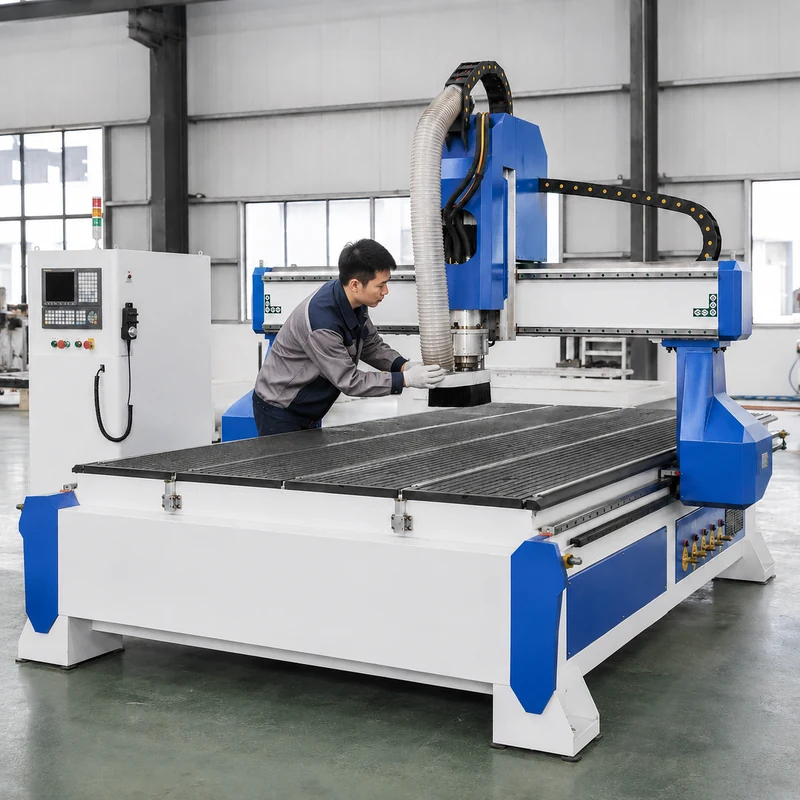
A practical 3-axis CNC router for furniture, cabinet, door, sign and sheet-processing workshops that need a full 1300 × 2500 mm work area. Choose this manual-tool-change machine when most programs use one cutter or only occasional changes; move to an ATC model when repeated tool changes interrupt output.
- 1300 × 2500 × 200 mm working area
- 3.5 kW air-cooled spindle, up to 18,000 rpm
- Vacuum and T-slot dual-purpose table
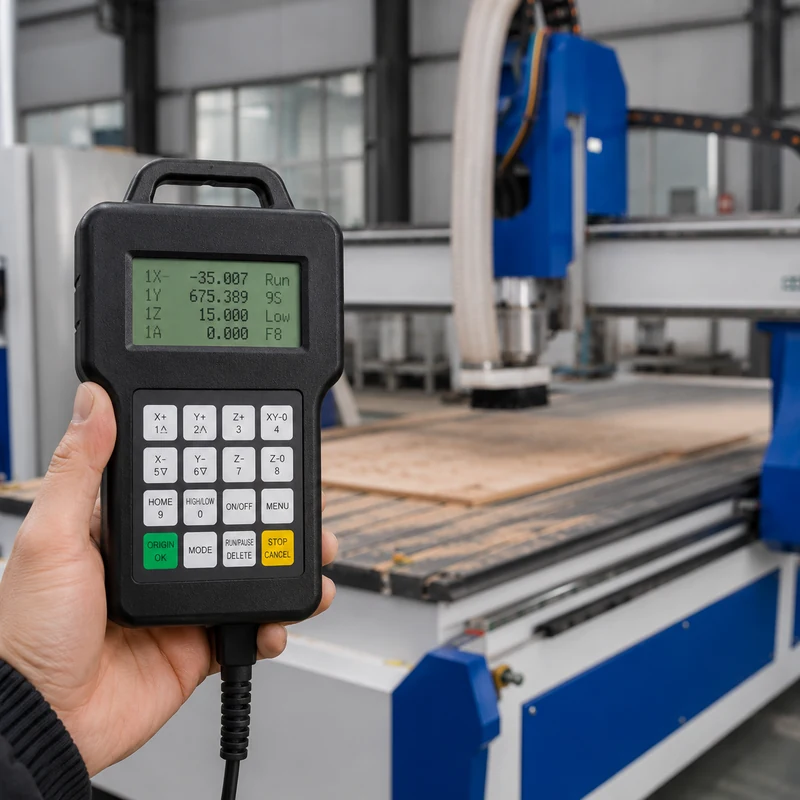
- DSP A11 handheld controller
- X/Y rack-and-pinion drive with Z-axis ball screw
Send us your material, drawing, tool list and target output so we can match the machine, workholding and test scope.
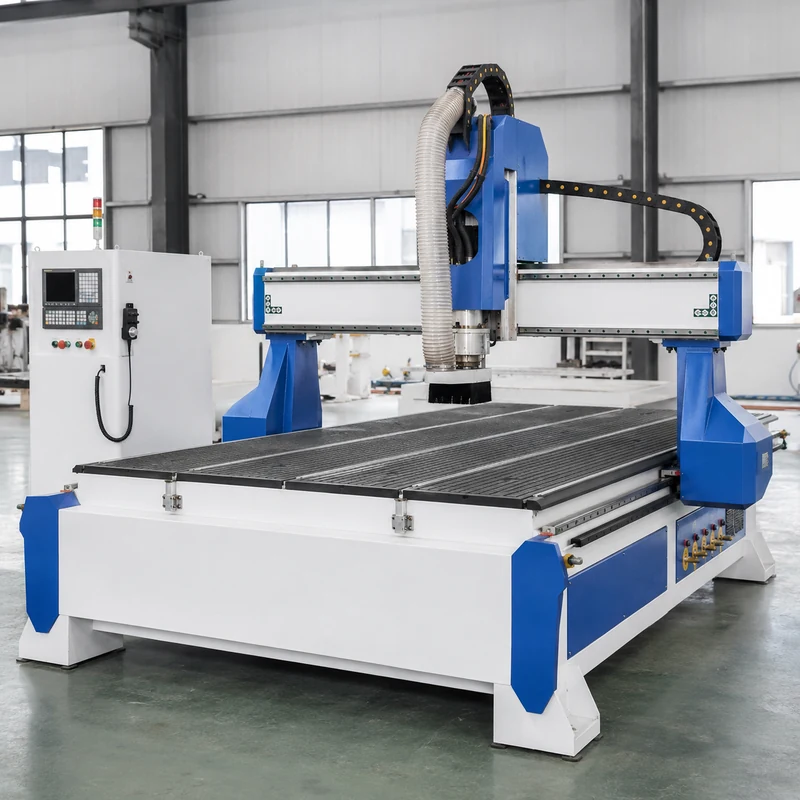
Built for Industrial Buyers Processing Full Sheets and Routed Parts
We recommend this 1325 wood CNC router for furniture factories, cabinet and door manufacturers, panel-furniture producers, woodworking shops, sign makers, acrylic and plastic processors, CNC job shops, distributors and production teams evaluating a straightforward full-sheet machine.
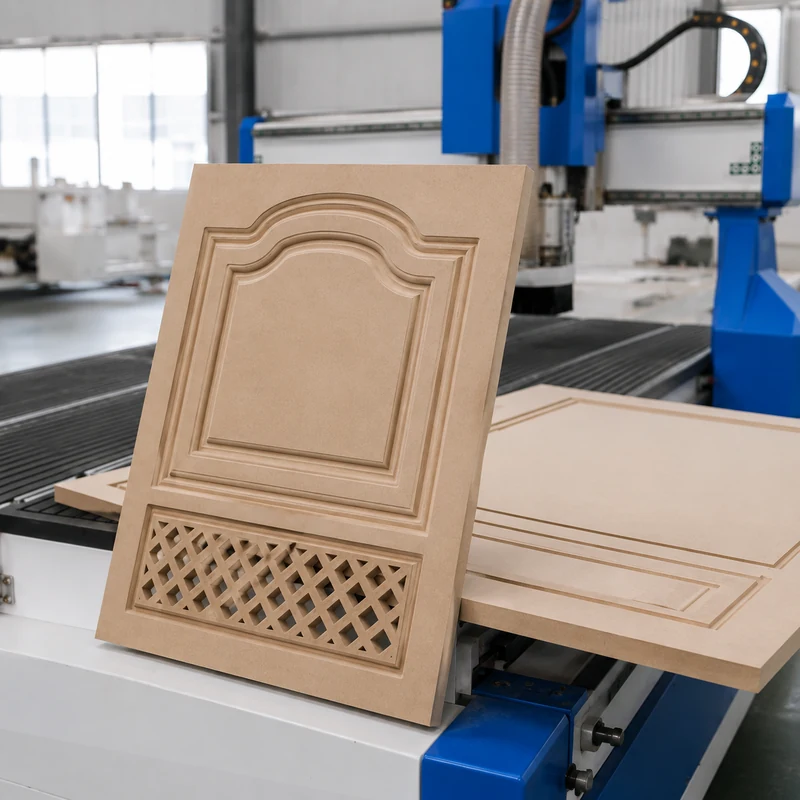
It can process suitable solid wood, MDF, plywood, particleboard, melamine board, acrylic, PVC, plastics, foam and composite sheets. Typical work includes cabinet and furniture components, door panels, signs, grooves, drilled features, profiles, decorative carving and custom routed parts.
Soft aluminum routing can be evaluated only after Quick CNC reviews the alloy, thickness, drawing, tooling, workholding, lubrication or cooling method and required finish.
A Straightforward 4×8 Production Solution
The 1300 × 2500 mm table handles common full-sheet formats without repositioning. The single 3.5 kW spindle and manual tool-change workflow keep the machine focused on cutting, routing, grooving, drilling and engraving jobs that use one tool for most of the cycle or require only occasional changes.
Quick CNC recommends this machine when the buyer needs useful full-sheet capacity and controlled investment more than automatic tool changing or automated loading. When a normal program repeatedly requires several tools, an ATC router can reduce interruptions and provide a better production flow.
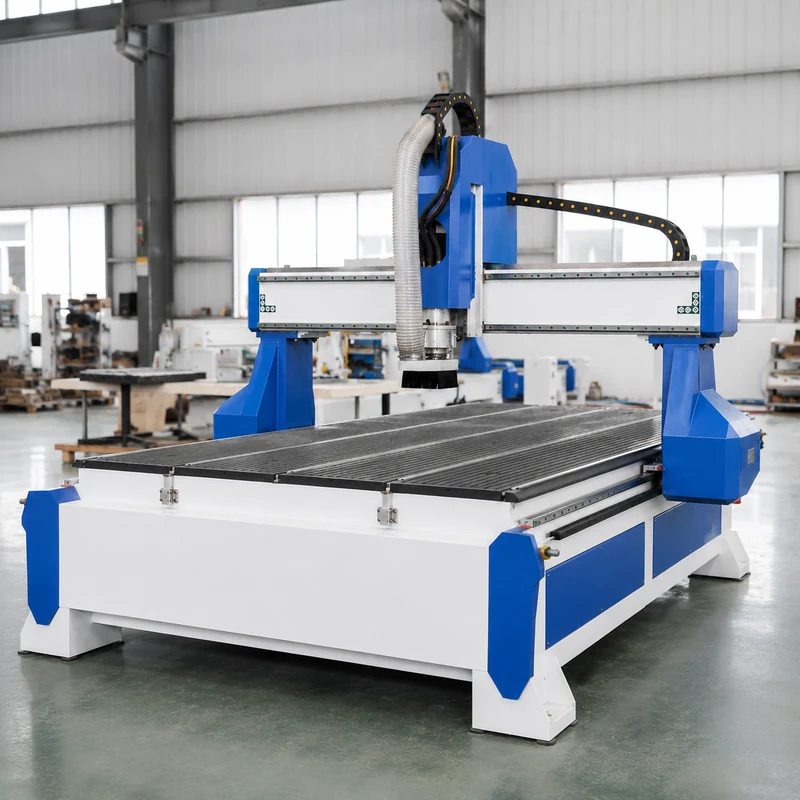
Suitable and Unsuitable Production Scope
A strong fit for
- panel sizing, profiling and component cutting;
- cabinet, door and furniture-part production;
- signage, display panels and acrylic parts;
- grooves, pockets, drilling and decorative engraving;
- custom woodworking and short-to-medium batch production;
- workshops that accept manual tool changes.
Choose another machine direction when
- one program repeatedly uses several cutters and tool changes limit output;
- automatic loading, unloading, labeling or production-line integration is required;
- rotary, side-face, undercut or five-side machining is required;
- the primary work is steel, hard metal or heavy metal removal;
- machining-center-level rigidity, thermal control or precision mold work is required;
- the buyer needs a compact desktop or hobby machine.
1325 Wood CNC Router Specifications
| Specification | Listed configuration |
|---|---|
| X/Y/Z working area | 1300 × 2500 × 200 mm |
| Machine size | 2000 × 3100 × 1700 mm |
| Repositioning resolution | 0.02 mm |
| X/Y transmission | Rack-and-pinion gear drive |
| Z transmission | Ball screw drive |
| Linear guide | 20 mm square linear guide |
| Maximum rapid speed | 35,000 mm/min |
| Maximum cutting speed | 15,000 mm/min |
| Spindle | 3.5 kW air-cooled |
| Spindle speed | Up to 18,000 rpm |
| Inverter | 3.7 kW |
| Drive motors | Stepper motors |
| Controller | DSP A11 handheld controller |
| Command and interface | G-code, USB 2.0 |
| Table | Vacuum and T-slot dual-purpose table |
| Vacuum pump | 7.5 kW option |
| Listed power supply | AC 380 V, 50–60 Hz, 3-phase |
| Listed packing | 2280 × 3200 × 1800 mm, 1000 kg |
Repositioning resolution is a machine specification, not a finished-part tolerance. Actual part size and surface result depend on material, tool condition, spindle runout, workholding, cutting parameters, toolpath strategy and inspection method. We confirm the final configuration, electrical requirements and packing data in the quotation or technical agreement.
Structure for Full-Sheet Routing
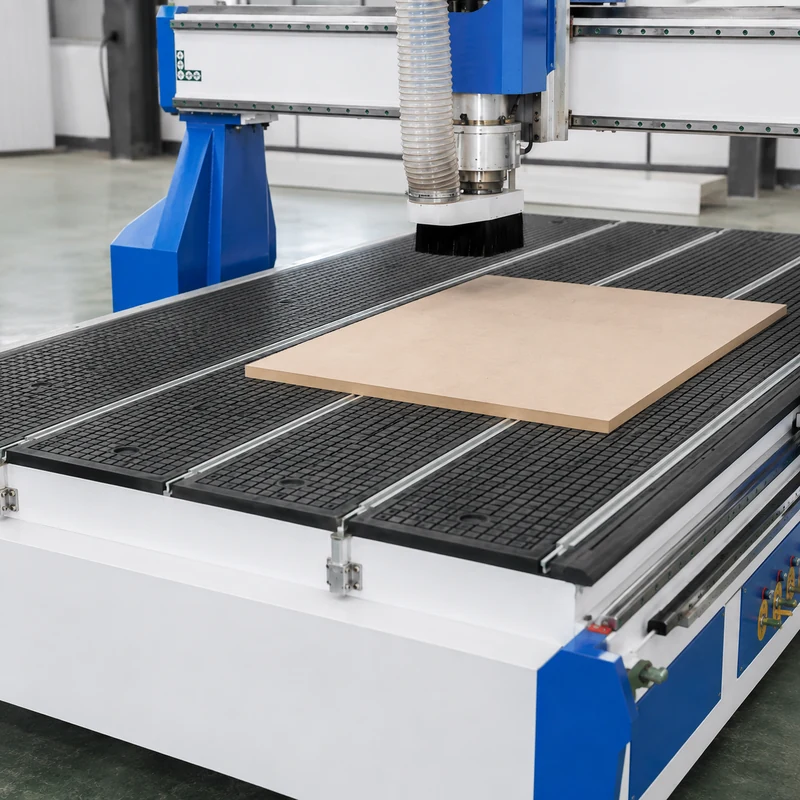
The X and Y axes use rack-and-pinion transmission to support travel across the large table, while the Z axis uses a ball screw for controlled vertical motion. The vacuum and T-slot table allows the buyer to combine suction holding for sheets with mechanical fixtures for irregular or low-area parts.
The DSP A11 handheld controller supports offline operation and USB file transfer. This can simplify daily work where the operator prefers to load prepared G-code without keeping a computer connected during machining. Quick CNC will review the buyer's CAD/CAM software and post-processor before production use.
Select the Configuration Around the Job
Vacuum holding
Full sheets can use vacuum holding, but practical performance depends on panel porosity, flatness, spoilboard condition, open vacuum zones and the remaining surface area after profiles are cut. Small parts may require onion-skinning, tabs, bridges, a different cutting order or auxiliary fixtures.
Mechanical fixtures
The T-slot table provides a second holding method for irregular, nonporous or low-area parts. Clamp positions must remain outside every toolpath and allow enough clearance for the spindle, dust hood and cutter.
Dust extraction
MDF, particleboard and wood routing produce large amounts of fine dust and chips. We will specify the dust-collection interface, while the buyer provides an effective dust-collection system and confirm the extraction interface, airflow and workshop layout with Quick CNC.
Electrical supply
The reference configuration is AC 380 V, 50–60 Hz, 3-phase. We will confirm the destination voltage, phase, frequency, grounding, breaker, cable and any transformer requirement before the machine is built.
Send us the number of tools per program, smallest part, panel material, factory power and required output. We will compare this 1325 configuration with ATC or nesting alternatives and define a sample-test direction.
Controlled Customization
We configure the machine around the buyer's material, part dimensions, tooling, workholding, dust-collection interface, software workflow, voltage and factory conditions. Customization is confirmed only after the selected components, utility requirements and delivery scope are recorded in the quotation or technical agreement.
Requests for a different spindle, controller, motor system, pump, table arrangement or factory interface should include the production reason and expected result. We will recommend an alternative model when the requested process is better served by ATC, nesting, rotary, PTP or five-axis equipment.
Tooling, Workholding and Sample Validation
For MDF and laminated panels, compression cutters can help control chipping on both faces. Down-cut tools can protect the top face, while up-cut tools improve chip evacuation. Straight tools support general profiles and grooves; V-bits support lettering and decorative lines; ball-nose tools support relief and curved surfaces.
Tool selection must match material grade, thickness, edge requirement, spindle power, collet capacity and planned feed. Worn tools, trapped dust, weak vacuum holding or incorrect cutting parameters can cause fuzzy edges, burning, melting, chatter or part movement.
For acrylic, heat control and chip evacuation are critical. For soft aluminum, Quick CNC requires the alloy, thickness, drawing, tolerance, finish, cutter, lubrication or cooling plan and sample-test criteria before approving the configuration.
Send us the drawing and material details when the finished part has a defined tolerance, edge-quality target, appearance requirement or output target. We can arrange a sample-cutting plan and record the agreed acceptance method before production.
Testing, Quality Control and Documentation
The test and evidence package for each order is defined in the technical agreement before production. We do not treat general factory images or standard process descriptions as proof that a specific order has passed its acceptance test.
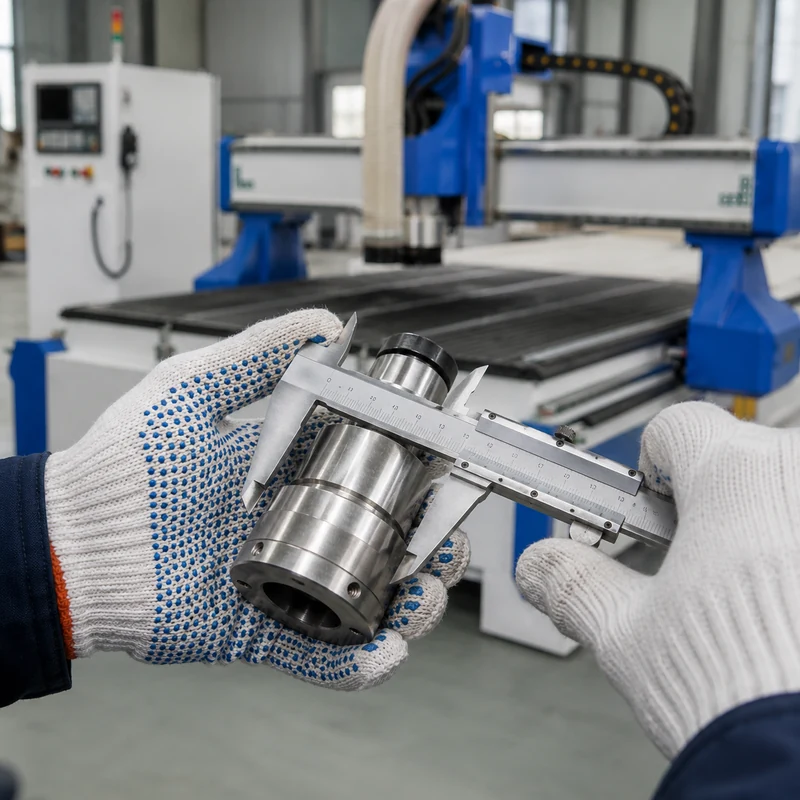
Quick CNC uses manufacturing and inspection steps to check component dimensions, structural fit, guide alignment, assembly condition and machine function. The exact pre-delivery test for an order should be defined in the technical agreement.
We can provide, when agreed, machine photos, configuration records, sample-cutting video, measurement results, serial information, parameter backups, manuals, packing records or third-party inspection access. These items must be agreed before shipment so the evidence matches the order and acceptance criteria.
No certification scope should be assumed from the product name alone. Send the destination market and required standard so Quick CNC can confirm what documentation is available for the ordered configuration.
Choose This Model or an Upgrade
Choose this 1325 manual-tool-change router when
- most programs use one cutter or only occasional changes;
- the main work is top-face cutting, routing, grooving, drilling or engraving;
- full-sheet size matters more than automatic handling;
- the factory wants vacuum and mechanical holding options;
- the buyer prefers a straightforward machine and controlled starting investment.
Evaluate a 3-axis ATC router when
- normal programs repeatedly require several tools;
- manual changes interrupt the operator and reduce output;
- tool length management and repeat production are priorities.
Evaluate a nesting machine or line when
- automatic loading, unloading, labeling, drilling integration or higher panel throughput is required.
Evaluate rotary, 4-axis or 5-axis equipment when
- the parts require cylindrical work, side machining, undercuts or multiple-face access.
Practical Production Scenarios
Cabinet and panel furniture
Production task: cut cabinet sides, shelves, doors, backs and furniture components from MDF, plywood, particleboard or melamine board. The final configuration should reflect the smallest parts, drilling pattern, edge requirement and expected boards per shift.
Wooden doors and decorative panels
Production task: route profiles, pockets, grooves, lettering and relief details. Send the door size, depth, tool list and finish requirement so Quick CNC can review Z travel, tooling and cycle sequence.
Signs and acrylic parts
Production task: produce letters, logos, display panels and routed plastic components. Material-specific cutters, chip evacuation, heat control and protective-film handling should be confirmed before batch work.
Custom parts and job-shop work
Production task: use the dual-purpose table for mixed sheet and fixture-based jobs. Send us how often materials change, how many tools each program uses and which tolerances must be inspected.
Quick CNC Production and Quality Process
We prepare the machine around the confirmed configuration, electrical requirements and agreed delivery scope. The order record controls component confirmation, manufacturing, assembly, guide and structure inspection, parameter setup, functional testing, agreed sample work, final configuration checks, packing and documentation.
We will prepare a technical agreement identifying the working area, spindle, controller, motor system, table, vacuum pump, electrical supply, included accessories, documentation, test scope, packing and service responsibilities. This gives the buyer and Quick CNC one reference for production and acceptance.
What to Send for an Accurate Quotation
Provide:
- material name, grade, sheet size and thickness;
- finished-part drawing or representative file;
- required operations and machining depths;
- smallest part size and preferred holding method;
- edge, surface-finish and tolerance requirements;
- tools used per program and tool-change frequency;
- target boards or parts per shift;
- CAD/CAM software and post-processor information;
- factory voltage, phase, frequency, grounding and dust extraction;
- destination country, port and preferred Incoterm;
- sample-test, FAT, documentation or inspection requirements.
MOQ, Lead Time, Packing and Logistics
Quick CNC has no minimum order quantity for this machine. Standard production lead time is approximately 45 days after the order and configuration are confirmed. Ocean freight time is separate and depends on the route, carrier and destination handling.
The machine is prepared with export packing and is normally shipped by container. The final packing list and quotation confirm machine dimensions, gross weight, protective packing method, loading plan, port and Incoterm before transport booking.
Installation, Warranty and After-Sales Support
The standard warranty is one year. Coverage, exclusions, the warranty start point and replacement-part responsibilities are controlled by the signed agreement. Quick CNC can support installation planning, operator training, troubleshooting and spare-parts coordination according to the selected machine, destination and agreed service scope.
Before arrival, the buyer should prepare the foundation or floor area, electrical connection, grounding, dust extraction, lifting equipment, internet access and any compressed-air or other utility requirement stated in the final documents.
Frequently Asked Questions
Is 1325 the same as a 4×8 CNC router?
The 1325 name normally refers to a working area around 1300 × 2500 mm, which is commonly used for full 4×8-foot sheets. Always use the confirmed metric working area for production planning.
Does this machine have an automatic tool changer?
No. This configuration uses a single spindle with manual tool changes. Choose it when programs use one tool or only occasional changes. Evaluate an ATC router when repeated tool changes limit output.
Can it cut MDF, plywood and melamine board?
Yes, these are core materials when the tool, vacuum holding, spoilboard, dust collection and cutting parameters are matched to the panel grade and edge requirement.
Can it process soft aluminum?
Occasional soft-aluminum routing can be evaluated, but it is not a general metal-cutting promise. Quick CNC needs the alloy, thickness, drawing, tolerance, finish and process plan before recommending the setup.
Will the vacuum table hold every small part?
No. Holding depends on material porosity, flatness, vacuum zones and remaining surface area. Small parts may require tabs, onion skin, a different toolpath sequence or mechanical fixtures.
Does 0.02 mm mean the finished part will hold a 0.02 mm tolerance?
No. The listed value is repositioning resolution. Finished-part tolerance must be validated through the complete material, tooling, workholding, toolpath and inspection process.
What electrical supply is required?
The reference configuration is AC 380 V, 50–60 Hz, 3-phase. We will confirm the destination factory power before production.
How long does production take?
Standard production lead time is approximately 45 days after order and configuration confirmation. Shipping time is separate.
Get a 1325 CNC Router Configuration for Your Factory
Send Quick CNC your drawing, materials, sheet size, tool list, output target, factory power and destination. Our engineers will recommend the machine configuration, workholding, tooling direction, test scope and quotation for your production task.
Send your drawing, materials, tool list, output target, factory power and destination for a matched configuration and quotation.