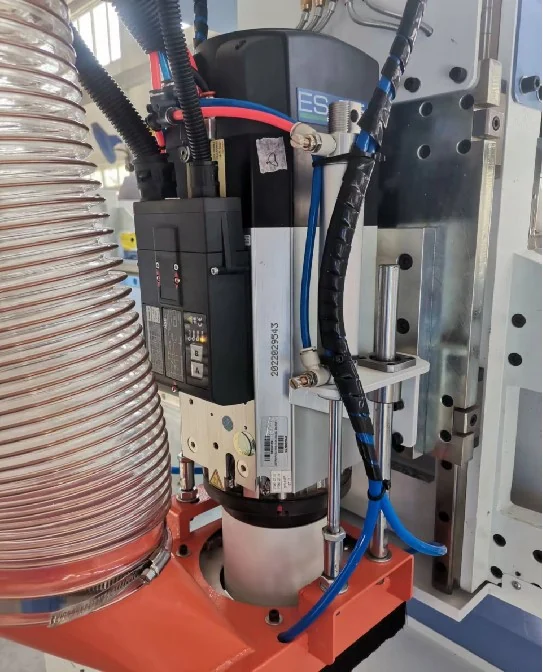
12 kW HSD Spindle
Optional higher-configuration spindle. Final selection follows the quoted machine build and the production requirement.
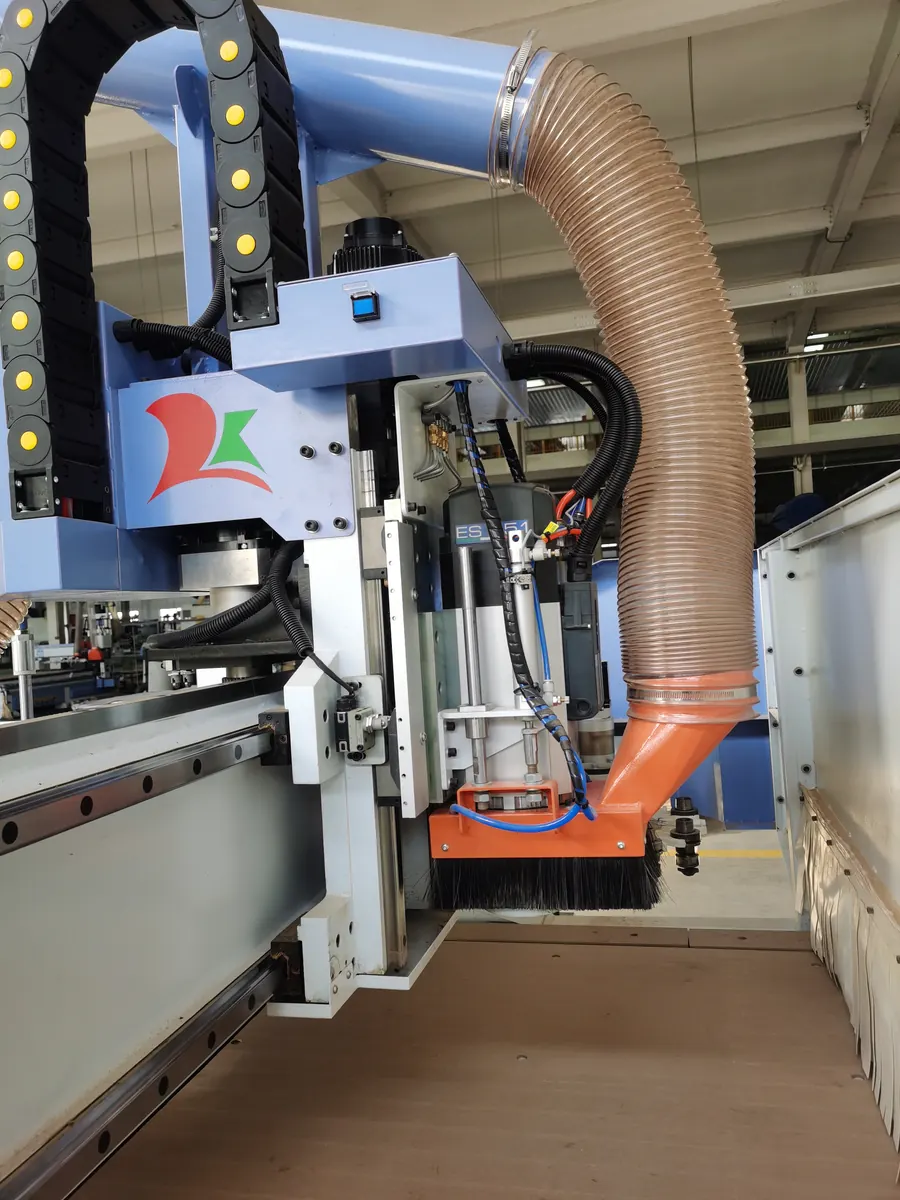
3 Axis Automatic Tool Changing for Cabinet, Door and Furniture Panel Production
Use CC-481 when one job needs cutting, drilling, grooving, profiling and engraving without stopping the operator for every tool change.
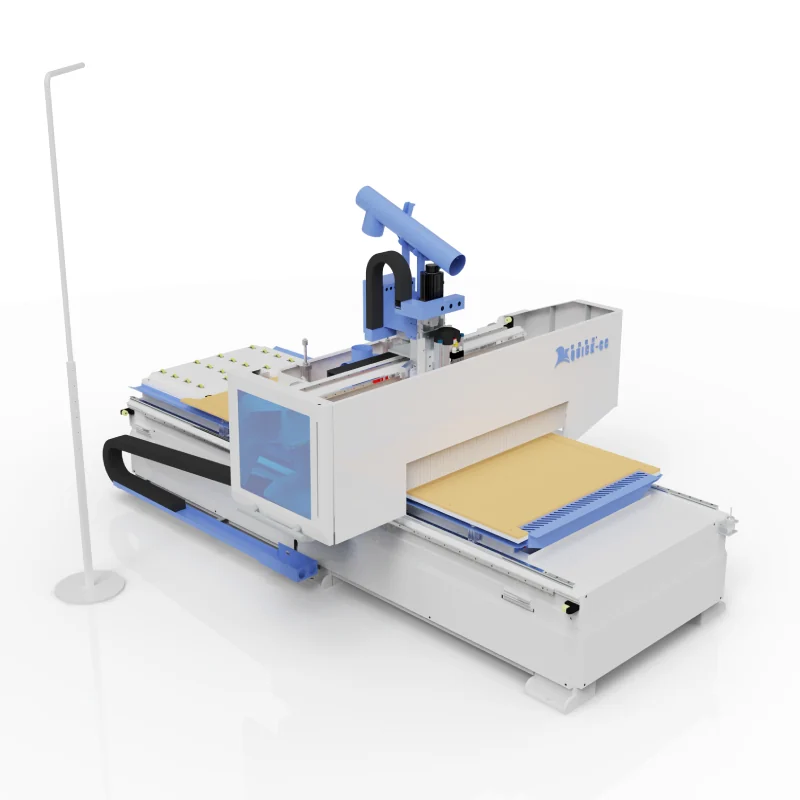
Start with the baseline. Upgrade only when the job requires it.
Quick answer: the recommended CC-481 baseline is a 1300 × 2500 mm 3-axis ATC router with a 9.0 kW ATC air-cooled spindle, 8-tool linear automatic tool changer, vacuum + T-slot table, servo drive system, rack-and-pinion transmission on X/Y, ball screw on Z and 0.6–0.8 MPa compressed-air supply.
| Item | Recommended CC-481 Baseline | When to review an upgrade |
|---|---|---|
| Working area | 1300 × 2500 mm | When the largest sheet or fixture exceeds the standard envelope. |
| Z travel | 200 mm | For thicker doors, fixtures or relief work, review 300 or 400 mm. |
| Spindle | 9.0 kW ATC air-cooled | 12 kW is optional for heavier long-bed work. |
| Tool magazine | 8-tool linear ATC | 10, 12 or 16 tools when one job needs more cutters; carousel ATC is optional. |
| Table | Vacuum + T-slot | Review fixtures and vacuum strategy for small parts, strips and low-contact-area work. |
| Drive | Servo; rack-and-pinion X/Y, ball screw Z | Confirm final motor, controller and drive package in the quotation. |
| Controller | Syntec / LNC / NK105-class options | Match the controller to workflow, operator familiarity and quotation scope. |
Choose it when automatic tool changing removes a real production bottleneck.
CC-481 is positioned for cabinet panels, wardrobe panels, MDF doors, plywood cutting, acrylic letters, PVC boards, decorative panels, wood relief work and furniture components.
Choose the working area by the largest real sheet or fixture. For doors, check the thickest workpiece and required Z clearance. For acrylic, plan workholding and chip evacuation before production. For narrow strips or small offcuts, confirm fixtures instead of assuming the vacuum table alone will hold every part.
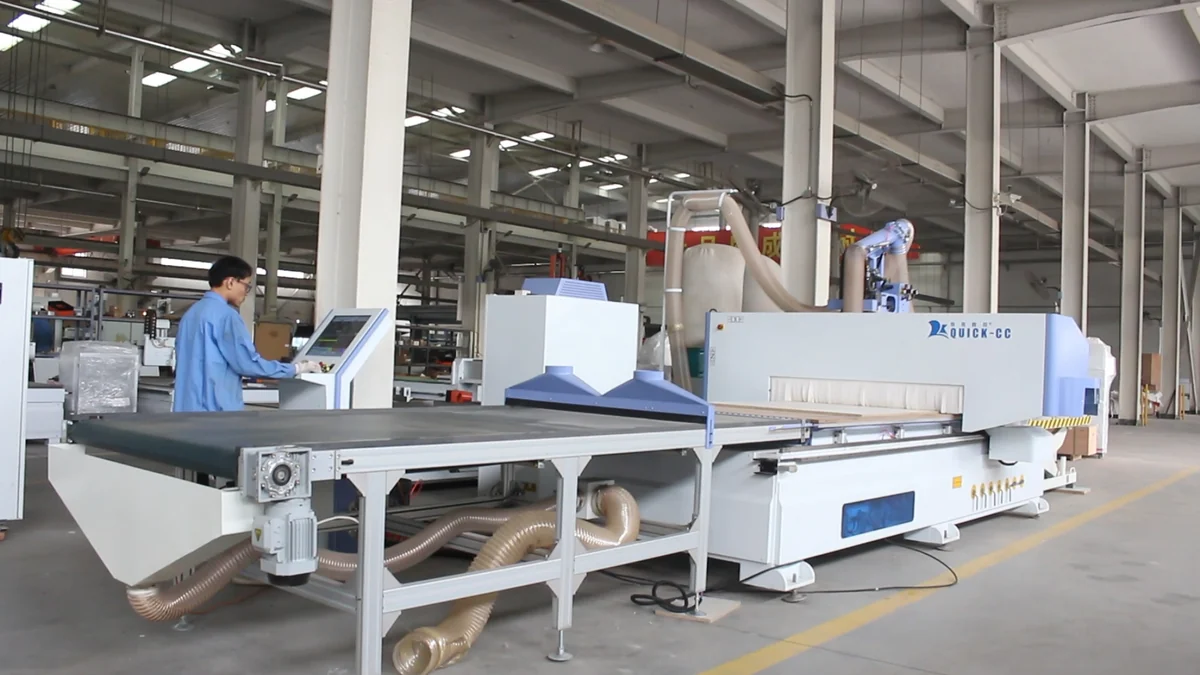
Material names alone are not enough. Tooling, holding, chip removal and finish requirements decide the process.
| Material | Typical CC-481 Work | Buyer / Process Note |
|---|---|---|
| MDF | Cutting, grooving, drilling, profiling | Main panel application; industrial dust extraction should be planned from day one. |
| Plywood | Cutting, profiling, drilling | Cutter geometry, holding and sheet quality affect edge finish. |
| Particle board | Panel cutting and grooves | Plan vacuum holding and dust collection for batch work. |
| Solid wood | Furniture parts, profiling, engraving, relief work | Tool selection and grain direction affect finish. |
| Acrylic | Letters, signs, cutting and engraving | Plan chip evacuation, heat control and secure workholding. |
| PVC sheet | Cutting and routing | Use suitable tooling and avoid heat buildup. |
| Aluminum composite panel | Cutting and grooving | Suitable tooling and holding are required. |
| Soft aluminum | Conditional light-duty routing | Send alloy, thickness, tolerance and finish requirements for engineering review and sample validation. |
Do not select CC-481 for steel, stainless steel, hardened metals, deep metal pocketing or high-precision metal molds.
Separate the standard baseline from optional configurations before comparing quotations.
| Item | CC-481 Recommended Baseline / Available Scope |
|---|---|
| Model | CC-481 |
| Machine type | 3 Axis ATC CNC Router |
| Working area | 1300 × 2500 mm standard; 1500 × 3000 mm, 2000 × 3000 mm and 2000 × 4000 mm optional |
| Z travel | 200 mm standard; 300 mm and 400 mm optional for thicker doors, fixtures and relief work |
| Spindle power | 9.0 kW ATC air-cooled spindle baseline; 12 kW optional for heavier long-bed work |
| Spindle speed | 6000–24000 rpm quotation range, matched to cutter and material |
| Tool magazine type | Linear ATC standard; carousel ATC optional |
| Tool capacity | 8 tools baseline; 10, 12 or 16 tools optional |
| Tool holder | ISO30 / ER32 baseline; HSK F63 optional for higher-configuration builds |
| Table type | Vacuum + T-slot worktable |
| Vacuum zones | 6-zone vacuum layout recommended for 1325 / 1530 panel work |
| Drive system | Servo drive system with rack-and-pinion transmission on X/Y and ball screw on Z |
| Controller | Syntec / LNC / NK105-class controller options by quotation |
| Software compatibility | G-code workflow; commonly matched with Aspire, ArtCAM, Type3, Ucancam and similar CAM software |
| Voltage | 220V 1PH/3PH 50/60Hz or 380V 3PH 50/60Hz, selected for destination country |
| Compressed air | 0.6–0.8 MPa air supply for ATC and pneumatic functions |
| Dust collection | 3 kW, 5.5 kW or 7.5 kW dust collector options; choose stronger extraction for MDF batch cutting |
| Estimated 1325 shipping size | About 3400 × 2270 × 2100 mm for shipping planning |
| Estimated 1325 machine weight | About 1600 kg for standard 1325 ATC shipping planning |
| Best buyer input | Material, sheet size, thickness, tool count, voltage, air supply, dust plan and daily output target |
Choose the complete cutting system, not the biggest spindle number on a quotation.
Automatic loading and unloading is optional, not part of the standard CC-481 baseline. Evaluate it against sheet size, factory layout, operator workflow and daily output.
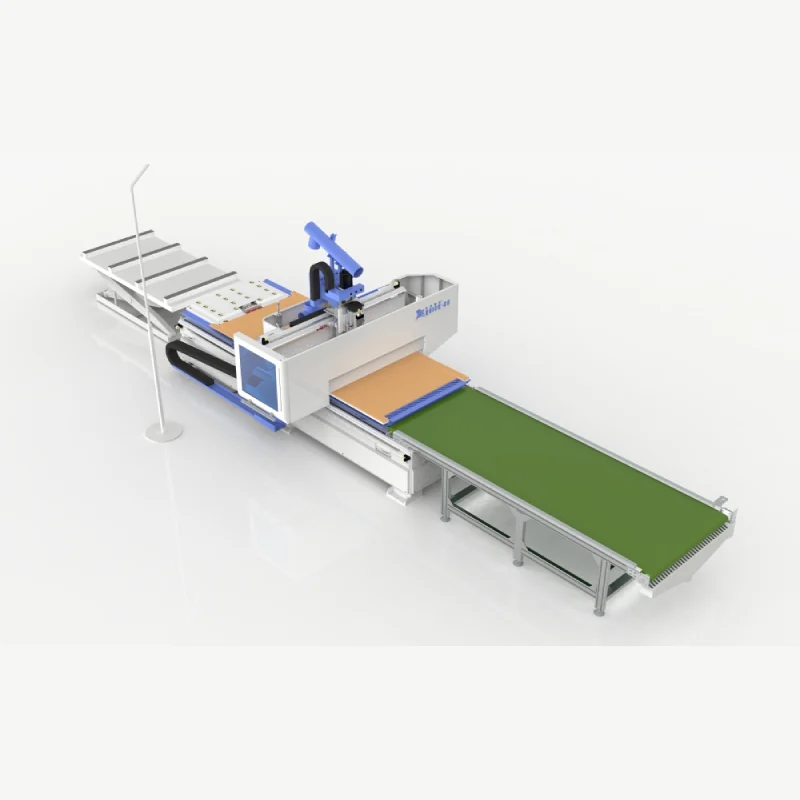
Pay for an option because it removes a bottleneck, not because the option list is long.
Use component photos to confirm what a quoted configuration actually includes.
Optional higher-configuration spindle. Final selection follows the quoted machine build and the production requirement.
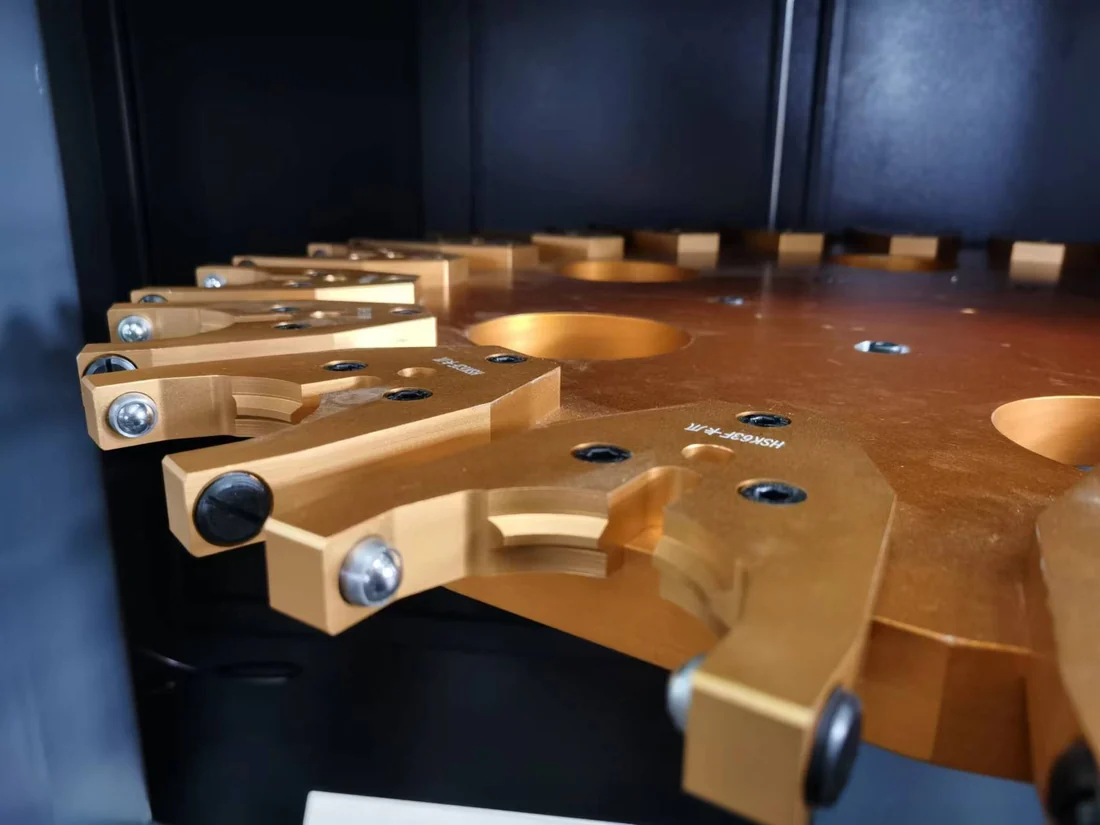
HSK F63 is optional for higher-configuration builds. Confirm the spindle and tool-holder package in the final quotation.
Carousel-style tool changing is available when that magazine layout better fits the selected configuration.
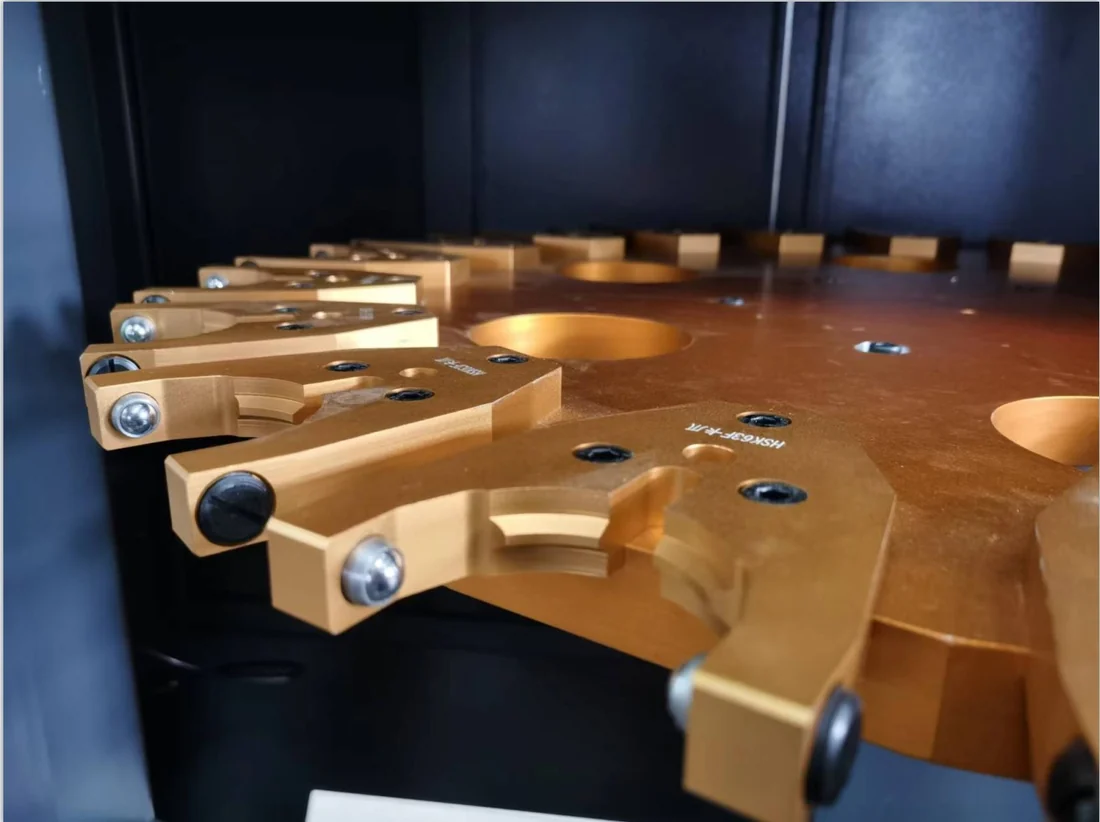
The magazine layout and tool capacity are matched to the selected ATC configuration and cutter count.
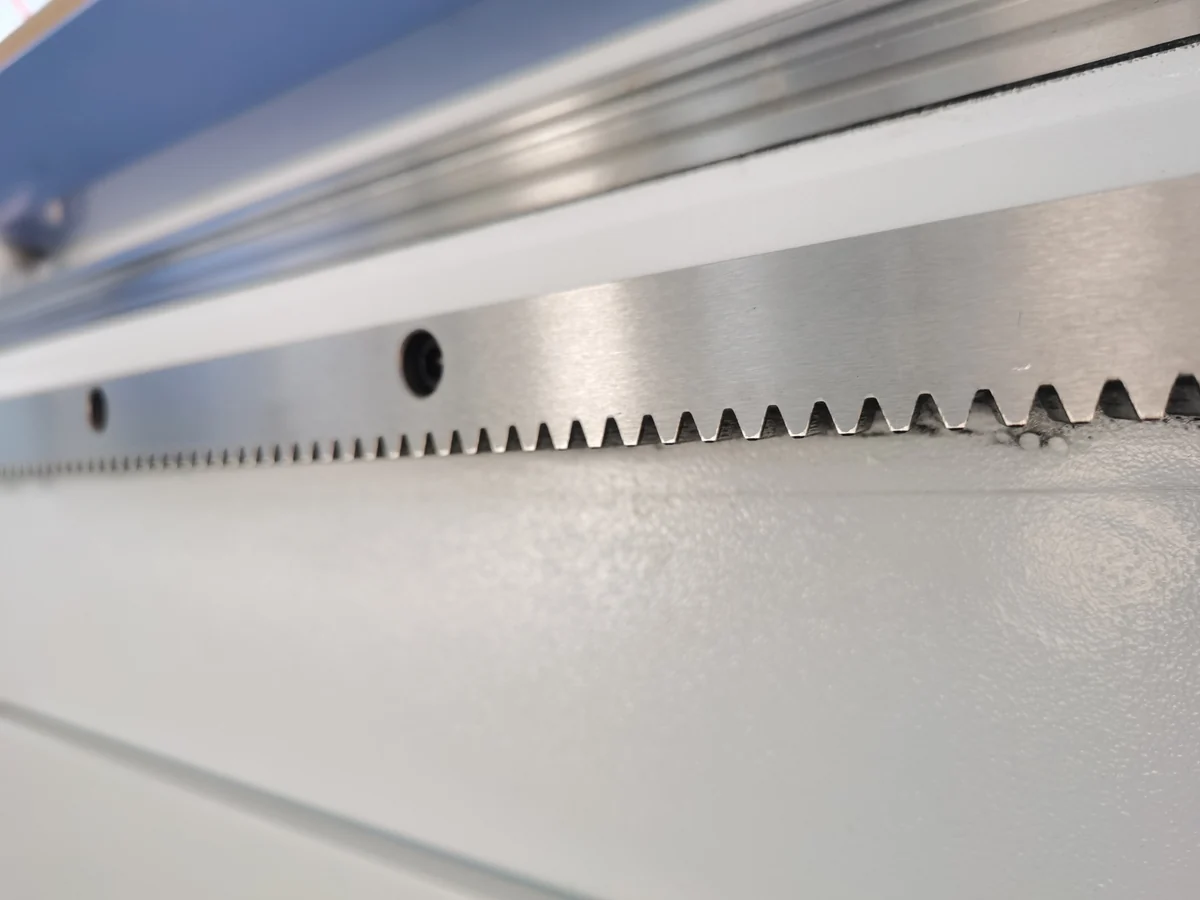
Rack-and-pinion transmission is used on X/Y in the recommended machine architecture.
The machined mounting surface forms part of the mechanical foundation for guide installation and axis assembly.
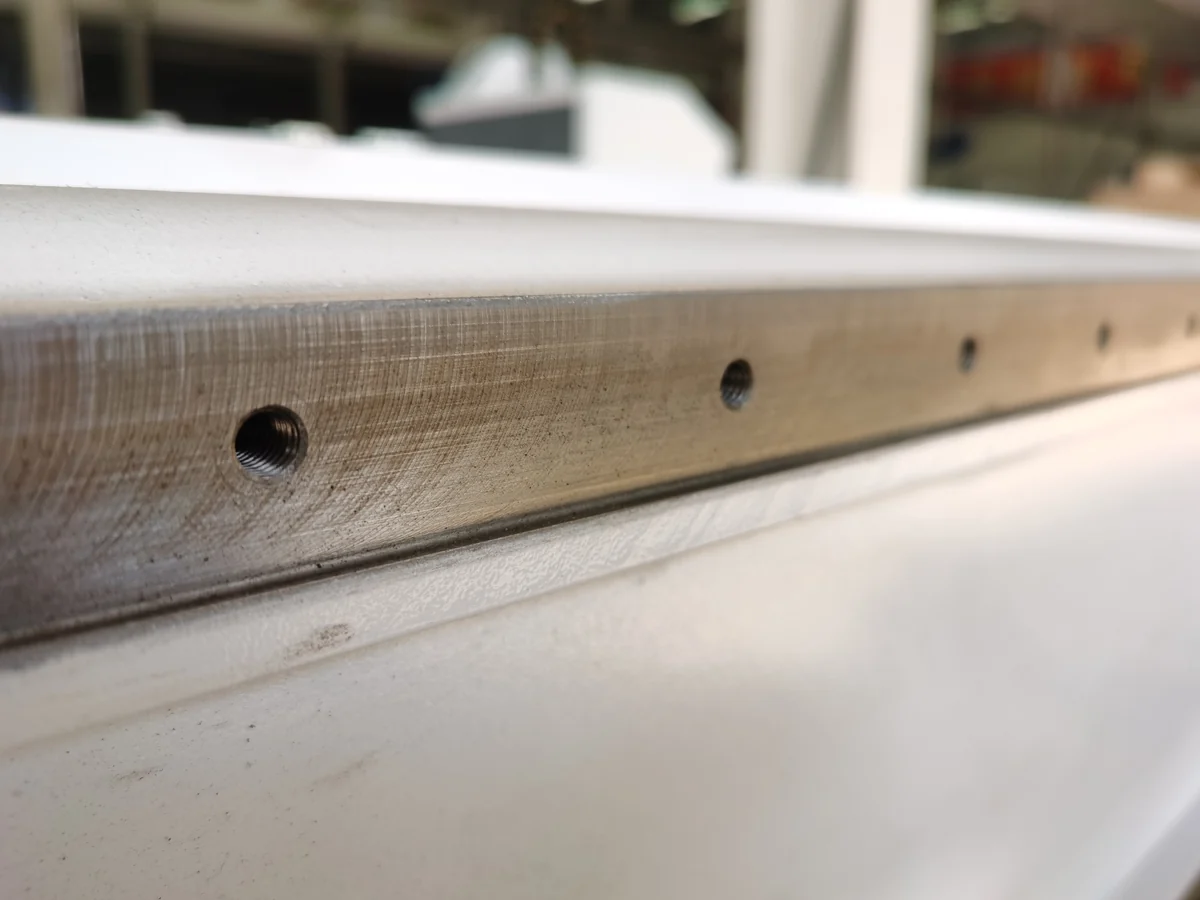
Judge CC-481 as one mechanical system, not by spindle power alone. The recommended architecture combines rack-and-pinion transmission on X/Y, a ball screw on Z, machined linear-guide mounting surfaces, an ATC spindle and tool magazine, plus a vacuum + T-slot table for panel work.
During quotation review, confirm the final servo package, controller, tool-holder interface and workholding package as one configuration. A larger spindle cannot compensate for weak holding, and more tool positions do not improve output when the real bottleneck is CAM, loading, drilling, edge banding or downstream handling.
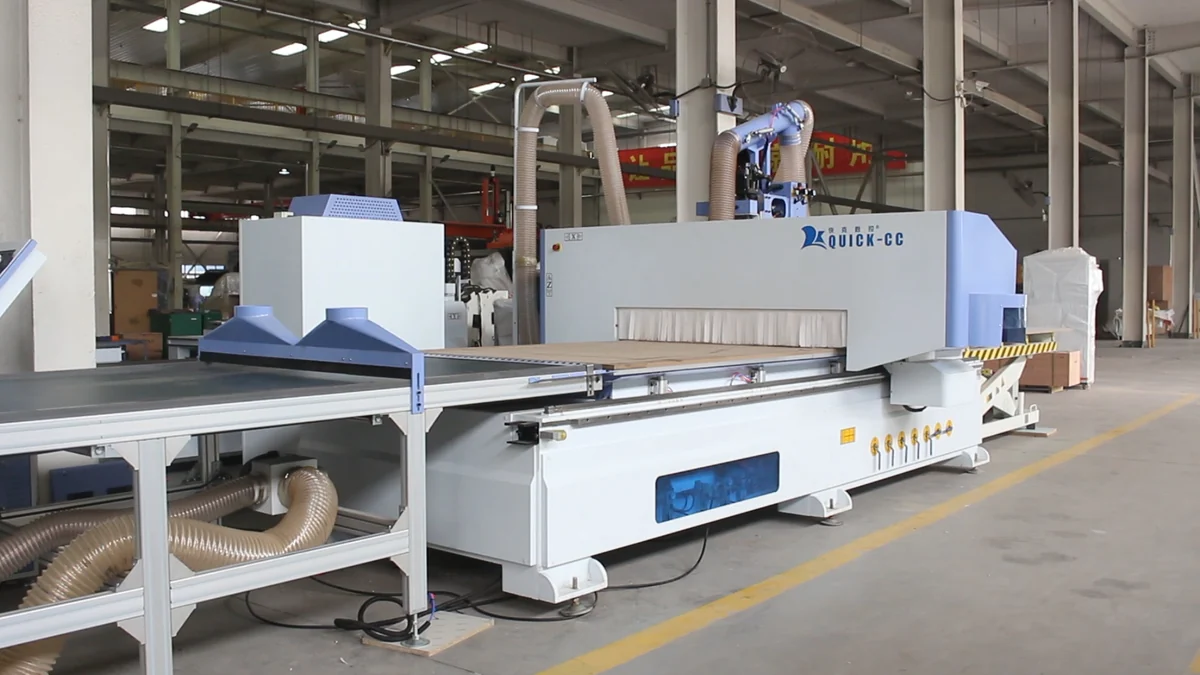
The operator still needs a stable process even when tool changing is automatic.
Separate standard machine inspection from any project-specific cutting check.
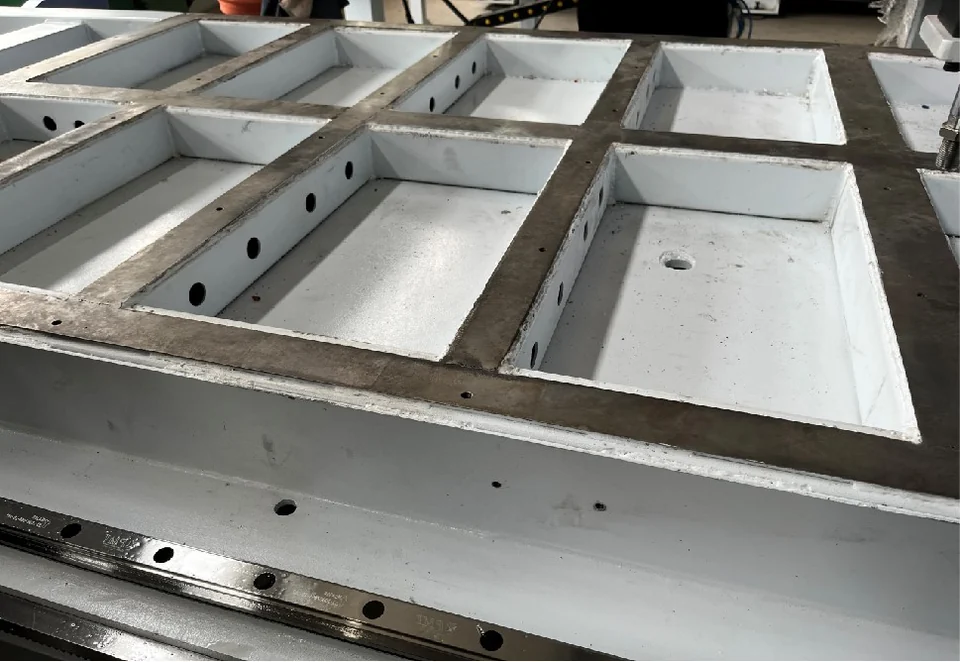
Move from brochure comparison to a project-specific engineering review before the final configuration is released.
Confirm commercial and support scope before the machine reaches your factory.
These six answers decide more than a brochure comparison.
Send production facts first. Configuration follows.
| Send This | Why It Matters |
|---|---|
| Main material | Decides spindle, tooling, holding and dust plan. |
| Maximum sheet / workpiece size | Decides the required working area. |
| Material thickness | Influences Z travel, cutter length and workholding. |
| Main process | Cutting, routing, drilling, grooving, engraving or profiling. |
| Daily output target | Shows whether basic ATC is enough or more automation should be reviewed. |
| Tool quantity per normal job | Decides whether 8 tools are enough or 10, 12 or 16 should be reviewed. |
| Existing CAM software | Helps confirm controller and post-processor workflow. |
| Voltage and phase | Avoids electrical mismatch at installation. |
| Compressed air | Required for ATC and pneumatic functions. |
| Dust collection plan | Critical for MDF, plywood and particle-board production. |
| Destination country | Affects electrical configuration, logistics and document review. |
| Budget range (optional) | Helps separate necessary production options from unnecessary upgrades without making budget disclosure a barrier to the first technical review. |
Short answers to the questions that change a buying decision.
CC-481 is a 3 Axis ATC CNC Router. Add a rotary device only when round legs, columns or cylindrical parts are required.
The recommended baseline is 1300 × 2500 mm. Larger 1500 × 3000 mm, 2000 × 3000 mm and 2000 × 4000 mm working areas are optional.
The recommended baseline uses 8 tools. 10, 12 or 16 tools are optional for jobs that need more cutters.
No. CC-481 is not intended for steel, stainless steel, hardened metals or deep metal cutting.
Yes. Prepare stable 0.6–0.8 MPa compressed air for the ATC and pneumatic functions.
Yes. MDF, plywood and particle-board production should use industrial dust collection from day one.
No. Loading and unloading automation is optional and should be evaluated according to sheet size, factory layout and daily output.
The machine is assembled, inspected and tested before shipment. CC-481 checks include axis movement, spindle running, tool changing, table function, controller operation, electrical cabinet condition and packing protection. Part-focused cutting checks can be planned when drawing and material details are provided.
Send material, maximum sheet size, thickness, main process, tool count, daily output, CAM software, voltage, compressed air, dust plan, destination country and budget range.
Send the drawing, material, sheet size, thickness, normal tool count, daily output, voltage, compressed air, dust plan and destination. Quick CNC will match the machine, options, tooling and workflow to the project.
Tell us your material, working size and production needs. Our engineers will recommend a suitable CNC machine for your business.