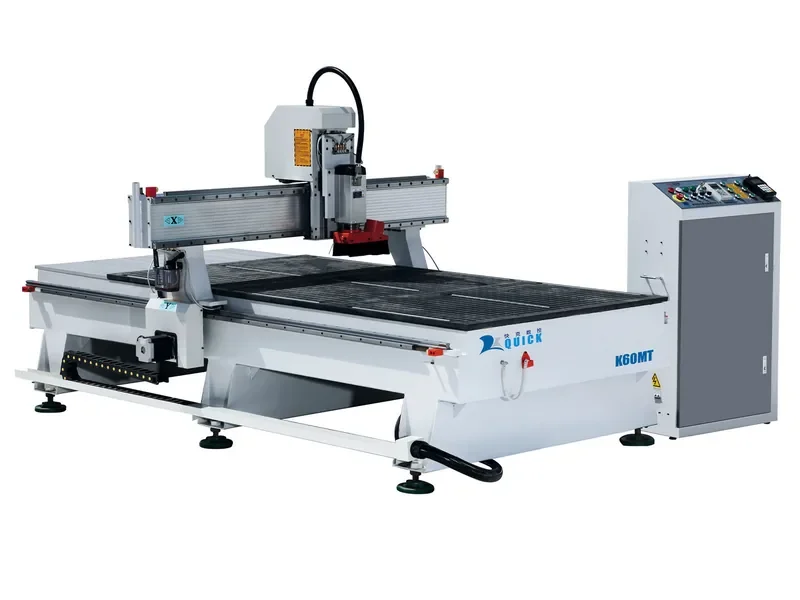
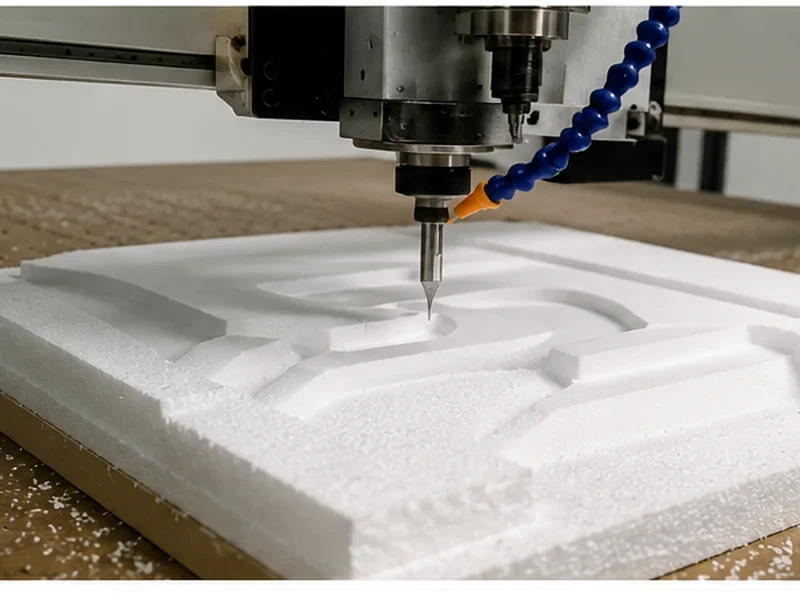
Which drilling setup fits your cabinet production?
If you only have a few simple side holes, you probably do not need a six-side drilling machine. If you cut full sheets and mainly need vertical holes, a nesting CNC with a drill bank can make more sense. If you process doors or shaped parts, look at PTP. And if operators keep flipping panels for horizontal holes, connector holes and changing hole maps, that is where six-side drilling starts to earn its place.
Simple rule: Start with the hole map and the part flow. The right machine is the one that removes the drilling step that is slowing production down now.
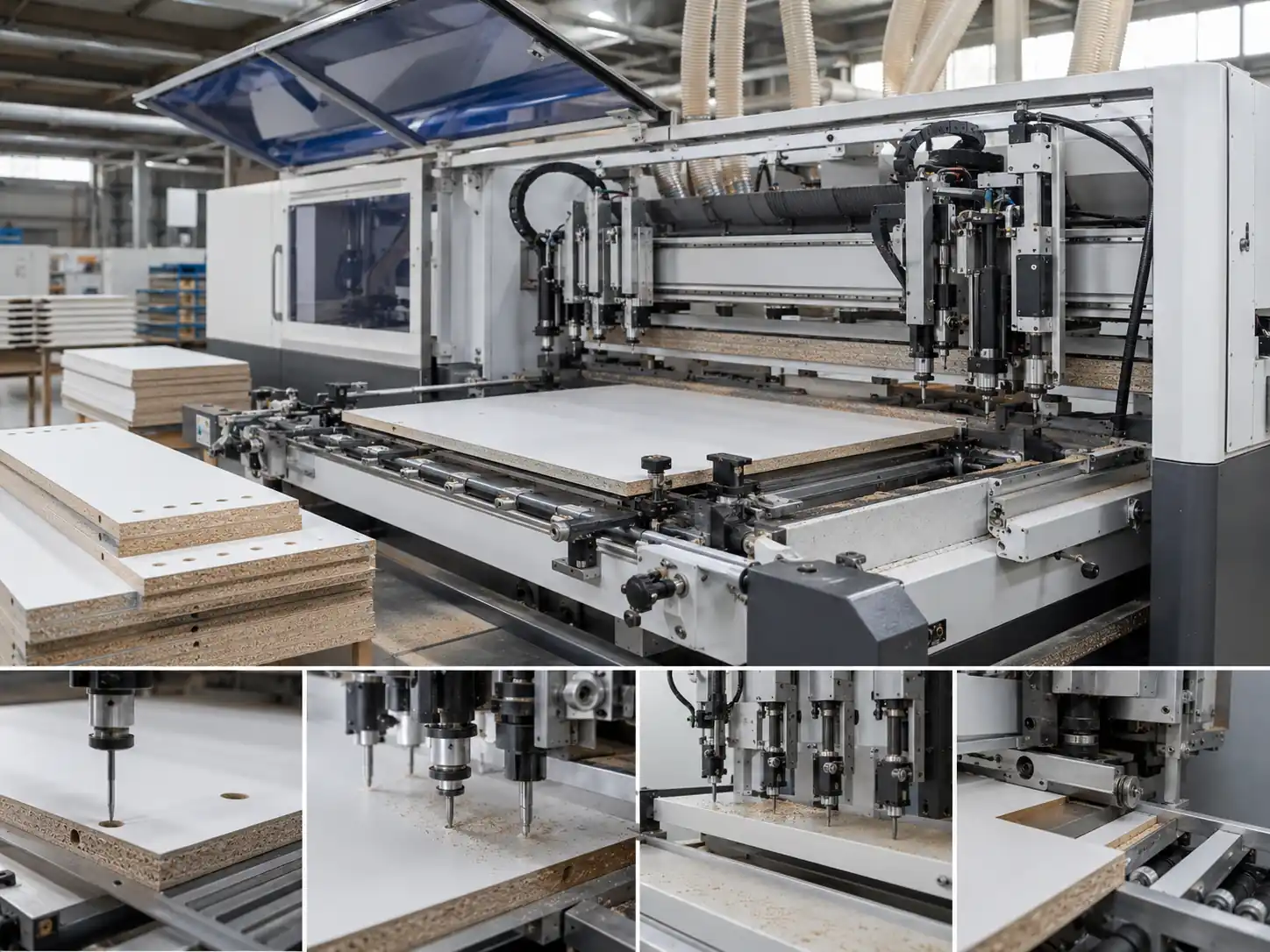
Where is drilling slowing you down?
Start with one real cabinet panel. Look at the holes, grooves and edges that need machining, then look at how many times the panel has to be moved or flipped before assembly. That will tell you much more than the machine name.
If you make cabinets, wardrobes, doors or panel furniture, this page will help you narrow the choice between side drilling, nesting with a drill bank, PTP, six-side drilling and a more automated production line.
The short version
Is this the kind of work you do?
Why CNC drilling becomes the bottleneck in cabinet making
Cabinet production is not only cutting rectangular panels. Each side panel, shelf, door, drawer component or wardrobe board can need shelf-pin holes, dowel holes, connector holes, hinge positions, grooves and mounting holes. When these features are produced manually or in several separate setups, the factory loses time in marking, flipping, aligning and checking.
The problem becomes stronger in custom furniture production because every board can carry a different hole map. A machine that cuts panels quickly does not solve the whole production problem if operators still wait at the drilling station before assembly.
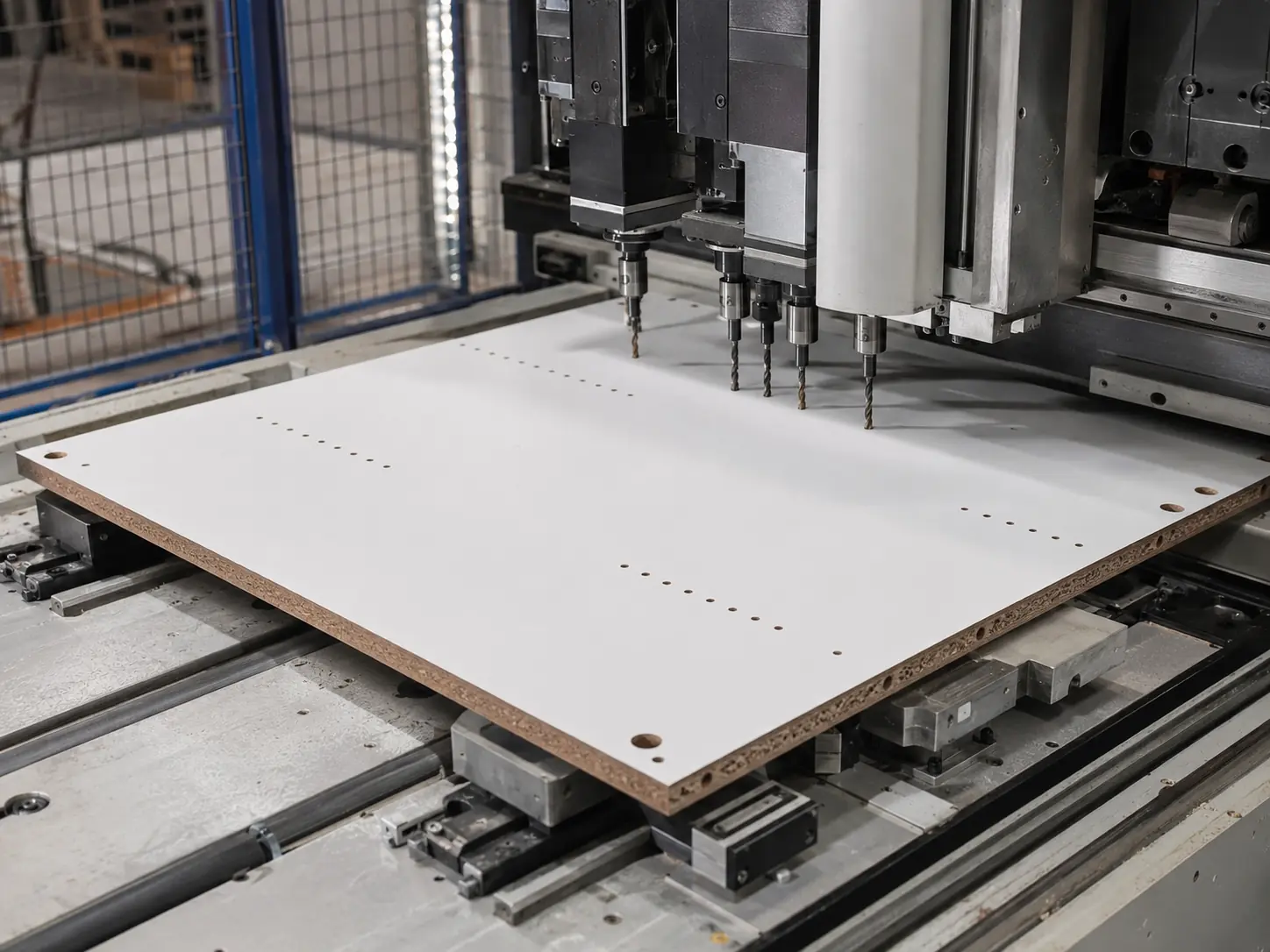
Which CNC drilling machine type fits cabinet production?
Use the table below to narrow the machine type before you compare models. This prevents a common mistake: buying a larger router when the real bottleneck is drilling direction, barcode workflow or board handling.
| Machine type | Best production fit | Why it works | What to watch |
|---|---|---|---|
| Side drilling machine | Simple horizontal side holes on lower-volume cabinet or furniture parts | Lower investment and simpler operation for limited side-hole work | Not the right answer when panels require top, bottom, edge, groove and barcode processing in one flow |
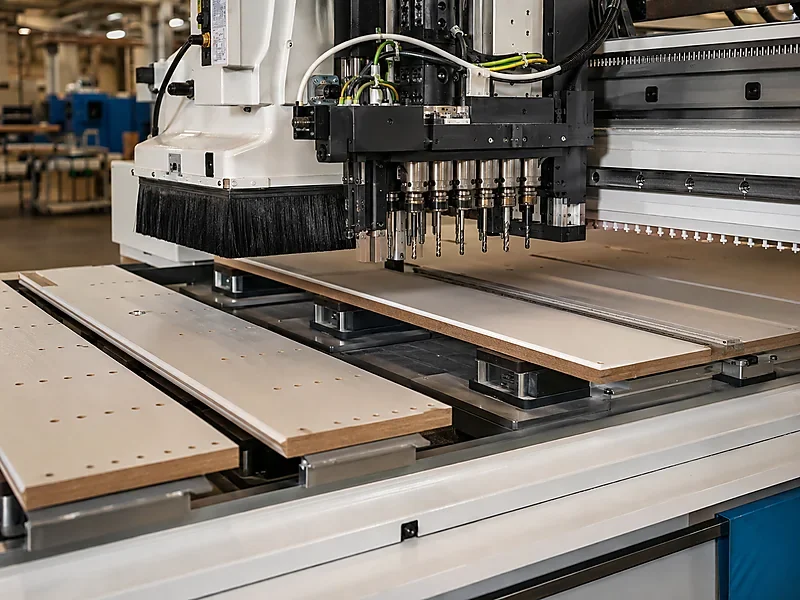
| Nesting CNC router with drill bank | Sheet cutting plus repeated vertical holes for cabinet carcass parts | Combines nesting, cutting and selected drilling before unloading | Horizontal holes and multi-face drilling still need another process or a different machine architecture |
| PTP CNC router with boring head | Doors, cabinet panels, shaped components and parts requiring pod-and-rail holding | Flexible workholding, boring, routing, milling and automatic tool changes in one setup | Less efficient than nesting for simple full-sheet cutting and less direct than six-side drilling for high-volume panel drilling |
| Six-side drilling machine | Panel furniture factories with many vertical holes, horizontal holes, grooves and changing cabinet/wardrobe data | Reduces panel flipping, repeated positioning and manual drilling checks | Needs suitable data preparation, panel flow, floor space, dust control and operator training |
| CNC drilling and cutting production line | Factories that want linked loading, labeling, drilling, cutting and unloading | Stronger automation and lower manual handling across several processes | Requires layout planning, production data discipline and clear output target before quotation |
What should you check before choosing a cabinet drilling machine?
Start with the parts you actually make, not the catalogue. Six things matter most: panel size, which faces need drilling, the hole pattern, software data, how panels are handled and what is slowing assembly down.
Which setup fits your shop?
You do not need another comparison table here. Match the machine to the bottleneck you can see on a normal production day.
Only a few simple side holes → start with side drilling. Keep the setup simple if drilling is not holding the rest of production back.
Full-sheet cutting plus repeated vertical holes → start with nesting CNC + drill bank. This keeps sheet cutting and selected vertical drilling in one workflow.
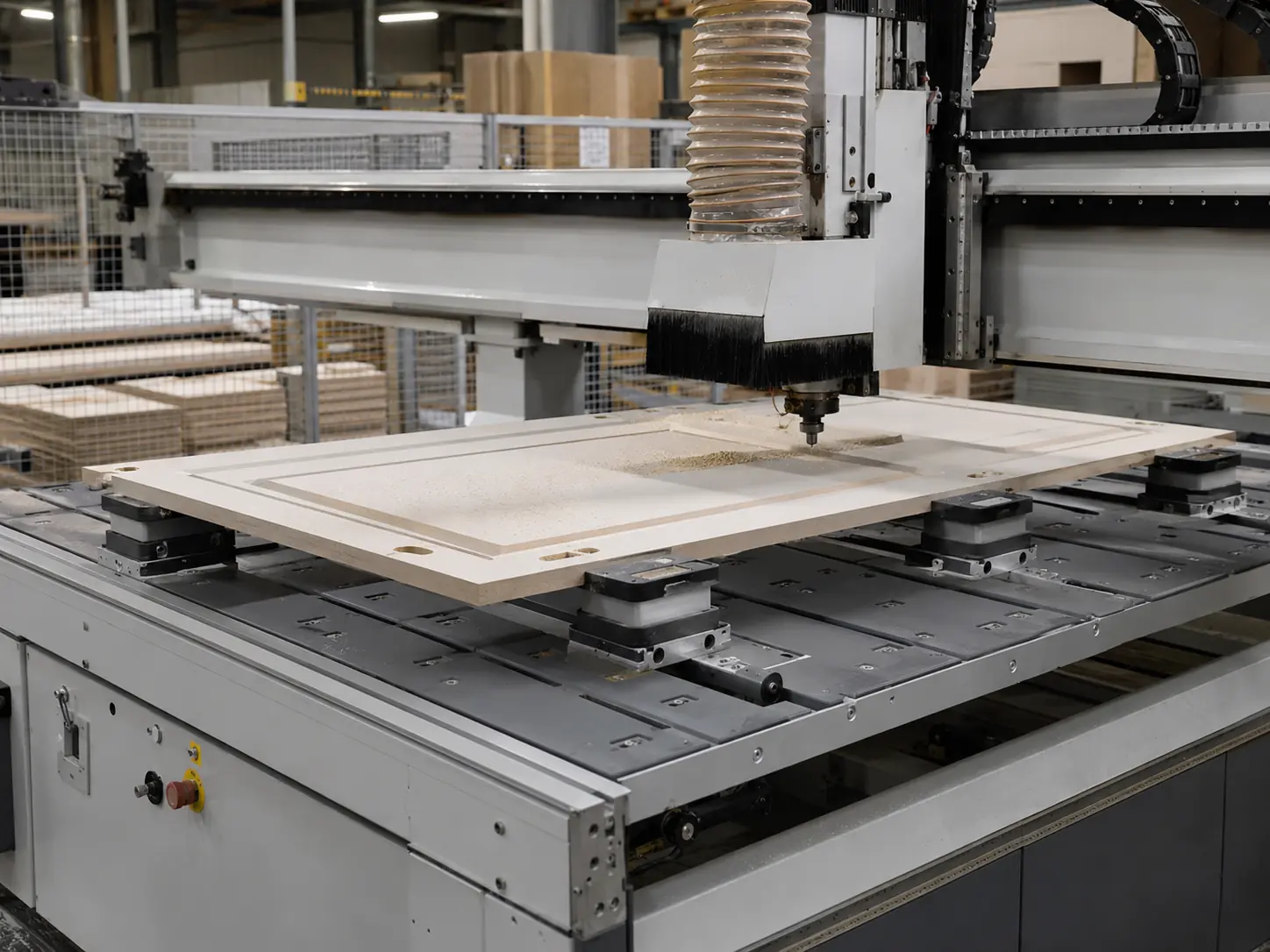
Doors, shaped panels or mixed boring/routing → start with PTP. Pod-and-rail holding gives better access for flexible component work.
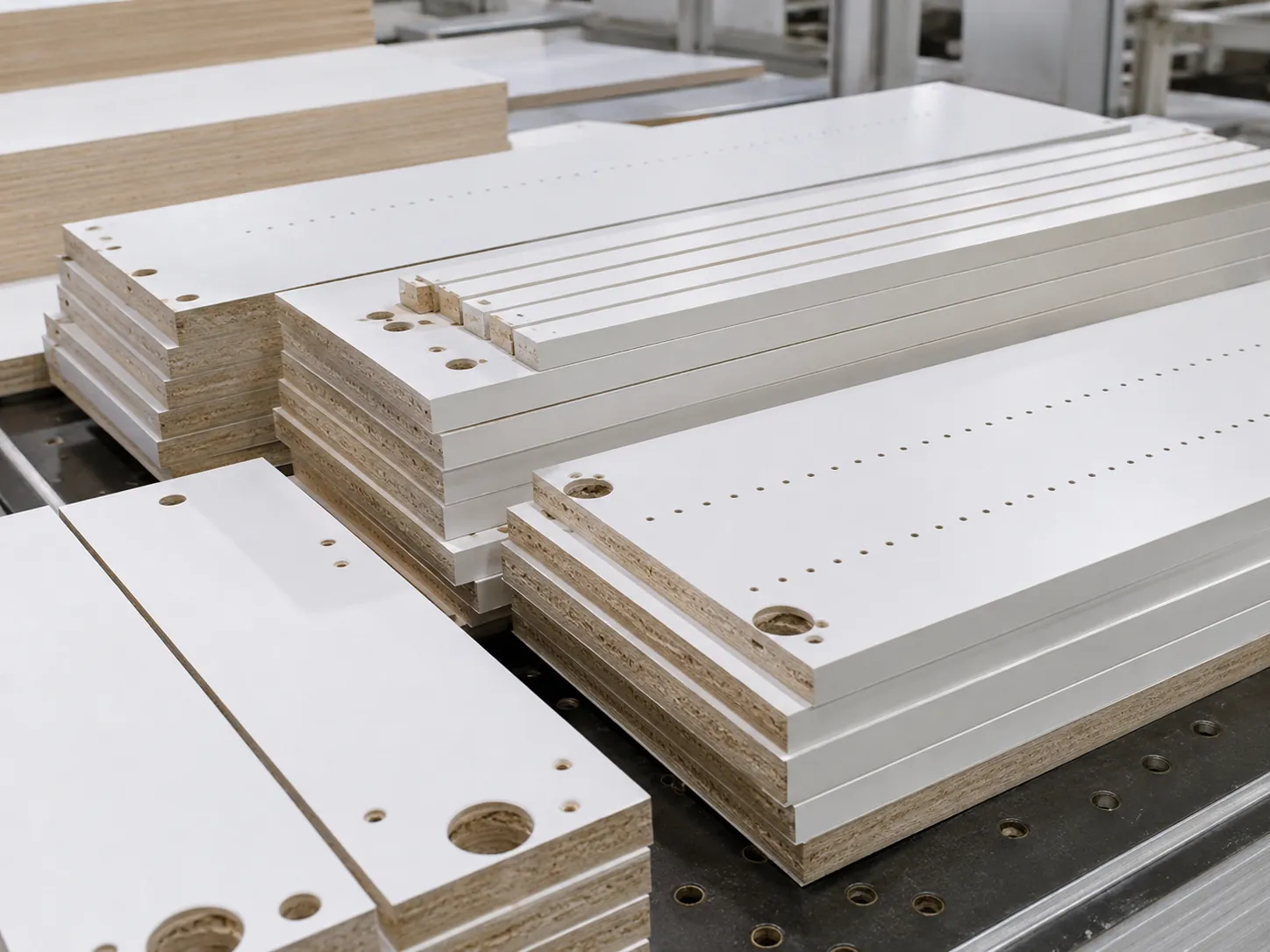
Repeated cabinet panels with multi-face hole maps → start with six-side drilling. This is where reducing panel flipping and re-positioning begins to matter.
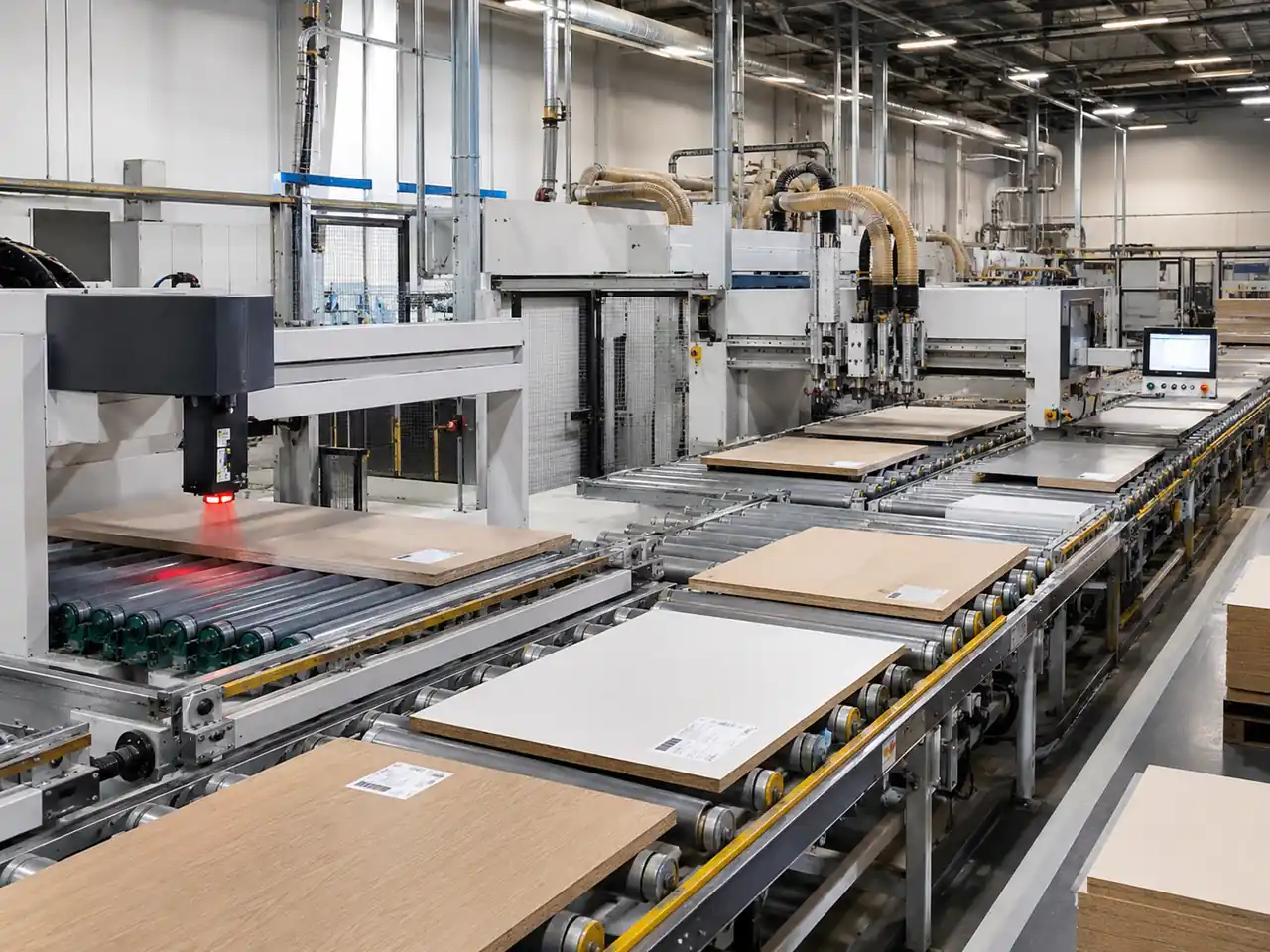
Loading, labeling, drilling, cutting and unloading are all bottlenecks → look at the whole production line. At this point, improving one machine alone will not solve the flow problem.
What else matters besides the drill head?
Once you know which type of machine fits, look at the rest of the setup. The drill head is only one part of a stable cabinet-drilling process.
What these machines can handle
Six-side drilling makes sense when cabinet panels need vertical holes, horizontal holes, side holes, front or rear grooves, through holes, blind holes and repeated connector-hole patterns. PTP is the more flexible choice when doors, cabinet panels or shaped furniture parts need drilling together with routing, milling, grooving, cutting or side processing. The exact drill layout and optional units still depend on the machine model you choose.
Drill banks and boring heads
Drill banks speed repeated hole patterns because several drills can be positioned for common cabinet operations. A boring head is valuable when the same part needs repeated drilling and boring in a controlled setup. For a PTP machine, the boring head works with the pod-and-rail table to process doors, cabinet components and shaped panels more flexibly.
Panel holding and reference control
Drilling accuracy fails when the panel moves, bows or references from the wrong edge. Review pressing rollers, clamps, grippers, vacuum pods, lower support plates and edge referencing based on panel size and surface finish.
Software and barcode workflow
For custom cabinets, software flow matters because every panel can carry a different hole map. Barcode scanning and compatible file formats reduce manual job selection. Make sure the drawing can move cleanly from your cabinet software to the machine before you settle on the setup.
Utilities and workshop conditions
Also check voltage and frequency, compressed air, dust extraction, floor space, feeding side and unloading direction. A machine can fit the parts perfectly and still be the wrong choice if it does not fit the way material moves through your shop.
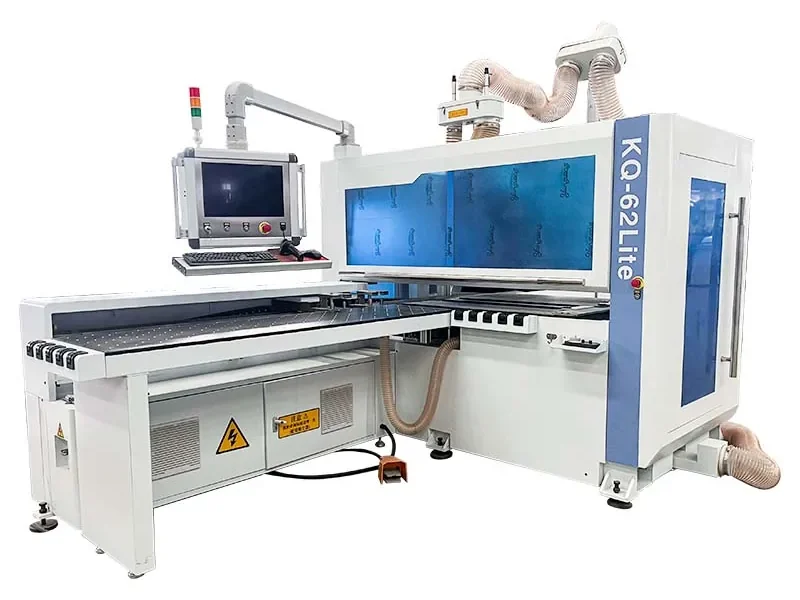
One model example: the public KQ-62Lite information lists horizontal and vertical drilling, front/back grooving, barcode scanning, two Z-axis drill banks and BAN, DXF, XML, MPR and BD data support. Its listed panel range is 70–2800 mm long, 50–1220 mm wide and 9–60 mm thick. Those figures belong to that model, so compare them only when KQ-62Lite is actually on your shortlist.
Where should drilling sit in your production line?
Cabinet drilling can be placed before or after cutting and edge banding depending on the production method. The right sequence reduces handling and protects finished surfaces.
| Workflow | Good fit | Planning point |
|---|---|---|
| Nesting CNC → drilling checks → edge banding → assembly | Factories cutting most parts from full sheets | Confirm whether holes are cut by spindle, drill bank or a later drilling station. |
| Panel saw or beam saw → six-side drilling → edge banding → assembly | Panel furniture plants using cut-to-size boards and barcode data | Confirm label flow, reference edge and feeding direction. |
| Door blank preparation → PTP boring/routing → sanding or finishing | Door producers and shaped panel shops | Confirm pod position, tool list, boring pattern and surface protection. |
| Loading → labeling → drilling → cutting → unloading | Factories planning an automated cabinet production cell | Confirm line footprint, operator position, material stack height and output target. |
What to confirm before you order
Once the machine choice is clear, make sure the practical details are clear too. Quick CNC was founded in 2006, and support can include setup guidance, installation support, operator training, remote troubleshooting and spare-parts coordination.
Common buying mistakes
Production Scenario: When a Larger Router Does Not Fix the Drilling Bottleneck
Consider a cabinet shop that upgrades to a larger CNC router because cutting speed appears to be the main productivity problem. After the upgrade, assembly is still slow because horizontal connector holes and some shelf-pin rows remain a separate manual operation.
- Initial choice
- The new machine is selected mainly around table size and spindle power, while drilling remains a secondary process.
- What still goes wrong
- Panels wait after cutting, operators flip boards repeatedly, and assembly still needs correction when holes do not line up.
- Root cause
- The real bottleneck is multi-face drilling and panel handling, not the cutting envelope.
- Better approach
- Separate the hole map by face, then compare nesting with a drill bank, PTP and six-side drilling around the actual panel flow.
- What this tells you
- Check drilling faces, hole diameters, groove requirements, data format and real output target before choosing the machine type.
Talk through your cabinet drilling setup
Send one typical panel drawing, your material and thickness, the hole directions and your expected output. From there, we can narrow the choice to side drilling, nesting with a drill bank, PTP, six-side drilling or a more automated line.
FAQ
What is the best CNC drilling machine for cabinet making?
Start with the hole map. Use side drilling for simple side holes, nesting CNC with a drill bank for sheet cutting plus vertical drilling, PTP for flexible door and shaped-panel work, and six-side drilling when repeated cabinet panels need multi-face drilling with less flipping and re-positioning.
Can a CNC router drill cabinet holes?
Yes. A CNC router can handle selected cabinet holes, especially vertical drilling. When horizontal holes, several drilling faces or repeated panel flipping become a regular bottleneck, a drill bank, PTP machine or six-side drilling machine becomes a better production fit.
What is the difference between a drill bank and a six-side drilling machine?
A drill bank is a drilling unit used on certain routers or nesting machines for repeated hole patterns, mainly vertical drilling depending on the configuration. A six-side drilling machine is a dedicated panel drilling center built around multi-face drilling, grooves, panel handling and data-driven cabinet production.
Should I choose a PTP CNC router or a six-side drilling machine?
Choose PTP when doors, shaped furniture panels or cabinet components need flexible pod holding together with boring, routing, milling or tool changes. Choose six-side drilling when repeated cabinet panels need horizontal and vertical holes, grooves, barcode jobs and less board flipping.
What should I send for a CNC drilling machine quotation?
Start with one typical panel drawing, the material and thickness, panel size range, hole directions and expected output. That is enough for the first machine comparison; software, utilities, layout and automation details can follow once the machine type is clear.
Can a drilling and cutting production line reduce separate drilling steps?
Yes, when loading, labeling, drilling, grooving, cutting and unloading are planned as one flow. Before choosing the line, check layout, output target, software data, dust extraction, compressed air and feeding direction so the automation fits the factory.

Frannie
Hello, I’m Frannie, a CNC machinery specialist with 15 years of experience in the woodworking CNC industry. I help furniture factories, cabinet makers, woodworking workshops, and production businesses choose CNC machines that match their production needs, factory size, budget, and efficiency goals.
My work focuses on solving real production problems, including replacing outdated equipment, improving machining efficiency, reducing labor costs, and upgrading to smarter CNC solutions. I also support customers with machine installation guidance, operation training, video support, and on-site training when needed, helping them use their machines more confidently and effectively.