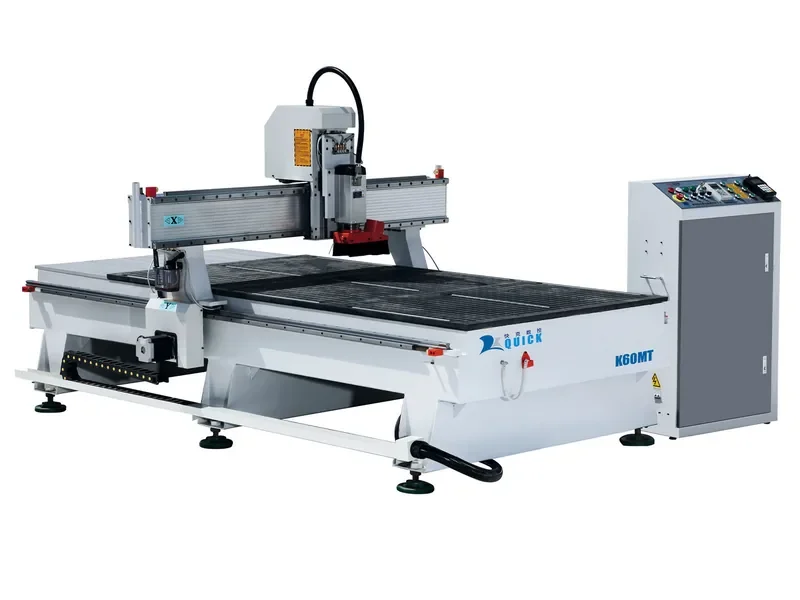
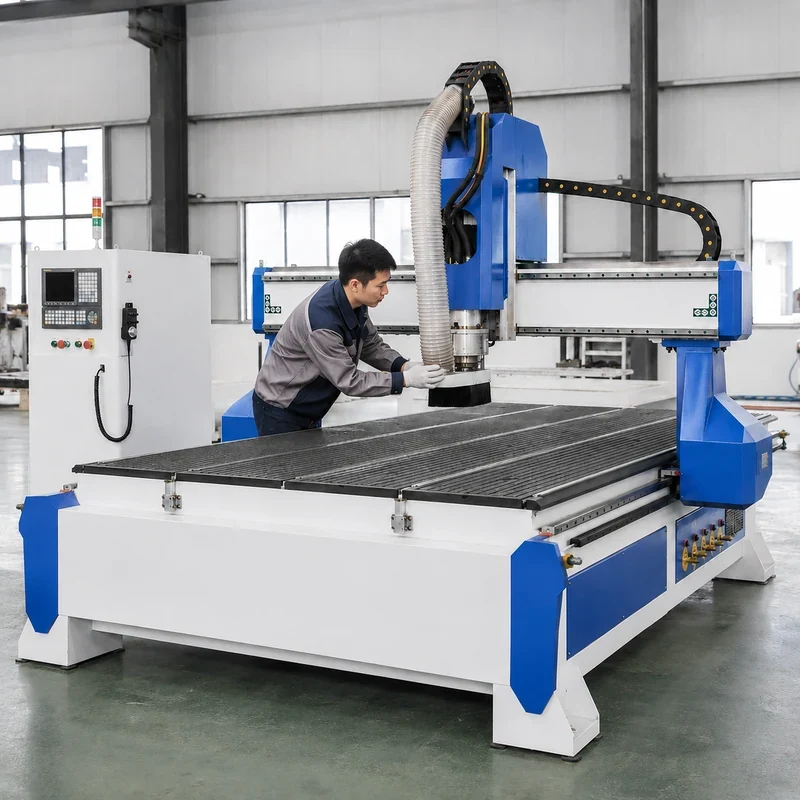
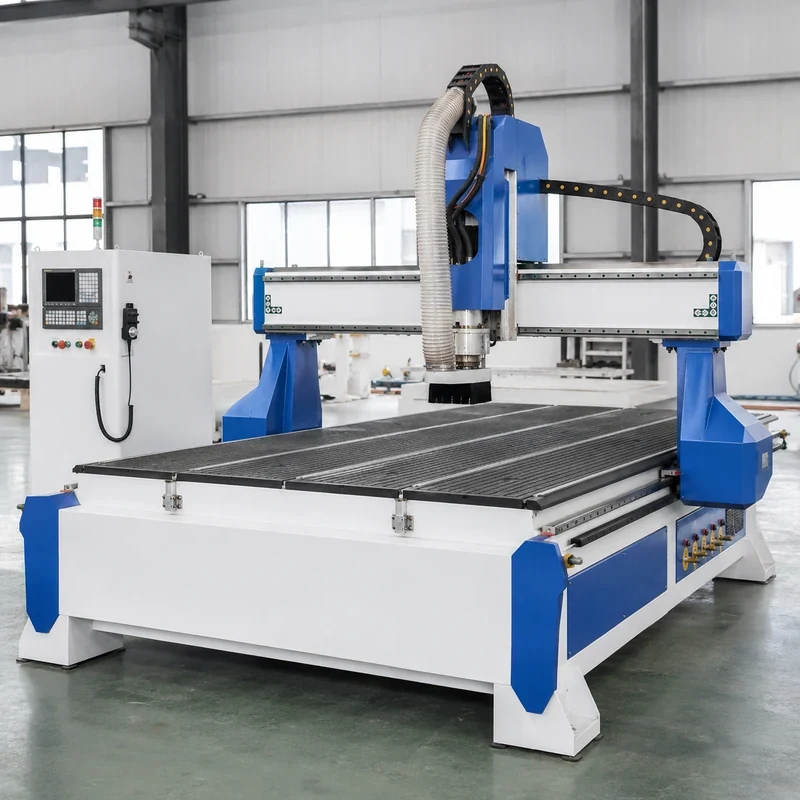
How Accurate Is a CNC Router? Here’s What Actually Matters
If you’re asking whether a CNC router is accurate enough for your work, don’t start with the smallest number in a brochure. Start with the part you need to make.
A router that works well for cabinet panels, furniture parts, acrylic signs, or wood carving is not automatically the right machine for a tight-tolerance metal part. Material, part size, hold-down, tooling, cutting strategy, and the tolerance on your drawing all matter.
First, Make Sure We’re Talking About the Same Kind of Accuracy
This is where a lot of confusion starts. Someone sees a number like ±0.05 mm and assumes every finished part will come out within ±0.05 mm.
That’s not how CNC routing works.
The number may describe axis positioning, repeatability, or a controlled machine test. Your finished part also has to deal with the cutter, spindle, sheet movement, toolpath, material, and measurement method.
| What You’re Looking At | What It Really Tells You | What It Does Not Tell You |
|---|---|---|
| Positioning accuracy | How close an axis gets to the commanded position | Whether your finished part will hold the same tolerance |
| Repeatability | How consistently the machine returns to the same position | Whether that repeated position is actually correct |
| Finished-part tolerance | How close the cut part is to your drawing | Nothing by itself — this is the result you really care about |
| Cut quality | What the edge and surface actually look like | Whether another dimension somewhere else is correct |
What Does “Accurate Enough” Mean for Your Work?
It depends on what you’re making. A cabinet shop, an acrylic sign shop, and a machine shop are looking for completely different results.
| Your Work | Is a CNC Router a Good Fit? | What Matters Most |
|---|---|---|
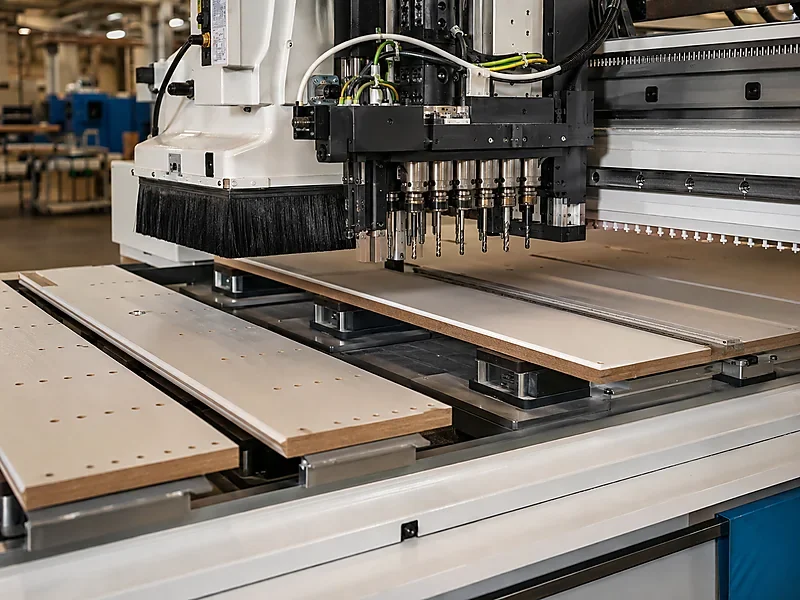
| Cabinet and panel furniture | Yes | Panel fit, hole position, repeat nesting, vacuum hold-down |
| Door panels | Yes | Profile consistency, groove position, edge and surface quality |
| Acrylic signs and plastic parts | Yes, with the right setup | Tool sharpness, chip removal, clean edge, small-part hold-down |
| Wood carving and 3D relief | Yes | Z-axis stability, spindle runout, tool length, finishing path |
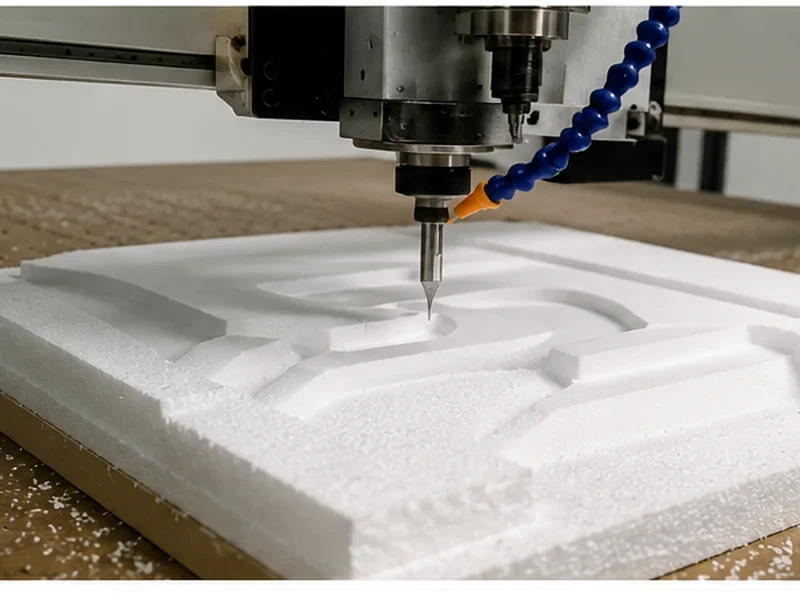
| Foam and soft-material forms | Yes | Shape consistency, support, toolpath and surface finish |
| Aluminum and soft non-ferrous work | Needs a closer look | Rigidity, tooling, chip control, cutting load and required tolerance |
| Precision metal parts or mold work | Usually not the first machine to choose | Start by comparing a CNC milling machine or machining center |
For furniture production, the real test is often simple: do the panels fit, do the holes line up, and do repeated sheets stay consistent?
For acrylic, a dimension can look fine on paper and still fail in production because the part moved or the edge melted during the final pass.
For metal work, don’t force a router into a job that really needs a milling machine. If the drawing has tight mechanical tolerances, that machine choice should be checked first.
For more application examples, see our CNC router applications.
What Actually Changes the Finished Result?
If parts are coming out wrong, the machine itself is only one place to look.
Machine frame and gantry
A rigid machine holds its geometry better when the cutter is under load. If the frame or gantry flexes, you can see chatter, rough edges, or dimensions that change during heavier cuts.
Drive system and transmission
Servo motors, stepper motors, rack and pinion, and ball screws all have their place. Don’t choose by component name alone.
A servo system can give better control and feedback, but it cannot fix a weak frame, poor calibration, bad tooling, or a sheet that is moving on the table.
Table flatness and hold-down
This is one of the most common reasons a good machine still makes a bad part.
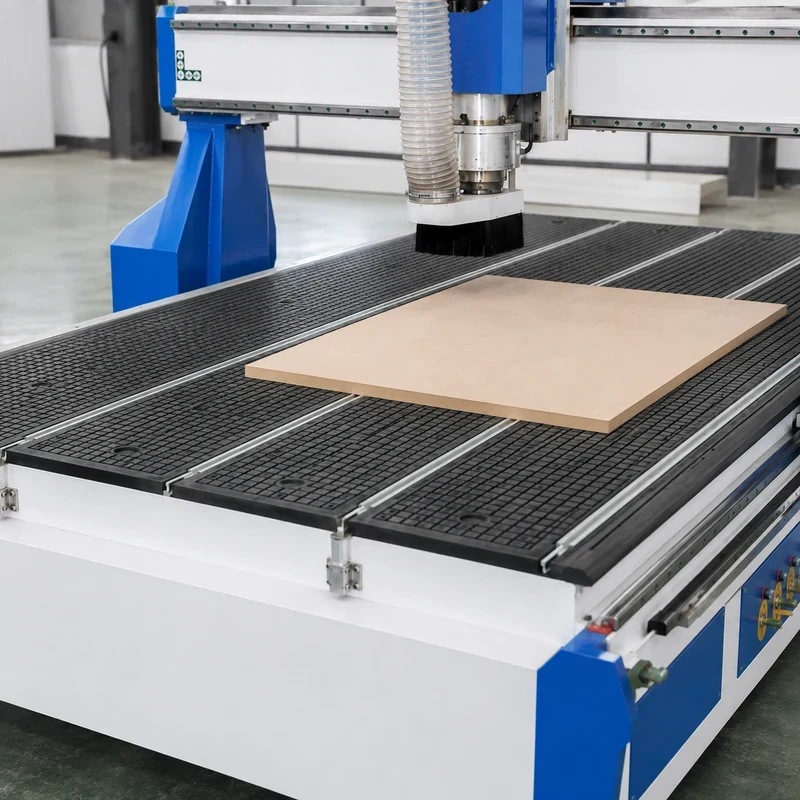
If the sheet lifts, slides, or loses vacuum, the cutter is no longer following the part where you think it is.
On nesting jobs, spoilboard condition, gasketing, vacuum leakage, dust, and cutting sequence can all change the result.
Spindle, collet, and cutter
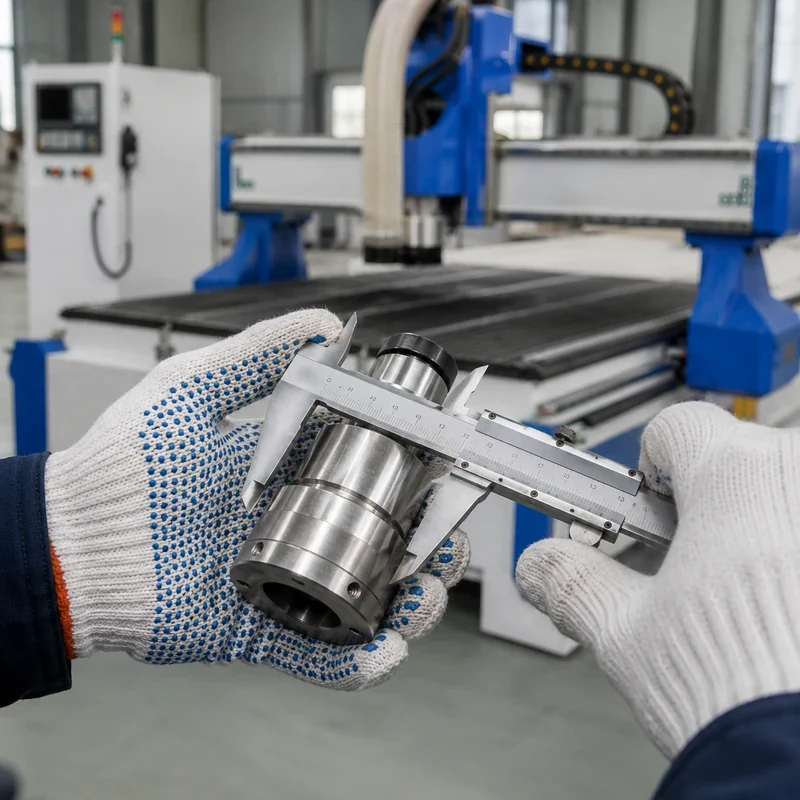
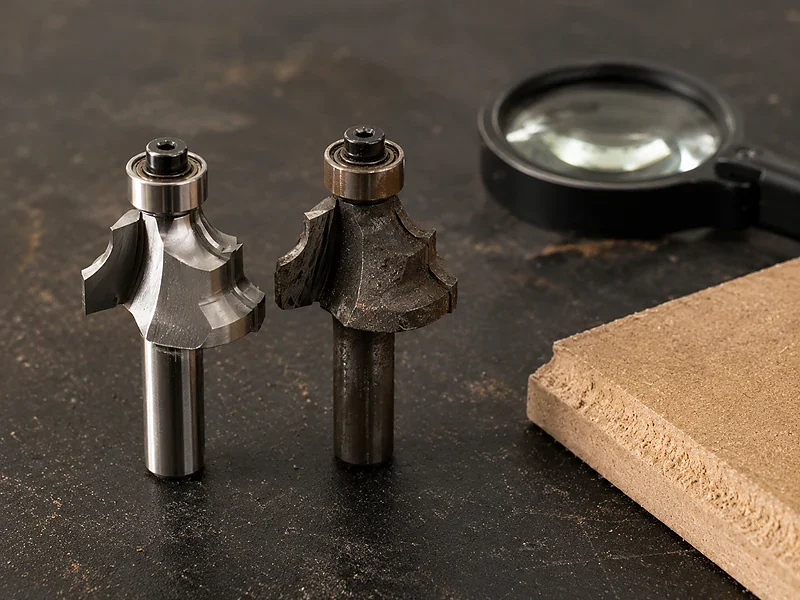
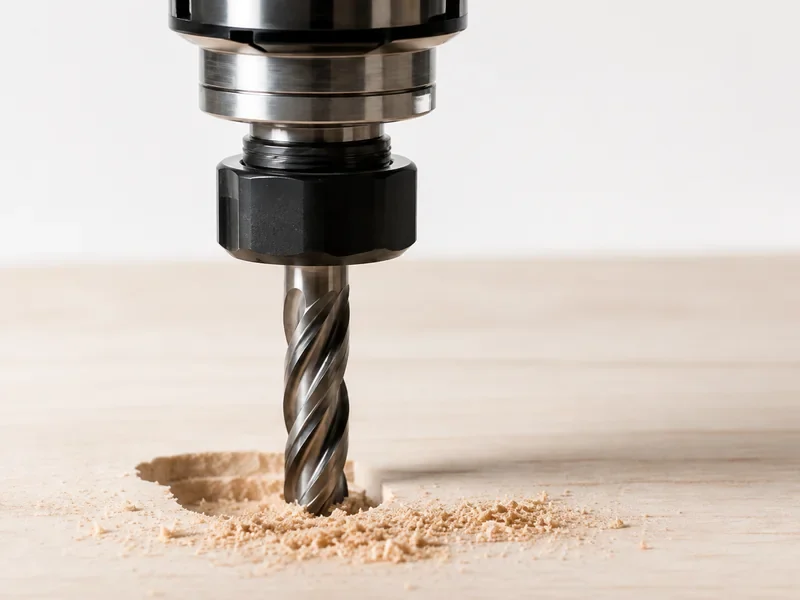
The axis can move perfectly and the part can still be wrong if the cutter is worn, the real tool diameter is different from the CAM value, or the spindle and collet have too much runout.
Toolpath and cutting strategy
Roughing, finishing passes, step-down, compensation, lead-in, tabs, onion-skin cutting, and cut direction all affect the finished part.
For tighter work, leaving material for a finishing pass is often much more useful than simply chasing a smaller brochure accuracy number.
Calibration and maintenance
A machine that ran well six months ago can drift if nobody checks it.
- Axis calibration
- Table surfacing
- Rail and rack cleaning
- Lubrication
- Vacuum system condition
- Tool holder and collet condition
- Machine squareness
- Origin and fixture checks
Don’t Let One Brochure Number Decide the Machine
Seeing ±0.05 mm on one quotation and ±0.1 mm on another does not automatically mean the first machine will make better parts.
An accuracy number means very little until you know how it was measured.
Before you compare two claims, check a few simple things:
- Is the number positioning accuracy, repeatability, or finished-part tolerance?
- Was it measured while cutting or only while the machine was moving?
- Was the test done over a short distance or the full working area?
- What material and cutter were used?
- How was the material held down?
- How was the result measured?
If those answers are missing, don’t base the machine choice on that number alone.
Sometimes the Problem Isn’t Accuracy — It’s the Wrong Machine
This matters because not every job belongs on a CNC router.
CNC router or CNC milling machine?
A CNC router is a strong fit for wood, MDF, plywood, acrylic, suitable plastics, foam, signs, cabinet panels, door panels, and many furniture parts.
If you’re making precision metal parts, molds, or mechanical components with tight tolerances, start by checking whether a CNC milling machine or machining center is the better choice.
Does ATC make the router more accurate?
Not automatically. ATC saves manual tool changes and is useful when one job needs several cutters.
But the finished result still comes back to the machine structure, transmission, spindle, tool condition, workholding, calibration, and toolpath.
Does servo automatically mean better accuracy?
No. Servo gives the motion system better feedback and control. That’s useful, especially on production machines, but it’s still only one part of the complete system.
If you’re also comparing machine structures, see our 3 Axis vs 4 Axis vs 5 Axis CNC Router guide.
If Accuracy Matters, Start With the Part — Not the Machine Model
If you already know the part you need to make, you’re much closer to choosing the right router.
Focus on panel fit, drilling position, repeated sheet cutting, vacuum hold-down and daily output.
Focus on edge quality, tool choice, heat control, chip removal and small-part hold-down.
Focus on Z-axis stability, spindle runout, tool length and the finishing path.
If the tolerance is tight, don’t start by asking, “Which model is the most accurate?”
Start with:
- Your drawing
- Material
- Material thickness
- Critical dimensions and tolerance
- Required edge or surface quality
- Expected daily production
With those six things, it’s much easier to tell whether a standard router is enough, whether the configuration needs to change, or whether another machine is the better choice.
Have a Drawing Already?
Send us the drawing, material, thickness, required tolerance, and expected production. We can look at the job first and then talk about the machine.
Send Your Drawing to Quick CNCIf Your CNC Router Parts Are Off, Check These First
When a part comes out too small, too large, misaligned, or different from the last sheet, don’t immediately blame one component.
| What You See | What Could Be Happening | Where to Start |
|---|---|---|
| Part is consistently too small | Tool diameter or compensation is wrong | Check the real cutter size and CAM offset |
| Part size changes across the table | Calibration, squareness, table flatness, or hold-down issue | Check full-table calibration and vacuum |
| Holes do not line up | Origin, program, fixture, drilling strategy, or sheet movement | Check the program and whether the sheet moved |
| Acrylic edge melts | Wrong feed/speed, dull cutter, or poor chip removal | Check the cutter and cutting parameters |
| Small parts move near the end of the cut | Not enough hold-down after separation | Use better vacuum, tabs, gasketing, or onion-skin strategy |
| Surface shows chatter | Vibration, tool deflection, or spindle problem | Check rigidity, cutter length, feed rate, and spindle runout |
| Repeated sheets are inconsistent | Tool wear, material variation, vacuum leakage, or calibration drift | Check the whole process instead of one component |
FAQ
Is a CNC router accurate enough for cabinet making?
Yes. CNC routers are widely suited to cabinet and panel furniture work when the machine, vacuum hold-down, tooling, drilling strategy, and calibration are matched to the job. The important checks are panel fit, hole position, and consistency from one sheet to the next.
What’s the difference between accuracy and repeatability?
Accuracy is how close the machine or finished part is to the target. Repeatability is how consistently it returns to the same place. A router can repeat very well and still make the wrong size part if the cutter, compensation, workholding, or program is wrong.
Can a CNC router really hold ±0.05 mm?
Don’t judge that number until you know what it refers to and how it was measured. It could describe positioning accuracy, repeatability, or another controlled test. It should not automatically be treated as the finished-part tolerance for every material, part size, and cutting condition.
Why are my parts slightly undersized or oversized?
Start with the real cutter diameter, CAM compensation, tool wear, spindle runout, workholding, finishing pass, and calibration. The machine can move correctly and still make the wrong size part if one of those is off.
Is a servo CNC router more accurate than a stepper CNC router?
Servo can improve motion feedback and control, but it does not guarantee a more accurate finished part. Machine rigidity, transmission, spindle condition, tooling, table flatness, workholding, calibration, and cutting strategy still matter.
Should I use a CNC router or CNC milling machine for tight-tolerance parts?
For wood, cabinet panels, furniture parts, acrylic, suitable plastics, foam, and signage, a CNC router is often the right choice. For strict metal tolerances, molds, and precision mechanical components, start by comparing a CNC milling machine or machining center.
So, Is a CNC Router Accurate Enough for Your Job?
For most woodworking, cabinet, panel furniture, acrylic, sign, plastic, foam, and carving jobs, the answer can be yes — as long as the machine and cutting process match what you’re trying to make.
Don’t let the smallest brochure number make the decision for you. Look at the finished part, not just the axis specification.
If the tolerance matters, put it on the drawing. Add the material, thickness, part size, edge requirement, and production target. That’s enough to have a much more useful conversation about whether a CNC router is the right machine.

Frannie
Hello, I’m Frannie, a CNC machinery specialist with 15 years of experience in the woodworking CNC industry. I help furniture factories, cabinet makers, woodworking workshops, and production businesses choose CNC machines that match their production needs, factory size, budget, and efficiency goals.
My work focuses on solving real production problems, including replacing outdated equipment, improving machining efficiency, reducing labor costs, and upgrading to smarter CNC solutions. I also support customers with machine installation guidance, operation training, video support, and on-site training when needed, helping them use their machines more confidently and effectively.